Subaru Libero – Buy Classic Cars
The Subaru Libero distinguishes itself as a compact microvan with a cabover layout, rear-mounted three-cylinder engine, and available all-wheel drive. Produced from 1983 to 1998 mainly for the European market, this versatile van appeals to those seeking distinctive engineering in the small van segment.
Search results
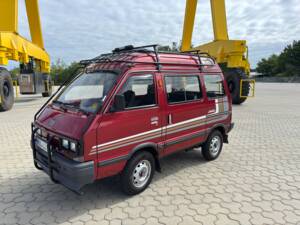
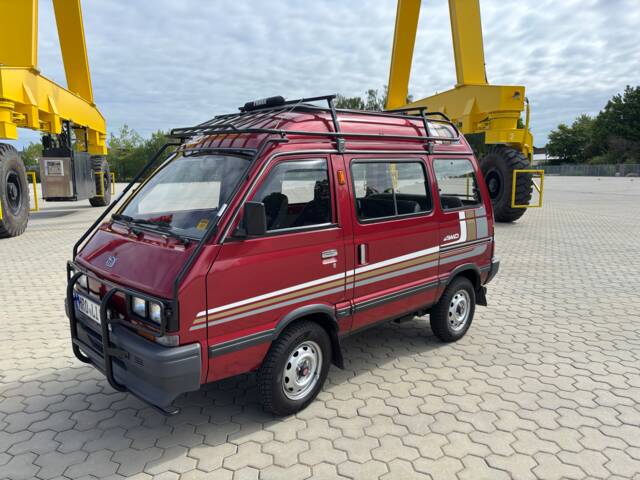
1991 | Subaru Libero 1.2
KJ8 | Documented History | Rare OEM Accessories

Subaru Libero listing references from Classic Trader
Below you will find listings related to your search that are no longer available on Classic Trader. Use this information to gain insight into availability, value trends, and current pricing for a "Subaru Libero" to make a more informed purchasing decision.
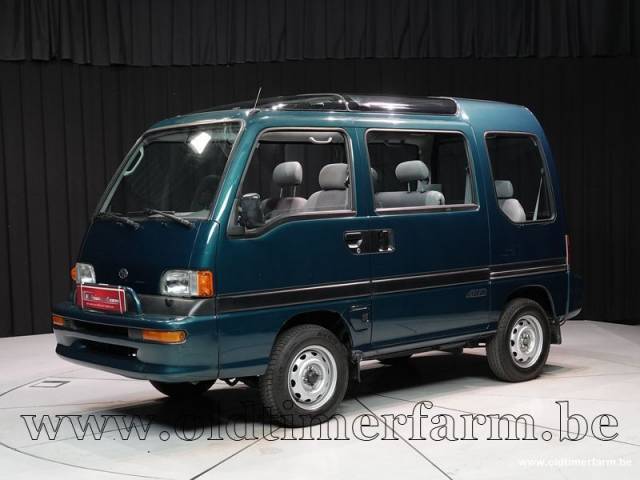
1996 | Subaru Libero 1.2
1996 Subaru libero '96

Subaru Libero Classic Cars: Prices & Market Values
History of the Subaru Libero
The Subaru Libero found its niche in the microvan segment from 1983 to 1998. Marketed under different names—Sumo in Japan, Domingo in the UK, Iceland, and Sweden, and Combi in Belgium—the Libero’s European identity is closely tied to its practicality and utility. Developed as a response to changing urban mobility needs, it offered compact dimensions with maximum space usage and flexibility. Production ceased in 1998, succeeded in Subaru's lineup by models like the Sambar (sixth generation) and, for different market segments, the Forester.
Model Series History
Launched in 1983, the Libero drew from the earlier Subaru Sambar architecture, modernising it for international markets. Its platform remained remarkably consistent, always featuring a rear-mounted engine and available 4WD throughout its lifespan. While powertrain evolution was modest—largely limited to 1.0 and 1.2-litre three-cylinder engines borrowed and adapted from the Justy—constant refinement of features and equipment kept it competitive until its discontinuation.
Highlights and Unique Features of the Subaru Libero
The most striking aspect of the Libero is its cabover design, optimising cabin space and practicality on a tiny footprint. The rear-mounted three-cylinder engine leaves the front free, enhancing crash safety—a rarity in the segment. The 4x4 option offered surprising off-road capability for a van of this size, making the Libero popular among rural users and outdoor enthusiasts. Its sliding side doors and flexible seating contributed to its appeal for both family and utility applications.
Technical Data
Special Editions and Limited Runs
The Libero’s main variations were market-specific names and occasionally equipment levels, such as the Columbuss in Sweden and Estratto in Taiwan. While there are no known factory-built limited editions recognised as collector's models, certain configurations—such as versions with permanent 4WD or special trim packages—may attract specific interest among enthusiasts searching for utility or unique market variants.
Engine, Performance, Transmission and Handling
The Libero’s 1.2-litre engine delivers 54 horsepower, providing adequate traction and drive for a vehicle its size, especially when equipped with the 4x4 system. The 5-speed manual transmission is robust and regarded as reliable. Handling in urban environments benefits from the compact turning circle and generous outward vision. On the open road, the microvan’s high profile and lightweight construction make it sensitive to crosswinds, and top speed is relatively limited at 128 km/h. Ride comfort is basic but suitable for city and rural use. The most relevant versions for collectors are those with the 1.2-litre 4x4 drivetrain, especially with original equipment and rare market trims like the Swedish Columbuss or Belgian Combi.
Interior, Comfort, Exterior and Design
The cabover design maximises cabin space relative to its small footprint. Its sliding side doors enhance access for passengers and cargo. Interior layout is functional, with flexible seating arrangements catering to both passenger and flat-floor cargo usage. Materials are straightforward but durable, in line with late-20th-century Japanese vehicle manufacturing. While colours and trim often reflected practical needs—neutral greys and blues—some regional models offered unique upholstery or paintwork. Factory accessories included roof racks and auxiliary heaters; third-party upgrades were common for users wanting to push its versatility further.
Other Features
Certain Libero models featured regionally unique branding or badging, such as the name Estratto in Taiwan or Columbuss in Sweden. Export models might differ subtly in lighting or safety gear, tailored for local regulations. The Libero also benefitted from Subaru’s reputation for dependable flat engines and all-wheel-drive drivetrains, even though in this model the engine was inline.
Summary
The Subaru Libero sets itself apart by combining compact external dimensions with surprising interior space, a distinctive rear-mounted engine layout, and all-wheel drive capabilities. Its presence in multiple markets under various names, all with consistent engineering, has made it a unique classic vehicle within Subaru’s line-up. For enthusiasts seeking an unusual, practical microvan, the Libero represents a cornerstone in compact Japanese motoring history.