Subaru Justy classic cars for sale
The Subaru Justy is a distinctive subcompact hatchback, known for its practical design, innovative drivetrain options, and history spanning various generations since the 1980s. The model stands out due to its versatility, reliable engineering, and cult following among enthusiasts who value Japanese small cars. Discover what makes the Justy a unique addition to the world of classic cars.
Search results
Currently, there are no matching listings for your search.
Create search alert
Let yourself be notified as soon as a listing is published that matches your search filters.
Create listing
Do you have a Subaru Justy that you want to sell? Then create a listing now.
Create listingSubaru Justy listing references from Classic Trader
Below you will find listings related to your search that are no longer available on Classic Trader. Use this information to gain insight into availability, value trends, and current pricing for a "Subaru Justy" to make a more informed purchasing decision.
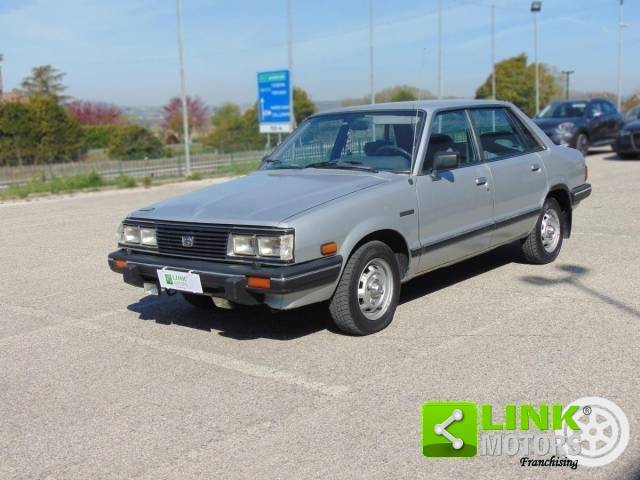
1984 | Subaru Justy
Subaru Leone 4WD, anno 1984, iscritta ASI, manutenzione curata.
Create search alert
Let yourself be notified as soon as a listing is published that matches your search filters.
Create listing
Do you have a Subaru Justy that you want to sell? Then create a listing now.
Create listingSubaru Justy Classic Cars: Prices & Market Values
History of the Subaru Justy
Introduced in 1984, the Subaru Justy emerged as a compact solution for urban and rural driving alike. Developed by Subaru, it held a reputation for offering both front-wheel and selectable four-wheel drive—a rarity in the subcompact segment. The Justy quickly gained recognition in markets necessitating all-weather and all-road usability, which suited Subaru’s image as a maker of robust, versatile vehicles. In its original run until 1994, the Justy established a significant presence in Europe and Japan, carving out its place among small, reliable hatchbacks. After a hiatus, the nameplate was revived in 2007 as a rebadged Daihatsu model and in 2016 again, this time based on a Toyota platform, reflecting the shifting landscape in small car production.
Model History of the Justy
The first-generation Subaru Justy, produced from 1984-1994, featured a utilitarian design and innovative mechanics. Initially, it used 1.0-litre and later 1.2-litre three-cylinder engines, available with either front-wheel or selectable four-wheel drive. By the mid-2000s, the model re-emerged as a badge-engineered version of Daihatsu's Boon, carrying compact, fuel-efficient powerplants and modern CVT transmissions. In 2016, Subaru reintroduced the Justy in Japan as a rebadged Toyota Tank/Roomy/Daihatsu Thor, aiming for practical urban mobility and shared technology in the age of global platforms.
Highlights of the Subaru Justy
The Justy is notable for integrating all-wheel drive in a supermini class vehicle, reinforcing Subaru's hallmark technology even in its most compact offering. Its engine configurations delivered both efficiency and resilience. Each generation responded to the evolving needs of the market, from early mechanical robustness to later iterations with advanced CVT gearboxes and lighter bodies. The Justy is the sole representative under its manufacturer code (KAD) in the Subaru classic supply and demand statistics, claiming a full 100% share both in listings and interest for its make and model series, underscoring its unique position among Subaru classics.
Technical Data
Special Editions and Collectible Models
Over its production years, the Justy line included practical trims with differences mainly in drive configuration and drivetrain technology. Special trim packages were often market-specific but did not typically constitute limited or collector's editions in the traditional sense. Significantly, the introduction of electronically controlled CVT and the four-wheel-drive system in the subcompact format marks high points for collectors focused on technical milestones.
Engine, Performance, Transmission and Handling
The Justy's early models relied on a lively three-cylinder engine, noted for mechanical simplicity and reliability. Transmission choices included a conventional five-speed manual and an innovative, electronically controlled CVT in later versions. The selectable four-wheel-drive system allowed operation on various road conditions, a substantial advantage in snowy or rural environments. The car's lightweight layout and direct steering produced a predictable driving experience, making it appealing to drivers seeking practical mobility and robust engineering. Notable variants include early 4WD manual models prized for their mechanical robustness and late-1980s models featuring the CVT for their technological interest.
Interior, Comfort, Exterior and Design
The Justy was designed with function in mind, featuring a boxy profile to maximise interior volume and utility. Interior layout prioritised practicality with straightforward instrumentation and controls. Unique exterior colours were available in certain markets, though primary appeal derived from its compact size and high roofline. Special accessories included period-correct roof racks and mud flaps, with later models offering enhanced sound insulation and optional alloy wheels. The Justy's design language reflects the Japanese emphasis on maximizing space and durability in a small package.
Other relevant features
With multiple badge-engineered iterations, every Justy reflects a blend of Subaru’s and its partners' engineering philosophies. These collaborations brought efficient urban transport solutions and contributed to the Justy's enduring appeal among fans of Japanese compact cars.
Summary
With its unique combination of compact design, all-weather capability, and dependable engineering, the Subaru Justy holds a singular status among small Japanese classics. Its full representation in classic Subaru listings demonstrates its role as the go-to model for enthusiasts of the brand’s earlier compact offerings.