Stoewer R 150 classic cars for sale
The Stoewer R 150 stands out as a rare, front-wheel drive mid-range classic from the 1930s, offered in saloon, cabriolet and roadster variants. Its four-cylinder flathead engine, advanced chassis and unique door design make it a sought-after piece of engineering history.
Resultados de la búsqueda
Actualmente no hay anuncios que coincidan con su búsqueda.
Create search alert
Let yourself be notified as soon as a listing is published that matches your search filters.
Create listing
Do you have a Stoewer R 150 that you want to sell? Then create a listing now.
Create listingStoewer R 150 listing references from Classic Trader
Below you will find listings related to your search that are no longer available on Classic Trader. Use this information to gain insight into availability, value trends, and current pricing for a "Stoewer R 150" to make a more informed purchasing decision.
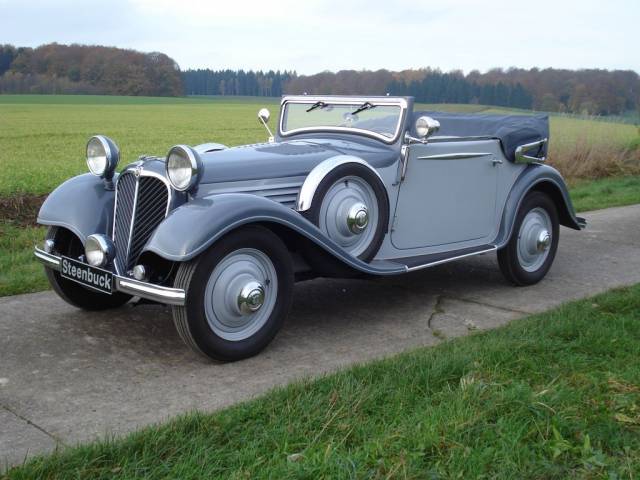
1934 | Stoewer R 150
Sport cabriolet with stunning design
Create search alert
Let yourself be notified as soon as a listing is published that matches your search filters.
Create listing
Do you have a Stoewer R 150 that you want to sell? Then create a listing now.
Create listingStoewer R 150 Classic Cars: Prices & Market Values
History of the Stoewer R 150
The Stoewer R 150 was introduced in 1934 by Stoewer-Werke AG from Stettin, a company with roots dating back to 1858. After entering the automotive world in 1901 and building a reputation for innovation, Stoewer launched the R-series in 1932, with the R 150 being produced from 1934 to 1935. Just 1,150 units left the factory, reflecting its rarity today. As the middle child between the R 140 and R 180, the R 150 brought together technical advances and market needs of its era. Its production period was short-lived, and subsequently, Stoewer's public vehicle production ceased in 1940 due to shifting historical circumstances.
Model history: The R-series family
The R 150 filled the gap between the smaller R 140 and more powerful R 180. It offered notable upgrades from the R 140, such as increased engine capacity and power, revised transmission, and a new rear axle. While the R 140 set standards as an early front-wheel-drive car in 1932, the R 150 pushed Stoewer’s technical ambitions further. Its major design changes, including the transition from a two-door to a four-door saloon, made it more practical while keeping advanced engineering like all-independent suspension. The R-series as a whole demonstrated Stoewer’s commitment to technical pioneering until passenger car production ended at the company in 1940.
Highlights and unique features
The R 150 boasted a 1,466cc four-cylinder flathead engine, producing 35 PS – a notable power output for a mid-size 1930s car. Thanks to its front-wheel-drive layout and fully independent suspension, the R 150 offered modern driving characteristics ahead of its time. Its body was available as a saloon with four doors in portal arrangement (allowing easy access without a B-pillar), cabriolet and roadster, the latter with a shorter wheelbase and distinctive sports design. The Sport Cabriolet version, with its long bonnet and low windscreen, visually evoked contemporary super sports cars. Only a small number of units were made, underlining its exclusivity today.
Technical data
Special Editions and Collectible Models
Stoewer offered the R 150 in Sport Cabriolet and Roadster variants, which stood out for their sleek lines, low windscreens and sports proportions. Particularly, the Sport Cabriolet reflected the zeitgeist of the 1930s for open, long-bonnet styling, making these versions highly notable among classic enthusiasts today.
Engine, Performance, Transmission and Handling
The Stoewer R 150’s side-valve four-cylinder engine delivers 35 PS, which, combined with its modest vehicle weight and the advanced front-wheel-drive, enables a responsive and surprisingly agile driving experience for its era. The fully synchronised four-speed gearbox smooths gear changes, while the all-independent suspension irons out many road irregularities, a rarity for mid-1930s vehicles. Saloon versions offer seating for four, while the more sporting cabriolet and roadster emphasise lightness and dynamism. • R 150 Saloon: Four-door, four-seat, portal door arrangement • R 150 Cabriolet: Two-seat open version • R 150 Roadster: Sporty, two-seat version with shorter wheelbase
Interior, Comfort, Exterior and Design
The R 150 stood out for details such as the portal-arranged front and rear doors without B-pillars on the saloon, providing excellent access and setting it apart from most competitors. The bodies, especially the Sport Cabriolet, featured long, elegant bonnets and low windscreens, echoing grand tourer aesthetics of the time. Materials and finishes prioritised craftsmanship, with a focus on comfort for both driver and passengers. Cabriolet and roadster versions embraced the open-air lifestyle that was widely popular in the 1930s. Accessory options and variations depended on the body style, but all R 150s emphasised a blend of technical innovation and period-appropriate luxury.
Summary
The Stoewer R 150 encapsulates advanced 1930s automotive engineering with its rare combination of front-wheel drive, independent suspension and flathead engine. Produced in very small numbers between 1934 and 1935, and available as a saloon, cabriolet and roadster, it is a standout for collectors interested in technical milestones and sophisticated pre-war design.