Renault R 30 Classic Cars for Sale
The Renault R 30 stands out among classic executive cars for its avant-garde hatchback design, velour interiors and the pioneering use of the PRV V6 engine. Initially introduced in 1975, it swiftly became emblematic for breaking conventions in French luxury. Extensive standard equipment and an emphasis on safety set it apart in its class.
Resultados de la búsqueda
Actualmente no hay anuncios que coincidan con su búsqueda.
Create search alert
Let yourself be notified as soon as a listing is published that matches your search filters.
Create listing
Do you have a Renault R 30 that you want to sell? Then create a listing now.
Create listingRenault R 30 listing references from Classic Trader
Below you will find listings related to your search that are no longer available on Classic Trader. Use this information to gain insight into availability, value trends, and current pricing for a "Renault R 30" to make a more informed purchasing decision.
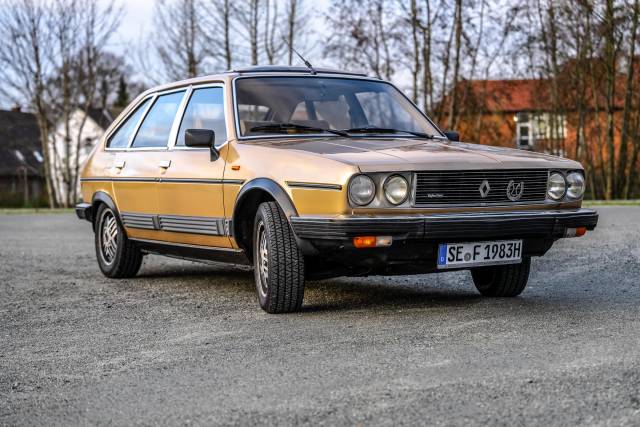
1983 | Renault R 30 TX
Renault R30 TX in Gold Wertgutachten Note 2 (1983)
Create search alert
Let yourself be notified as soon as a listing is published that matches your search filters.
Create listing
Do you have a Renault R 30 that you want to sell? Then create a listing now.
Create listingRenault R 30 Classic Cars: Prices & Market Values
History of the Renault R 30
Unveiled at the 1975 Geneva Motor Show, the Renault R 30 was developed as Renault’s flagship executive model. It was conceived as a successor to the Frégate, aiming to restore Renault's prestige in the large saloon market. Rather than produce a traditional saloon, Renault opted for a unique five-door hatchback concept—an unusual choice for an executive car of the era. Collaboration with Peugeot resulted in the use of the innovative 2.7-litre PRV V6 engine, making the R 30 the first post-war Renault to feature a six-cylinder engine. Marketed exclusively as the well-equipped 'TS', the R 30 integrated a high level of safety and comfort, including options like leather seats and transformable front seats. Its upscale yet unconventional packaging, however, limited its commercial success due in part to rising fuel prices and its non-traditional form. By 1984, production ceased and the Renault 25 took its place as the company’s new flagship.
Model History and Evolution
The Renault R 30 was produced from 1975 to 1984. Its platform was derived from the Renault 16, but with significant improvements and the key addition of the PRV V6. In 1976, a more affordable four-cylinder variant, the Renault 20, was introduced. Updates to the R 30’s engine in 1977 aimed to address fuel consumption, at the expense of some power. In 1979, the TX edition arrived, distinguished by bespoke alloy wheels and a bump in output. Diesel technology appeared in 1981 with the R 30 Turbo D, which gradually replaced the petrol variants. The model line concluded in 1984, succeeded by the more modern Renault 25.
Highlights and Market Presence
The R 30 blended executive comfort with practical five-door usability. Notable highlights include its adjustable rear seats, safety cell construction, and an extensive feature list with power steering, cruise control, and central locking. R 30s are prized for their factory metallic colours like Gold Metallic (Champagne) and original Renault alloy wheels. Despite its standing as Renault's flagship, its standout hatchback profile was a major talking point among enthusiasts of the period.
Technical Data
Special Editions and Collectible Models
The 1979 Renault R 30 TX edition is recognised for its individual design alloy wheels and enhanced power output. Models painted in special colours like Gold Metallic (Champagne) or those with rare factory fittings—such as full-leather seats or headlamp wipe/wash—are also notable among collectors.
Engine, Performance, Transmission and Handling
The hallmark of the R 30 is its PRV V6, offering smooth but not particularly frugal performance—fuel economy was a noted weak point, particularly after the 1973 oil crisis. Handling benefits from front-wheel drive and power steering, and the ride quality is comfort-oriented, suiting its luxury positioning.
- Renault R 30 TS – Original V6, four-speed manual or optional three-speed automatic, noted for high comfort and practicality.
- Renault R 30 TX (from 1979) – Enhancement of TS with unique alloys and increased engine power.
- Renault R 30 Turbo D (from 1981) – The diesel addition prioritised fuel economy, addressing earlier criticism, and brought new appeal for high-mileage drivers.
Interior, Comfort, Exterior and Design
The Renault R 30’s design is defined by its distinctive, practical five-door hatchback—unique among executive cars of the period. The interior features signature French comfort: velour upholstery was standard, with optional leather seats and bedspring-style front seats for superior long-distance travelling comfort. Notable amenities include central locking, electrical windows, cruise control, sunroof, power steering, and a variable luggage compartment accessed by a large rear tailgate. Exterior highlights include factory metallic finishes such as Gold Metallic, original Renault alloy wheels, and Michelin TRX fitment. Accessories often include original radios and period-correct trim detailing.
Summary
The Renault R 30 combines French engineering innovation with executive luxury, carving itself a distinctive place in automotive history with its V6 engine, unique five-door design, and generous equipment levels. With all Renault classic listings of this era representing the R 30, and matching demand interest, it clearly holds a dedicated audience among collectors and enthusiasts seeking a high-comfort, high-character classic.