Powell Sport Wagon classic cars for sale
The Powell Sport Wagon stands out with its distinctive appearance and utilitarian design—a rarity on the classic market. This model’s blend of post-war ingenuity and robust mechanicals has attracted a dedicated following. Discover the details that make the Sport Wagon unique and learn why enthusiasts value its history and features.
Search results
Currently, there are no matching listings for your search.
Create search alert
Let yourself be notified as soon as a listing is published that matches your search filters.
Create listing
Do you have a Powell Sport Wagon that you want to sell? Then create a listing now.
Create listingPowell Sport Wagon listing references from Classic Trader
Below you will find listings related to your search that are no longer available on Classic Trader. Use this information to gain insight into availability, value trends, and current pricing for a "Powell Sport Wagon" to make a more informed purchasing decision.
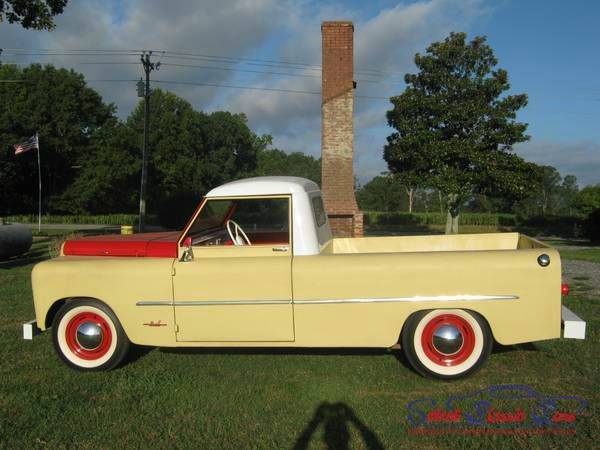
1956 | Powell Sport Wagon
Create search alert
Let yourself be notified as soon as a listing is published that matches your search filters.
Create listing
Do you have a Powell Sport Wagon that you want to sell? Then create a listing now.
Create listingPowell Sport Wagon Classic Cars: Prices & Market Values
History of the Powell Sport Wagon
The Powell Sport Wagon was developed by the Powell Manufacturing Company, a Southern California enterprise that shifted its focus from motorbikes and scooters to innovative utility vehicles after World War II. The Sport Wagon, produced in the mid-1950s, represented Powell's response to a growing postwar appetite for versatile, budget-conscious vehicles. Built using a combination of newly manufactured bodies mounted on repurposed pre-war car chassis—usually Plymouth—the Sport Wagon was a striking example of ingenuity in a time of material shortages and economic constraints. The pragmatic nature of its production, along with its practical station wagon layout, captured the spirit of a transitional era in the US automotive landscape.
Model History
The Powell Sport Wagon had a short production span, with only a handful of units assembled during the mid-1950s. There was no direct predecessor to this model; it was a bold, stand-alone project. The chassis source most commonly came from late 1930s to early 1940s Plymouth passenger cars, giving the Sport Wagon a unique blend of reused structural elements and contemporary styling for the 1950s. No direct successor followed, as Powell Manufacturing soon ceased automobile production to focus on other ventures.
Highlights of the Powell Sport Wagon
A defining feature of the Powell Sport Wagon is the resourceful use of recycled chassis and running gear mated to a new body—a practice nearly unheard of among its contemporaries. It included a functional sliding tailgate, wooden side rails, and a utilitarian interior with metal and durable materials designed for practicality over luxury. The small production run has made it one of the most elusive American wagons of the era.
Technical Data
Special Editions and Collectible Models
No known factory-sanctioned special editions of the Powell Sport Wagon exist, as the low production volume and handcrafted nature already made each example somewhat unique. Variations did occur based on the specific donor chassis or minor trim differences introduced during assembly.
Engine, Performance, Transmission and Handling
Given their mechanical origins, Powell Sport Wagons typically inherit the performance attributes of the Plymouth vehicles they were built upon. Expect a modest output from the flathead six, paired to a three-speed manual, resulting in leisurely acceleration and top speeds aligning with typical pre-war American sedans. Handling was utilitarian, with leaf spring suspension and drum brakes reflecting the era’s technology.
The model’s highlight is its practicality, not sporting prowess. The robust powertrain components are generally reliable and easily sourced due to the use of standard Plymouth parts, though restoration can be complicated by the scarcity of body and trim pieces. The most recognizable Sport Wagons are those built on 1940 Plymouth chassis—these tend to be preferred by collectors for parts interchangeability and robust underpinnings.
Interior, Comfort, Exterior and Design
The Powell Sport Wagon presents a boxy, straightforward body shaped by sheet metal and accented by wooden cargo rails, evoking a utilitarian, almost commercial-vehicle style. Interiors are simple, utilising metal panels and vinyl or basic fabric coverings, emphasising durability rather than refinement. Options were limited, but some Sport Wagons featured two-tone paint or additional chrome trim. Accessories were generally aftermarket, and the most notable feature is the cargo-oriented rear compartment with the innovative sliding tailgate. No notable designer is recorded; the vehicle's aesthetics were defined by function and manufacturing constraints rather than by a single stylistic vision.
Other Features
Given the company’s inventive approach, some Sport Wagons have quirky custom features such as in-built fishing rod holders or unique interior storage compartments, reflective of the Californian outdoor lifestyle. Restoration projects often reveal non-standard elements, making each survivor a potential one-off.
Summary
The Powell Sport Wagon is among the rarest postwar American wagons—born out of economic necessity and creative engineering. Its rarity, utilitarian design, and fascinating background make it a standout choice for collectors seeking something distinct from mainstream classics. While finding one can be a challenge, the vehicle rewards passion with historical depth and quirky charm.