- Car
- Powell (0 offers)
Buy Powell Classic Cars
A Powell Sport Wagon is one of the rarest and most recognisable post-war American utility cars, combining California ingenuity with dependable Plymouth mechanical roots. Find a complete, well-documented Powell and assess its provenance, condition and Australian import path before you buy.
Search results
Currently, there are no matching listings for your search.
Create search alert
Let yourself be notified as soon as a listing is published that matches your search filters.
Powell listing references from Classic Trader
Below you will find listings related to your search that are no longer available on Classic Trader. Use this information to gain insight into availability, value trends, and current pricing for a "Powell" to make a more informed purchasing decision.
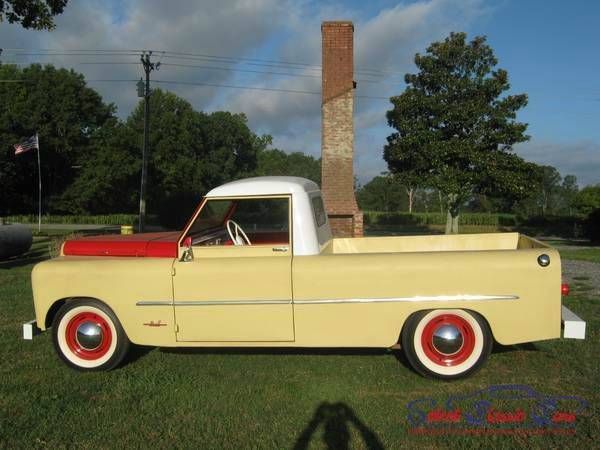
1956 | Powell Sport Wagon
Create search alert
Let yourself be notified as soon as a listing is published that matches your search filters.
Powell History & Heritage
Powell is a small name in American motoring history, but it carries an outsized personality. The company’s short-lived Sport Wagon was built in Compton, California, by a business that had already made radios and scooters. When brothers Channing and Hayward Powell turned to four wheels, they did not attempt to outspend Detroit. Instead, they assembled a light, useful and striking vehicle around renewed Plymouth running gear. The result was a distinctly Californian answer to the post-war utility car: part pickup, part station wagon and wholly individual.
Powell Manufacturing Company introduced the Sport Wagon for the 1955 model year. It was an era when American families were moving to suburbs, outdoor recreation was growing, and practical vehicles were beginning to acquire lifestyle appeal. A Powell could carry tools during the week, fishing equipment at the weekend and a family on a modest holiday. Its vivid panels, tall cabin and simple construction looked unlike anything from the large manufacturers. The company used the name Sport Wagon for both its pickup and enclosed station-wagon forms; a prospective buyer should therefore not assume that a listing’s body description tells the full story without photographs and serial-number evidence.
The business model was resourceful. Powell acquired and reconditioned earlier Plymouth components, commonly chassis from 1941 and flathead six-cylinder engines from the 1940–50 period, then added its own bodywork. That approach controlled cost and made service parts less daunting in the United States, although it means no two surviving cars should be treated as mechanically identical. A 1955, 1956 or 1957 registration year is only the opening point of the research. The actual donor frame, engine number, axle, braking arrangement and later modifications matter just as much.
Production ceased in March 1957, after barely three model years. The Powell Sport Wagon Registry estimates approximately 1,020 pickups and 150 station wagons were made, and recorded 109 survivors in its November 2024 update. These are registry estimates rather than factory production ledgers, but they convey the essential fact: even in North America, a genuine Powell is an uncommon sight. In Australia, it is a genuinely unusual imported classic. Scarcity is attractive, but it also changes the ownership equation. A buyer is acquiring a vehicle with a small knowledge base and a limited pool of body, trim and hardware donors, rather than a conventional American pickup with a ready local parts catalogue.
The pickup is usually the first image people associate with the marque: a compact cab-forward utility with a broad tray and unmistakable front treatment. The rarer Station Wagon applied the same thinking to an enclosed body and is the more unusual collector proposition. Both sit within the wider story of inventive American independents that found a niche between farm utility, commercial delivery vehicle and leisure transport. Powell did not have a long sequence of generations, facelift programmes or performance derivatives. Its story is instead concentrated: two core body styles, a brief production run and a remarkable survival of identity.
For an Australian collector, that concentration is useful. The decision is not about selecting the best year from decades of development; it is about finding the most honest individual car. A complete pickup with original character, a sound frame and an unbroken title can be a far more convincing purchase than a superficially polished Station Wagon with uncertain identity or missing Powell-only components.
Powell Highlights & Features
The Powell’s appeal begins with its body engineering and visual candour. Its body was built from straightforward steel panels, while the distinctive front end was fibreglass. Sliding side windows, an upright glasshouse and a workmanlike rear section give the Sport Wagon a memorable silhouette. It is neither a conventional American ute nor a normal estate car; it occupies a particularly appealing space between the two.
Several details reward close inspection. Early examples may have oak tailgates and bumpers, while later vehicles can use diamond-plate rear pieces. Optional pull-out fishing-rod carriers are a signature period accessory and neatly express the vehicle’s recreational purpose. Some late-1956 cars are reported to use Henry J steering wheels. Such details should not be used in isolation to declare a vehicle original: Powell’s production was small, components varied, and six decades of repair work may have altered any particular example. They are, however, valuable clues when read alongside old photographs, registry information and physical evidence.
The mechanical basis is a further strength. A reconditioned Plymouth flathead six is simple, low-stressed and well understood by specialists in American pre-war and early post-war cars. Its side-valve layout will not deliver modern acceleration, but it provides the calm, long-stroke character suited to a utility vehicle. The three-speed column-shift manual is equally period-correct in feel. This is not a collector vehicle to buy for rapid highway overtaking; it is one to enjoy for its design, scarcity and mechanical legibility.
Key characteristics to look for include:
- Genuine PMC identity, including the serial stamping on the right-front frame rail;
- a body whose steel panels, fibreglass nose, bonnet and grille are complete and properly aligned;
- correct or credibly documented rear trim, whether wood or diamond-plate;
- working sliding windows and, where fitted, complete fishing-tube hardware;
- a Plymouth engine and chassis combination supported by clear records, rather than assumptions based on a seller’s description; and
- a title history that links the car, chassis number and export documents without gaps.
A properly sorted Powell has a charm that a more expensive mainstream American vehicle cannot replicate. It is unusual without being pretentious, functional without being anonymous, and its homemade-industrial character is part of its value. Conversely, a project with a missing fibreglass front, damaged grille, absent tailgate hardware or poorly repaired frame can absorb far more money and time than a buyer initially expects. Powell-specific parts are not usually waiting on an Australian shelf; restoring them can mean careful fabrication, pattern-making and shipping from the United States.
Powell Technical Data
Because the company worked from reconditioned donor components, the following figures are a useful reference rather than a substitute for inspecting a particular car. Verify the engine displacement, wheelbase and component numbers directly.
The most important entry in that table is “varies”. A Powell may be offered with a broadly correct Plymouth engine yet have a later gearbox, changed differential, converted electrics or non-standard brakes. None of these changes automatically rules out a purchase. A sensitively upgraded car can be more usable on Australian roads, especially if it retains its period character and the work is documented. The price should reflect the difference between an original, well-preserved vehicle and a modified driver.
Powell Market Overview & Buying Tips
The Powell market is thin. That makes a rigid price guide misleading, especially after Australian landing costs. The most useful recent hard result is a non-running, incomplete 1957 project sold by Bring a Trailer for US$3,800 on 18 April 2025. It is evidence of what an unfinished car achieved in a competitive online sale, not a benchmark for a complete driver. A 1957 project advertised at US$8,000 in September 2024 and a restored 1956 wagon advertised at US$25,000 in 2021 are asking prices, not confirmed transactions. An archived Classic Trader listing for a 1956 Powell showed £17,116 around a decade ago. These sparse references underline why condition, completeness and provenance set the value more than a published average.
In practical terms, a buyer should separate the purchase into three budgets: the vehicle, its landed cost in Australia, and the work required before state registration. US collection and inland transport can be significant because a Powell may be far from the export port. Ocean freight, marine insurance, customs charges, GST where applicable, quarantine treatment or cleaning, port fees and local delivery all arrive before the first Australian road test. Ask an importer for a written estimate based on the vehicle’s actual collection address, dimensions and destination port; do not rely on a generic freight quote for a modern car.
Australia’s biosecurity process is especially relevant to a utility with an underbody, tray and many mud-catching seams. The Department of Agriculture, Fisheries and Forestry may inspect imported vehicles and can require cleaning or treatment when soil, plant material, insects or contamination are found. Before the car leaves the US, have its chassis, wheel arches, tray, engine bay and cabin thoroughly cleaned and photographed. Remove loose leaves, dirt and old workshop debris. A pre-shipment clean does not guarantee a biosecurity outcome, but it is far cheaper than discovering contamination at the wharf.
Import eligibility and registration are separate questions. Secure the appropriate Australian vehicle import approval before shipping and retain every document: foreign title, bill of sale, export paperwork, bill of lading, import approval, customs entry, quarantine release and photographs of identity markings. State and territory registration rules differ. A historic or club registration scheme may be attractive for an older left-hand-drive collector car, but the eligibility conditions, permitted use, inspections and club requirements vary between jurisdictions. Full registration, engineering sign-off and compulsory safety requirements can also differ. Confirm the route with the relevant state or territory authority before committing to buy, rather than assuming age alone resolves every issue.
Every original Powell was left-hand drive. That is part of the car’s authenticity and should be planned for rather than treated as a surprise. LHD is permitted for many eligible historic imports, subject to applicable Australian rules, but it affects driving comfort in right-hand-traffic conditions, overtaking sightlines, parking facilities and insurer appetite. Avoid a casual right-hand-drive conversion merely to make the vehicle seem easier to register. Such a conversion can be expensive, mechanically awkward and damaging to a rare car’s integrity. If a car has already been converted, seek engineering paperwork and inspect the workmanship very carefully.
Before bidding or making an offer, request a clear photograph of the PMC serial stamping on the right-front frame rail. Match it against the title and any registry information. Establish whether the chassis is consistent with the claimed vehicle and record all engine, frame and body markings. The donor-based construction means terminology can be imprecise in old paperwork, but inconsistency is not something to wave away. A missing title, a number that cannot be located, or a seller who will not permit an inspection can turn a bargain into an unregistrable ornament.
On a physical inspection, start underneath. Check the frame rails for corrosion, collision damage, poor welding and signs of misalignment. Examine crossmembers, spring hangers, brake lines, steering joints and the condition of the suspension. A straight, solid frame is the foundation of the purchase. Then inspect the steel body for rust in lower panels, floor areas, tray edges, seams and previous patch repairs. The fibreglass nose needs special attention for cracks, poor repairs, distortion around mountings and incorrect panel gaps. Its shape is central to a Powell’s appearance and reproducing it accurately is specialist work.
The flathead six should start readily when cold, hold oil pressure, avoid persistent smoke and run at stable temperature. Look for coolant leaks, cracked manifolds, tired wiring, brittle hoses and evidence of neglected servicing. Test the clutch, all three gears, steering response and brake performance; a car that has sat for years may require a complete hydraulic overhaul regardless of how presentable it looks. Confirm whether it remains six-volt or has been converted to twelve volts, and ensure that charging, lights and starter arrangements are safe and documented.
Finally, audit completeness. Powell-specific grilles, bonnet pieces, window hardware, tailgate parts, diamond plate and fishing-rod carriers can be much harder to replace than Plymouth service components. A missing ordinary door handle is manageable; a missing Powell front-end fitting may demand months of research and custom work. Registry contact, marque-owner networks and a pre-purchase inspection by a knowledgeable US-based specialist are sensible investments when buying remotely.
The Powell Driving Feel
Driving a Powell is about pace and occasion rather than performance figures. The wide bench, column lever and upright screen place the driver in an unmistakably mid-century American working vehicle, yet the proportions are lighter and more playful than a full-size pickup. The flathead six delivers a quiet, deliberate surge rather than a sharp response. It encourages early shifts and a relaxed rhythm, where mechanical sound, view through the tall glass and the car’s improbable silhouette become the experience.
In an Australian setting, it would be at home at a local classic-car gathering, a regional show or an unhurried Sunday run. It is less suited to sustained high-speed touring than a later V8 wagon, and drivers should allow for drum-brake behaviour, old-car steering and LHD road positioning. Those limits are not defects when understood. A Powell is rewarding because it turns a simple journey into conversation: people see a vehicle they cannot immediately place, then notice the fibreglass nose, sliding windows and practical rear body.
The pickup offers a more open, utility-focused atmosphere; the Station Wagon feels more enclosed and eccentric. Neither should be bought as a substitute for a modern load carrier. Their appeal is in being a rare survivor of a brief Californian experiment, best enjoyed sympathetically and maintained before small issues become major delays.
Powell Design & Coachwork
Powell design is best understood as intelligent small-series coachwork rather than conventional mass production. The company took a proven chassis and mechanical package, then made the exterior do the selling. Flat steel panels kept construction straightforward, the fibreglass nose created a recognisable face, and the tall body made the vehicle visibly useful. There is a directness to it: no unnecessary luxury, but considerable visual confidence.
The use of wood on some early rear sections gives certain vehicles a warmer, almost coachbuilt character. Diamond plate on later examples shifts the impression towards commercial practicality. Both treatments are part of the marque’s story, and a buyer should investigate whether the detail on a prospective car belongs to its period and body style rather than imposing a preferred specification. The optional rod carriers are particularly revealing: they transform a modest utility into an advertisement for California leisure.
This design also explains why restoration quality matters so much. Straight panels, consistent gaps and a well-finished fibreglass nose make a Powell look charmingly purposeful. Uneven repairs, incorrect grille work or ill-fitting trim can make the same car look improvised in the wrong way. Retain good detail photographs before and during any restoration, preserve original fittings where possible, and document any newly fabricated parts. For such a low-volume vehicle, the restoration file is a meaningful part of its long-term provenance.
Powell Ownership, Rarity & Documentation
Powell ownership is a research-led form of collecting. The Powell Sport Wagon Registry is an important starting point for confirming features, survivor information and community knowledge. It should complement, not replace, a professional inspection and title check. A vehicle’s paper trail should include historic US registrations where available, invoices, old photographs, restoration records and a clear record of numbers found on the vehicle.
Australian owners should also keep their import and registration dossier with the car. This protects the next sale, helps an insurer understand what is being covered, and makes future state inspection or club-registration discussions easier. Be explicit in adverts about LHD status, imported condition, engineering changes and whether the car is on full or historic registration. Accuracy earns trust in a market where buyers may be travelling interstate or assessing a car from overseas.
Parts strategy deserves the same care. Stock common Plymouth mechanical consumables through established American-car suppliers, but do not dispose of original Powell brackets, window pieces or trim simply because they need repair. Pattern parts, measurements and photographs can be invaluable later. Join owner networks before a component becomes urgent, and allow generous shipping time for anything sourced from North America.
Summary: Finding the Right Powell
A Powell is not a conventional American classic, and that is precisely its attraction. Built in Compton from 1955 to March 1957, the Sport Wagon Pickup and Station Wagon combine simple Plymouth-based running gear with a body design no large manufacturer would have attempted. Registry estimates of roughly 1,020 pickups and 150 wagons make authenticity, completeness and documentation central to value.
For Australian buyers, assess the whole transaction: the car’s PMC frame stamping and title, its chassis and flathead-six condition, the availability of Powell-specific parts, left-hand-drive use, biosecurity preparation, freight, import approval and the registration route in your state or territory. Find a sound, complete and honestly represented Powell on Classic Trader, and you will own a rare piece of Californian automotive ingenuity with a presence far greater than its short production run.