- Car
- Oldsmobile
- Oldsmobile 60 (0 offers)
Oldsmobile 60 classic cars for sale
The Oldsmobile 60 represents a significant chapter in American automotive development, manufactured in two main periods between 1939–1941 and 1946–1948. Characterized by its solid engineering, the 60 is notable for its diverse body styles and evolution in powertrains, ranging from robust inline-six engines to the availability of the Hydramatic automatic gearbox postwar. It remains a rare find that stands out in any collection.
Search results
Currently, there are no matching listings for your search.
Create search alert
Let yourself be notified as soon as a listing is published that matches your search filters.
Create listing
Do you have a Oldsmobile 60 that you want to sell? Then create a listing now.
Create listingOldsmobile 60 listing references from Classic Trader
Below you will find listings related to your search that are no longer available on Classic Trader. Use this information to gain insight into availability, value trends, and current pricing for a "Oldsmobile 60" to make a more informed purchasing decision.
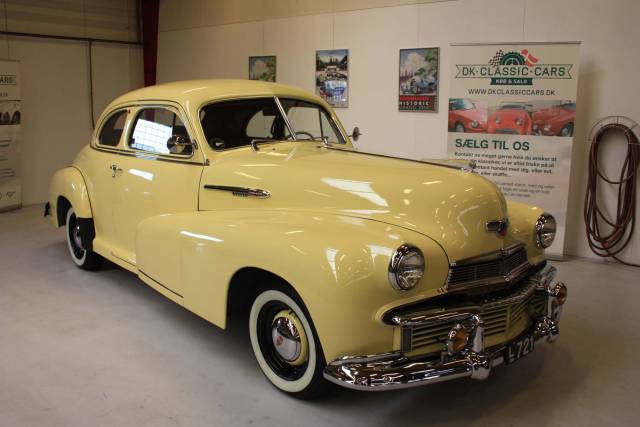
1942 | Oldsmobile 68 Club Coupe

Create search alert
Let yourself be notified as soon as a listing is published that matches your search filters.
Create listing
Do you have a Oldsmobile 60 that you want to sell? Then create a listing now.
Create listingOldsmobile 60 Classic Cars: Prices & Market Values
History of the Oldsmobile 60
The Oldsmobile 60 debuted in 1939 as part of the brand’s F-Series. It marked Oldsmobile’s commitment to practicality and durability, being released as an affordable base model and extended in 1940 to longer wheelbases and more body styles, including a 4-door station wagon targeting families and travellers. The first series featured a 3.5-litre (3523 cc) inline-six engine delivering 90 hp and introduced advanced features for its time, such as a semi-automatic gearbox.
Postwar, after a production hiatus imposed by World War II, the model re-emerged as the Special 60 (1946–1948). Now with a 3.8-litre (3769 cc) straight-six delivering 95 hp and bodywork shared between GM brands, it embodied Oldsmobile's approach to comfortable, accessible motoring. Production continued until 1948 before shifting focus to new postwar designs.
Model History
The Oldsmobile 60 succeeded earlier F-Series Oldsmobiles, occupying the brand’s entry-level slot. Its first iteration (1939–1941) had a 115-inch wheelbase, expanding to 119 inches after the war. Early on, the 60 line-up featured the Business Coupé, Coupé Club, two-door sedan, and four-door sedan. Station wagons, known as 'Woodies', joined the range from 1940. In later years, enhanced drivetrains included both a 6-cylinder (3.9-litre, 100 hp) and, in some cases, a straight-eight (4.2-litre, 110 hp), plus the newly introduced Hydramatic automatic transmission. Production transitioned to the successor 66 and 68 series during WWII, with the 60 badge reappearing from 1946 to 1948.
Highlights of the Oldsmobile 60
Standout features of the Oldsmobile 60 include shared componentry with sister brands Chevrolet and Pontiac, making sourcing some parts easier. The 1940s models offered not only manual but also GM's Hydramatic automatic transmission—a cutting-edge option at the time. The 'Woodie' station wagon model with real timber construction appealed to large families and enthusiasts. The range always included both standard and deluxe trims, with upgraded interior protection and comfort evident through padded seatbacks and improved safety.
Technical data
Special Editions and Collectible Models
Among the most notable and collectible variants are the station wagon 'Woodies', recognised for their elaborate real-wood exterior panels and the capacity to carry up to eight passengers. Deluxe trim models feature more luxurious materials and additional options compared to the standard specification.
Engine and Performance, Transmission and Handling
Prewar Oldsmobile 60 models were competent cruisers, powered by robust inline-six engines with smooth torque delivery, handled through either manual or semi-automatic gearboxes. Postwar variants improved torque and reliability, especially those fitted with the 3.9-litre six or the optional eight-cylinder. The introduction of the Hydramatic made everyday driving more accessible, particularly for the station wagon’s heavier body. With a focus on comfort, long-distance capability was enhanced by a compliant suspension setup and improved interior ergonomics. Notably, the 1940 4-door station wagon stood out for practicality, while 1946–1948 Hydramatic-equipped cars demonstrated the brand’s technological leadership in postwar America.
Interior, Comfort, Exterior and Design
Designers prioritized passenger comfort, evident in the deeply padded seats and rounded, safe seatback profiles. The extended wheelbase post-1941 provided generous interior space, especially in the Club Coupé (six seats) and station wagon (eight seats). The Woodie wagon is distinctive for its wood-and-steel contrast, while deluxe trims offered more sophisticated materials and paint finishes. Accessories included optional radios and deluxe interior features, while manual and automatic gearboxes reflected customer choice in driving experience. Colour palettes incorporated both conservative and period-appropriate hues.
Summary
The Oldsmobile 60’s multi-era production run saw it embody practicality, durability, and technological progression in the American mid-market segment. Its achievement lies in the wide model range, evolution in drivetrain technology, and clever sharing of components with other GM brands. Even among Oldsmobile classics today, the 60 stands alone in current market supply and demand listings, attesting to its singular place in North American automotive heritage.