Nissan S30 Classic Cars for Sale
The Nissan S30, known globally as the Fairlady Z and Datsun 240Z, 260Z, and 280Z, earned a reputation as a sports coupé with advanced engineering and distinctive Japanese design in the 1970s. As a two-seater or 2+2 GT, its straight-six engines and agile chassis set new standards for performance and aesthetics in its segment.
Search results
Currently, there are no matching listings for your search.
Create search alert
Let yourself be notified as soon as a listing is published that matches your search filters.
Create listing
Do you have a Nissan S30 that you want to sell? Then create a listing now.
Create listingNissan S30 listing references from Classic Trader
Below you will find listings related to your search that are no longer available on Classic Trader. Use this information to gain insight into availability, value trends, and current pricing for a "Nissan S30" to make a more informed purchasing decision.
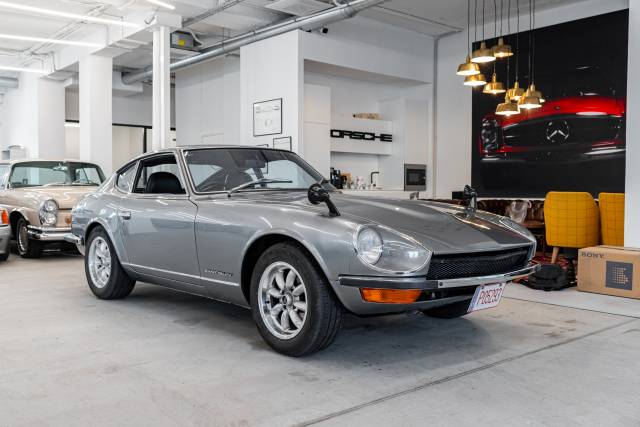
1972 | Nissan S30
JDM Nissan Fairlady Z - fully restored
Create search alert
Let yourself be notified as soon as a listing is published that matches your search filters.
Create listing
Do you have a Nissan S30 that you want to sell? Then create a listing now.
Create listingNissan S30 Classic Cars: Prices & Market Values
History of the Nissan S30
Born from Nissan’s ambition to break into the global sports car market, the S30 was crafted under the leadership of Yoshihiko Matsuo and visionary Yutaka Katayama. Released in Japan in 1969 as the Fairlady Z and internationally as the Datsun 240Z from 1970, the car was built to challenge European and American rivals with a combination of reliability, style, and performance. The S30’s genesis can be traced to Nissan’s foray into motorsport in the late 1950s, with its spiritual predecessor, the Fairlady roadster, evolving into a platform for technological advancement throughout the 1960s. The S30 capitalised on this heritage, becoming an international hit due to its lightweight construction, sophisticated independent suspension, and powerful inline-six engines.
Model History: From 240Z to 280Z
The S30 series debuted with the Datsun 240Z (model code S30) in 1969, equipped with the L24 2.4-litre engine linked to a four-speed manual gearbox, producing 127 mph top speed and 0–60 mph in 8 seconds. In mid-1971, Series II brought exterior and interior updates. By 1973, emission controls and a smaller carburettor were introduced. The 260Z replaced the 240Z with increased displacement, followed by the 280Z for North America, further enhancing performance and comfort. The S30 set the blueprint for Nissan’s Z models and is recognised for its racing pedigree, including SCCA and IMSA wins as well as overall victory in the 1973 East African Safari Rally.
Model Highlights and Market Standing
• Straight-six engines ranging from 2.0L (Fairlady Z) to 2.8L (280Z) • Chassis developed for sharp handling: MacPherson strut front suspension, Chapman strut rear • Features such as 5-speed manual transmission (select models), vented discs, and chrome trim • Factory-equipped with unique JDM accessories—eg. fender mirrors, special front grille, triple chrome bumpers • Interior options range from factory wood steering wheels to leather upholstery and dashboard finishes • High adaptability for modern classic enthusiasts: sports suspension upgrades (Koni), stainless exhaust systems, aluminium radiator upgrades
Technical Data
Special Editions and Collectible Models
The S30 series includes several sought-after versions, such as:
• Fairlady Z432 (Japan-only): Fitted with the S20 2.0L DOHC engine, distinctive by its performance and limited numbers. • 240Z Series I (early production): Noted for production quirks, rear hatch vents, unique badging, and details that are prized by purists. • 280Z Black Pearl Edition: A limited paint and trim package for the North American market, valued for its rarity and visual presence.
Japanese Domestic Market (JDM) variants occasionally feature fender mirrors, special grilles, and exclusive trim.
Weak Spots and Common Issues
The S30 is praised for its robust mechanicals, yet potential buyers should check for corrosion in the chassis, especially around the sills, floor pans, rear hatch, and wheel wells. Suspension bushings and rubber mounts often require refreshing, but modern replacements and upgrades (polyurethane, Koni dampers) fit easily. Carburettor models need attentive tuning, especially with contemporary fuels. Chrome bumpers and trims may show pitting; genuine replacements and restoration parts are available. Ensure brake systems—calipers, master cylinders—are in good order, as while these parts are serviceable, rebuilds may be necessary on unrestored cars. Replacement glass and rubber seals are readily available.
Engine and Performance, Transmission and Handling
The S30’s driving dynamics emerged from its combination of rev-happy inline-six engines, lightweight body, and well-balanced suspension. With power outputs up to 2.8L and smooth-shifting manual gearboxes (five-speed in later models), acceleration was competitive for its era (0–60 mph in 8 seconds for the 240Z). Independent suspension and low kerb weight yielded direct steering and predictable cornering. Many owners upgrade with Koni shocks and sport springs for improved handling balance without sacrificing comfort. Disc brakes in front (ventilated on some models) and available rear discs provide strong stopping power. • Datsun 240Z S30 – 2.4-litre, 4-speed manual, the original sports coupé blueprint • Datsun 260Z S30 – 2.6-litre, improved comfort, minor updates • Datsun 280Z S30 – 2.8-litre with fuel injection, sold primarily in the US with refined ride and emissions systems
Interior, Comfort, Exterior and Design
Styled by Nissan’s Sports Car Studio under Yoshihiko Matsuo, the S30 stands out for its long bonnet, truncated tail, and swept-back cabin. Finishes included metallic paint (eg. Gun Metal Grey), stainless steel and chrome trim, and original JDM features like fender mirrors and special front grilles. Interiors ranged from basic vinyl to custom leather, with factory wood-rim steering wheels and optional armrest/dash pad upgrades. Accessories include triple chrome bumpers, vented rear hatch panels on early models, and period-correct alloys. Restoration specialists and aftermarket suppliers provide alternatives for upholstery, headliners, and trim. Door and glass seals, plush carpeting, and optional luxury touches ensure comfort remains part of the package, even decades later.
Other Features
Modern updates to S30s often include aluminium radiators, stainless or sports exhaust manifolds, and larger aftermarket wheels. Replacement parts such as windshields, gaskets, and upgraded lighting (for improved nighttime visibility) are easy to source. Advanced brake upgrades (vented rotors, robust calipers) and uprated suspensions find favour with owners wanting to balance originality and usability.
Summary
The Nissan S30 encapsulates a distinctive era in motoring with its sharp design, responsive powertrains, and enduring engineering integrity. With robust support for spare parts, accessible modifications, and a thriving enthusiast community, the Datsun 240Z and its S30 siblings continue to stand as defining sports cars from Japan’s golden age.