- Car
- Mosler (0 offers)
Buy Mosler Classic Cars
Mosler cars are among the most uncompromising American specials ever built: ultra-light, low-volume and brutally fast. From the early Consulier GTP to the MT900S and race-bred MT900R, these are collector cars for buyers who value engineering edge over badge polish.
Search results
Currently, there are no matching listings for your search.
Create search alert
Let yourself be notified as soon as a listing is published that matches your search filters.
Mosler listing references from Classic Trader
Below you will find listings related to your search that are no longer available on Classic Trader. Use this information to gain insight into availability, value trends, and current pricing for a "Mosler" to make a more informed purchasing decision.
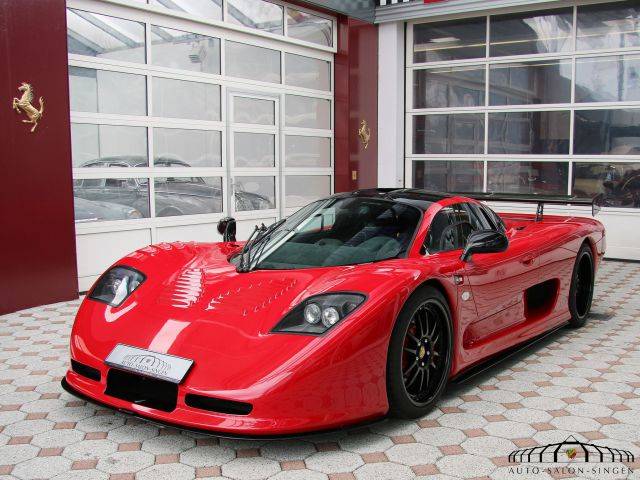
2006 | Mosler MT 900 GTR

Create search alert
Let yourself be notified as soon as a listing is published that matches your search filters.
History
Mosler Automotive began in 1985 as Consulier Industries, founded in Florida by Warren Mosler. That origin story already tells you a lot about the brand: Mosler did not grow out of a large car company, a racing dynasty or a luxury group. It came from a mindset that treated weight, drag and wasted complexity as problems to be engineered away. The result was a line of cars that became famous not because they were conventional, but because they were so clearly built to a different rulebook.
The first car to carry the concept was the Consulier GTP, launched in 1988. Built in very small numbers, it paired a carbon-and-Kevlar monocoque with a 2.2-litre turbocharged four-cylinder and a curb mass of around one tonne. In period, that combination looked almost absurd: modest displacement, modest interior comforts, but genuinely serious performance. The GTP is now remembered as one of the earliest American road cars to use advanced composite construction in such a radical way, and as one of the clearest signs that Mosler was aiming at lap times rather than boulevard theatre.
By the early 1990s the company changed name to Mosler Automotive and moved into a more overt performance identity. The Mosler Intruder followed with a Corvette-based LT1 V8, while the Mosler Raptor pushed the formula further and developed the brand’s reputation for making cars that were fast enough to upset the established order. These early models were still tiny-volume specials, but they established the Mosler recipe: a lightweight chassis, a proven GM V8 where appropriate, and a design philosophy that gave priority to function.
The most important chapter arrived with the MT900 in 2001. Designed by Rod Trenne — the stylist behind the Chevrolet Corvette C5 — it was a true clean-sheet supercar and not merely an evolution of earlier cars. The MT900 brought Mosler to a much wider audience because it combined exotic styling, a carbon-based structure and serious power with a surprisingly logical technical layout. In 2005, the MT900S sharpened the package further with more power, better aero and a sub-1,000 kg kerb weight. For many collectors, this is the signature Mosler: the car that distilled the brand’s ideas into a road-going machine with genuine world-class pace.
Race variants kept the brand visible well beyond its road-car output. The MT900R and related competition versions gave Mosler a sharp motorsport profile, and the company’s assets were later sold to Rossion Automotive in 2013. In total, Mosler built only around 35 road cars and roughly 50 race cars, which is why every surviving example feels like a piece of specialist industrial history rather than a mass-produced collectible.
Highlights
Mosler’s appeal begins with its refusal to do things the easy way. Every important model in the range reflects the same core belief: if you can remove mass, improve packaging and keep the structure honest, performance improves everywhere else. That is why Moslers feel so different from mainstream American sports cars and even from many European exotics.
The Consulier GTP stands out as the brand’s founding statement. Its carbon-Kevlar construction was highly unusual for the era, and its low weight allowed a relatively small turbo four to deliver real speed. Today, collectors value the GTP not just for rarity, but because it marks the point where Mosler proved that high-end performance did not need a giant V8 to be taken seriously.
The Intruder and Raptor broadened the formula. They used familiar American V8 muscle, but in a body and chassis package that remained far removed from the average Corvette or Camaro. That contrast is central to Mosler ownership: the engines may be recognisable, yet the overall experience is much more like a hand-built prototype.
The MT900 and MT900S are the models most Australian buyers will chase first. They have the strongest blend of road legality, exotic presence and genuine usable performance. The MT900S in particular became famous for explosive acceleration, superb braking and a kerb weight that undercut many far pricier supercars. In collector terms, it is the car that makes Mosler more than a curiosity.
The MT900R is the hard-edged competition derivative and a key talking point for the Australian market because the platform also appeared in local motorsport. That racing link matters: it shows that Mosler was not merely creating lightweight showpieces, but cars with enough development to win in serious GT competition.
Technical Data
The chassis philosophy stayed consistent across the range: low weight, serious stiffness and a strong preference for proven GM power where the model demanded V8 torque. The MT900/MT900S family used a carbon-based monocoque with front and rear subframes, double wishbone suspension and high-performance brakes. For buyers, that means the structure is advanced, but the mechanical heart remains relatively understandable compared with many low-volume exotics.
On paper the figures still impress. The MT900S, despite being a handmade specialist car, could run with established supercars of its day on power-to-weight alone. The Photon takes the idea to an extreme, showing how far Mosler was willing to go when the brief was to chase lap time rather than comfort or practicality.
Market Overview
For Australian buyers, Mosler is a niche within a niche. Supply is tiny, brand awareness is strong among enthusiasts but limited in the broader market, and every car tends to be bought on specification, history and presentation rather than on simple model recognition. That scarcity supports values, but it also means the market can be uneven: one well-documented car may attract serious interest, while another with patchy paperwork can sit for a long time.
Recent international auction results help define the landscape. Consulier GTP cars have generally traded around US$28,000–55,000, depending on condition and originality. That makes the earliest Mosler models the most accessible entry point, though they are still specialist purchases requiring careful inspection and proper import planning.
The MT900S is the headline car for collectors and tends to sit in a much higher bracket. Recent results have ranged from about US$150,000 to US$294,000, with a BaT sale in November 2022 reaching US$294,000, a Bonhams sale in April 2023 achieving £166,750, and a January 2026 BaT auction drawing a US$256,500 bid without meeting reserve. In Australian dollars, that places strong examples broadly in the A$230,000 to A$450,000+ zone before local costs.
The practical Australian issue is that most Moslers are left-hand drive. Buyers need to factor in whether they will accept LHD, or whether they want to pursue compliance and conversion. Under the SEVS (Specialist and Enthusiast Vehicle Scheme) pathway, some cars may be eligible for import and registration, but the process is not automatic and costs can be significant. Add compliance engineering, transport, registration, and possible conversion work, and the final landed price can move materially above the overseas purchase price.
That said, Australian interest is real because the brand has a local motorsport connection. The MT900R GT3 competed in the Australian GT Championship, which gives the marque a useful local anchor and helps buyers understand that Mosler is not just an internet-age oddity. For the right enthusiast, that link adds credibility and makes the car easier to appreciate within Australia’s track-day and historic racing culture.
Buyers in Australia should focus on three groups:
- Collectors who want rarity, provenance and a conversation-starting addition to a specialist garage.
- Track-day owners who are attracted to the low weight and modular engineering.
- Display-oriented buyers who simply want a car that few people in Australia will ever see twice.
Because the pool is so small, condition and paperwork matter more than mileage alone. Service records, import documents, chassis identification and evidence of professional care will do a lot to support value.
Driving Feel
Driving a Mosler is less about luxury and more about sensation. Even the road cars feel concentrated, purposeful and slightly impatient, as if they are permanently waiting for the next corner or braking point. The lighter models deliver that feeling most intensely, but it runs through the whole family.
The Consulier GTP has a raw, early-special charm. The turbo four gives it a different character from the later V8 cars: less theatrical at idle, less muscle-car noise, but still immediate because the weight is so low. On a twisty road it would feel alive and mechanical, with responses that are quicker than the modest output figure suggests. That contrast between spec sheet and actual pace is a large part of its appeal.
The Intruder and Raptor feel more aggressive and more traditional in engine character, yet still distinctly Mosler in the way they deliver their performance. The V8 gives them more shove and a stronger sense of authority, but the lightweight chassis keeps the experience sharp rather than blunt. These are not cruisers; they are cars that make even short drives feel eventful.
The MT900 is where the brand becomes properly supercar-like. It sits low, the controls feel focused, and the drivetrain responds with real urgency. What makes it special is not only acceleration, but the sense that the chassis is always doing just enough and no more. The steering, brakes and suspension work together to make the car feel smaller, lighter and more alert than many rivals.
The MT900S is the most complete expression of that idea. It combines big V8 torque with a chassis that seems to disappear underneath the driver. On the road, that can feel almost uncanny: gentle inputs produce immediate results, and the car’s composure builds confidence quickly. On a circuit, it becomes obvious why Mosler has such a loyal following among people who value lap time over badge cachet.
For Australian conditions, there is a practical side to the driving experience too. Local buyers should think about road width, speed humps, compliance requirements and the realities of servicing a left-hand-drive exotic. But as a driving machine, Mosler offers a purity that is hard to find at any price: low mass, strong visibility of the engineering, and very little fluff.
Design
Mosler design evolved from raw purposefulness to something more refined, but it never lost its technical honesty. The early cars look like they were drawn around the chassis brief first and the styling brief second. That is not a criticism; it is exactly what makes them memorable.
The Consulier GTP is visually challenging in the best possible way. Its surfaces are low, tight and almost prototype-like, with a stance that telegraphs performance more than elegance. The shape has none of the corporate polish of a mainstream coupe, yet it communicates speed and lightness immediately. For collectors, that early uncompromising look is part of the historical charm.
The Intruder and Raptor are more developed and more obviously road-focused, but they still retain that specialist-built feel. They are the kinds of cars that make sense when you know what you are looking at, and that makes them appealing to buyers who prefer function-led design over ornament.
With the MT900, Rod Trenne brought greater visual discipline. Trenne’s background at Chevrolet meant he understood how to give a performance car proportions that would read as coherent rather than experimental. The MT900’s low nose, broad haunches and purposeful aero surfaces give it a cleaner and more confident presence than the earlier Moslers. It looks like a proper supercar, but one that has been engineered from the inside out.
The MT900S refines that formula further. It is still aggressive, but the bodywork feels more resolved, with a stronger sense of integration between form and function. On some cars, extreme aero can look bolted on; on the MT900S it feels like part of the original plan. The Photon takes the lightweight theme further still, making the car appear even more technical and competition-led.
Inside, the cars are typically minimal. That is consistent with the brand’s mission: the cabin supports the driving task rather than competing with it. Buyers expecting a handcrafted grand tourer will be disappointed. Buyers expecting a focused engineering object will be very happy.
Motorsport
Mosler’s motorsport record is one of the reasons the brand has lasting collector relevance. Success on track validated the road-car concept and gave the cars a racing identity that few small manufacturers can claim.
The most important result is the 2003 Daytona GTS class win, which helped prove that the MT900R platform was more than a lightweight novelty. In the same period, Mosler cars also achieved major success in the British GT Championship, where the team of Tom Herridge and Rollcentre Racing secured the 2003 title. That result is particularly important because it showed the car could be developed into a championship-winning package against established opposition.
Mosler also built a strong reputation in other series such as Belcar, and the competition versions were frequently discussed alongside the most serious GT machinery of their time. For collectors, this matters because motorsport heritage supports the car’s story and helps explain why the design choices were so extreme.
For Australian buyers, the local racing link is the standout. The MT900R GT3 competed in the Australian GT Championship, giving Mosler a direct connection to the local scene. That association adds relevance for buyers who follow Australian motorsport and makes the brand easier to place within the country’s performance-car culture.
Motorsport also reinforces one of Mosler’s biggest selling points: the cars were built with competition logic, not just showroom theatre. The aero, structure and weight targets were all shaped by real racing needs. That is why a Mosler can still feel fresh today even though the brand’s production run was tiny.
Summary
Mosler is a collector brand for buyers who want something rare, technically interesting and genuinely different from the usual supercar names. The range runs from the pioneering Consulier GTP to the sharper MT900S and the hard-edged MT900R, but all Moslers share the same DNA: light weight, strong engineering discipline and a refusal to waste performance on excess mass.
For Australian enthusiasts, the brand has extra appeal because of its Australian GT Championship link and because the cars sit outside the ordinary market. At the same time, buyers must be realistic: most Moslers are LHD, and import, compliance and conversion costs can be substantial. The SEVS pathway may help with eligible examples, but it still demands proper planning, documentation and budgeting.
If you are looking to Buy a Mosler in Australia, focus on provenance, import status, original specification and specialist maintenance history. The best cars are the ones with clear paperwork and honest presentation, because rarity alone is not enough when every example is effectively a one-off transaction. For those who want an ultra-light American special with real motorsport credibility, Mosler remains one of the most compelling names to Find on the market.
Discover now the current Offers & Prices for Mosler classic cars on Classic Trader.