Mazda 110 Classic Cars for Sale
The Mazda 110, internationally known as the Cosmo Sport 110S, represents a milestone of Japanese automotive engineering. As the world’s first Mazda model with a rotary engine, this rare two-seater coupé from the late 1960s offers an unmistakable blend of innovative technology and classic design flair.
Search results
Currently, there are no matching listings for your search.
Create search alert
Let yourself be notified as soon as a listing is published that matches your search filters.
Create listing
Do you have a Mazda 110 that you want to sell? Then create a listing now.
Create listingMazda 110 listing references from Classic Trader
Below you will find listings related to your search that are no longer available on Classic Trader. Use this information to gain insight into availability, value trends, and current pricing for a "Mazda 110" to make a more informed purchasing decision.
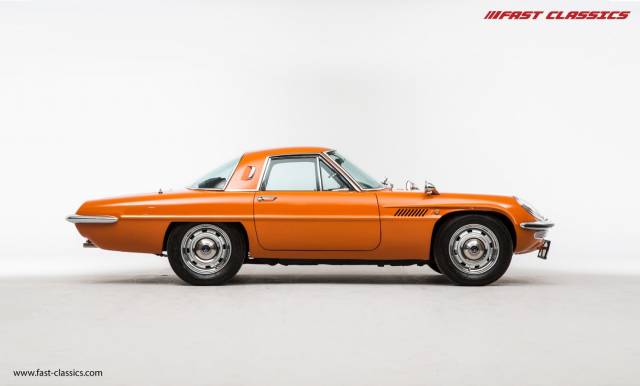
1968 | Mazda 110 S Cosmo Sport

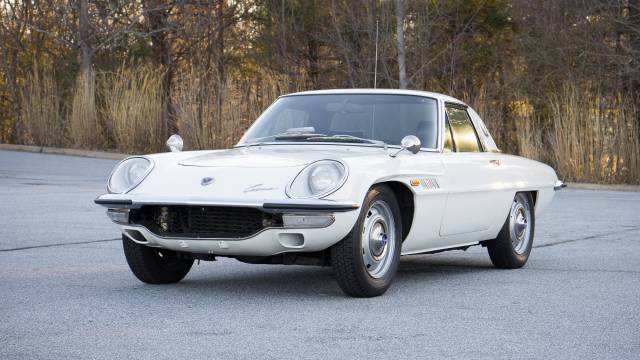
1970 | Mazda 110 S Cosmo Sport
Cosmo Sport L10B
Create search alert
Let yourself be notified as soon as a listing is published that matches your search filters.
Create listing
Do you have a Mazda 110 that you want to sell? Then create a listing now.
Create listingMazda 110 Classic Cars: Prices & Market Values
History of the Mazda 110 / Cosmo Sport 110S
In 1967, Mazda introduced the 110—known outside Japan as the Cosmo Sport 110S—as the brand’s pioneering rotary-engined sports coupé. Built in Hiroshima by Mazda Motor Corporation, which had begun producing passenger vehicles in 1960, the 110 was the first series production model worldwide to use the revolutionary Wankel engine. Mazda acquired the rights to this technology from NSU, setting new technical benchmarks and marking a bold step in Japanese car manufacturing history. The Cosmo Sport was positioned as Mazda’s flagship, reflecting both ambition and engineering prowess during a pivotal era. Its production ran until 1972, building just 1,519 units across two main series.
Model History
Production of the Mazda 110 began with the L10A (1967–1968), a short-wheelbase coupé equipped with a 982 cc, two-rotor rotary engine delivering 110 hp and a top speed of 185 km/h. Only 343 units of this early version were built. In July 1968, the updated L10B succeeded it, featuring a longer wheelbase, a power bump to 128 hp, and a slightly higher top speed of 193 km/h. The L10B comprised 1,176 of the total 1,519 units. Production ceased in 1972, with no direct successor in the Mazda portfolio, but the Cosmo laid the groundwork for future rotary-powered models.
Highlights of the Mazda 110
The Mazda 110, or Cosmo Sport 110S, stands out as Mazda’s inaugural rotary-powered vehicle and a trailblazer in sports coupé engineering. Its rarity is underlined by the very limited production numbers (1,519 in total), with the earliest L10A series being particularly sought after due to low build quantities. Notable features included a sophisticated 4-speed manual transmission, lightweight construction at 940 kg, and high speeds for its time. Factory-original accessories, such as the toolkit and instruction manual, add further allure for dedicated enthusiasts.
Technical Data
Special Editions and Collectible Models
The rare L10A (first series, 1967–1968) is especially prized due to its short production run of just 343 units. Vehicles fitted with original accessories—such as the Mazda-branded toolset, manuals, and keychains—are considered especially collectable by marque specialists. The L10B, while more numerous, also commands strong interest among collectors, particularly well-preserved or comprehensively documented examples.
Weak Spots and Common Issues
No specific weak spots or technical issues have been documented in the sources provided. Nonetheless, as with all Wankel-powered vehicles, attention should be paid to the rotary engine’s apex seals and overall sealing, as well as the availability of original replacement parts, given the car’s low production volume.
Engine and Performance, Transmission and Handling
The Mazda 110 was powered by a pioneering two-rotor Wankel engine, offering either 110 hp (L10A) or 128 hp (L10B). Thanks to a curb weight of just 940 kg, even the earlier variant achieved 185 km/h. The 4-speed manual gearbox, rear-wheel drive layout, and compact coupé chassis contributed to agile handling and responsive steering. The longer wheelbase of the L10B improved stability at high speeds and delivered greater comfort for prolonged drives. - Mazda 110 L10A (1967–1968): 110 PS, 185 km/h, rare (343 built)
- Mazda 110 L10B (1968–1972): 128 PS, 193 km/h, longer wheelbase (1,176 built)
Interior, Comfort, Exterior and Design
The Cosmo Sport 110S featured an elegant coupé silhouette, compact proportions, and a streamlined body with distinctive details. The interior typically sported a classic black finish, enhanced by high-quality materials and attention to ergonomic driver placement. Typical body colour was cream, with limited-edition hues for special markets. Equipment highlights included comprehensive analog gauges, signature front grille, and chrome-finished accents. Original special equipment such as branded toolkits, documentation, and accessories are rare finds today and highly valued. The combination of futuristic engineering with refined 1960s styling cues set a high standard for Japanese sports cars.
Other Relevant Features
Some Cosmo Sport 110S models have featured in classic car exhibitions, oldtimer rallies, and museums, underlining the historic importance of Mazda’s early rotary engineering. Well-documented vehicles with complete original accessories (manuals, toolkits, etc.) are particularly sought after among knowledgeable collectors.
Summary
The Mazda 110, known as the Cosmo Sport 110S, remains an important milestone in both Mazda’s and Japan’s automotive history. Its rotary engine, limited production, and distinctive styling continue to fascinate enthusiasts. Original condition and factory accessories markedly increase a model’s desirability in today’s classic car market.