- Car
- Lamborghini
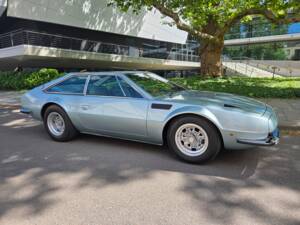
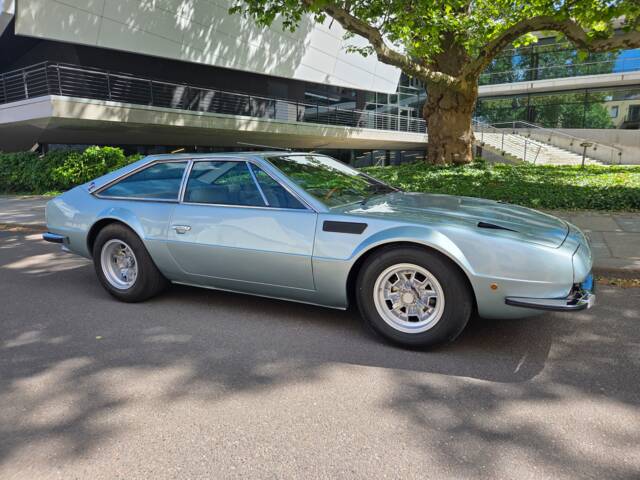
- Lamborghini Jarama (1 offer)
Lamborghini Jarama – Buy Classic Cars
The Lamborghini Jarama offered a striking alternative in the field of high-powered grand tourers between 1970 and 1976. Its technical layout, remarkable Bertone design, front-mounted V12 and practical 2+2 seating concept make it a highlight for collectors who appreciate sophisticated Italian engineering beyond well-trodden paths.
Search results
VAT is reclaimable

Lamborghini Jarama listing references from Classic Trader
Below you will find listings related to your search that are no longer available on Classic Trader. Use this information to gain insight into availability, value trends, and current pricing for a "Lamborghini Jarama" to make a more informed purchasing decision.
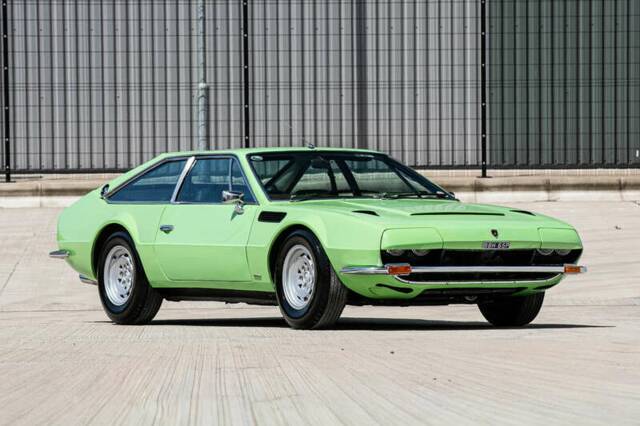
1973 | Lamborghini Jarama 400 GT S
1973 Lamborghini Jarama S - One of 18

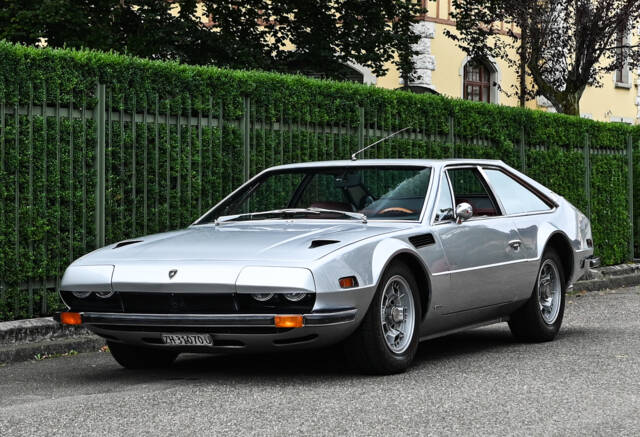
1972 | Lamborghini Jarama 400 GT
1 von 188, sehr seltenes und originales Fahrzeug

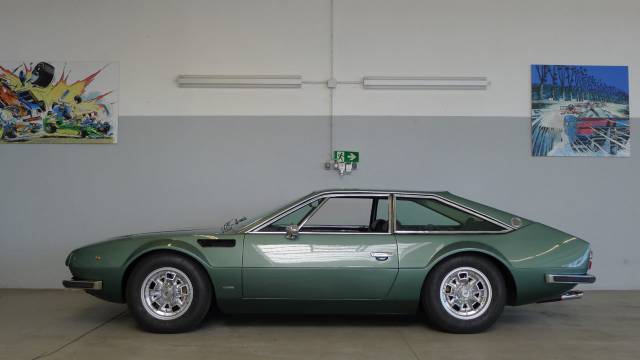
1971 | Lamborghini Jarama 400 GT
Bestzustand, driver´s choice
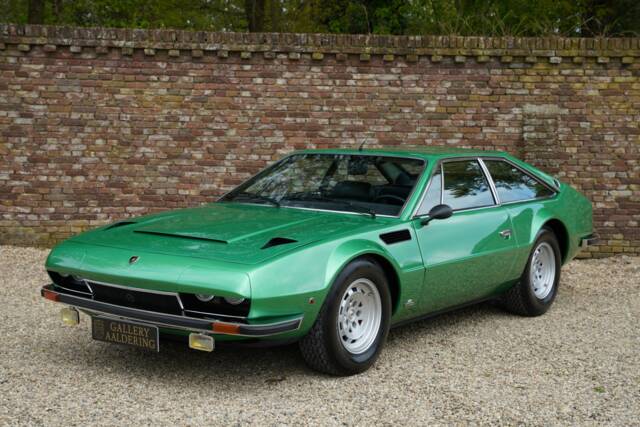
1972 | Lamborghini Jarama 400 GT S
Lamborghini Jarama S Coupe One of only 150 (GT)S models, Presented in green metallic “Antille Verde” with black hide, In the possession of the last owner for more than 2 decades, Technically completely overhauled with an upgraded braking and cooling system, Original "S" version from factory

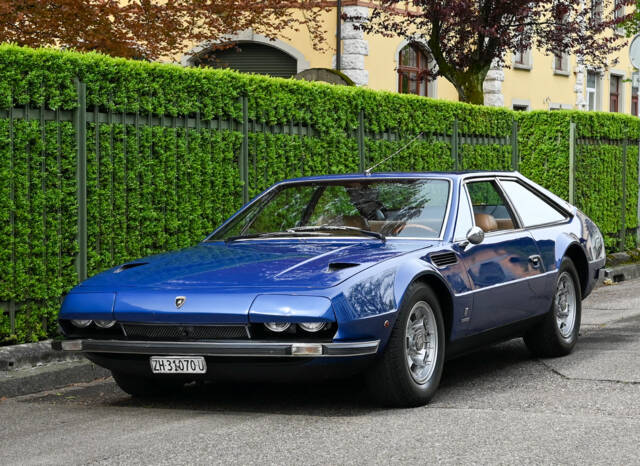
1971 | Lamborghini Jarama 400 GT
Seltenes originales Fahrzeug aus 48 Jahren Besitz, 1 von 177 Exemplaren
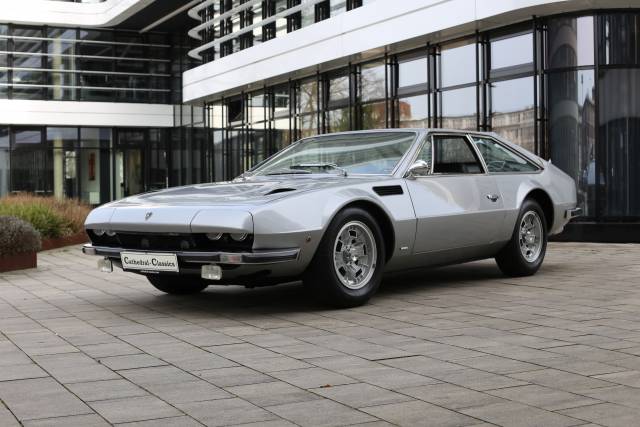
1971 | Lamborghini Jarama 400 GT
Ex Swiss / Now German registered - Lamborghini Jarama GT 400 - Series 1
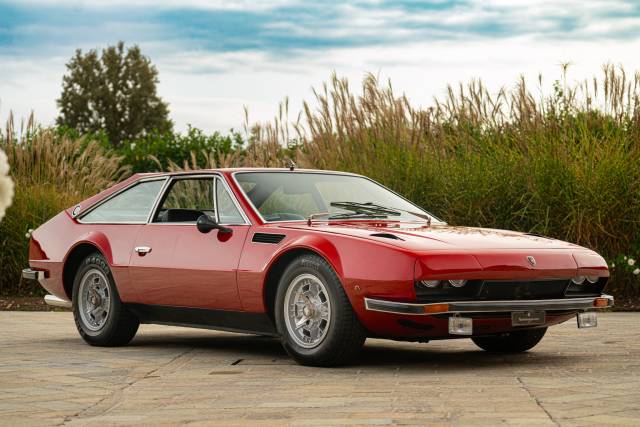
1971 | Lamborghini Jarama 400 GT
<p>PRESENTE PAD. 26 - FIERA BOLOGNA - 26-29 OTTOBRE</p>

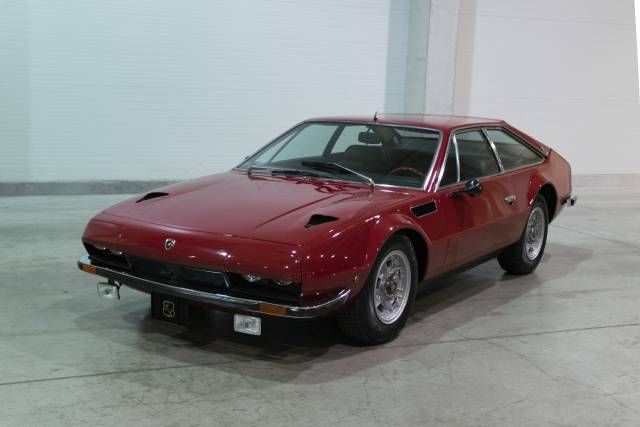
1971 | Lamborghini Jarama 400 GT
Certificate of historic vehicle * Registration of historic vehicle
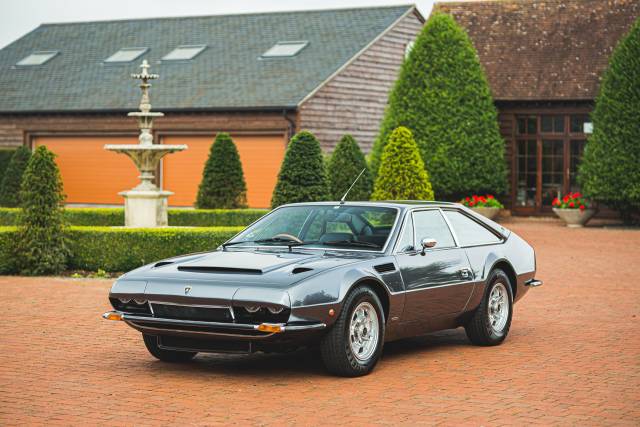
1974 | Lamborghini Jarama 400 GT S
Matching numbers and benefitting from a comprehensive restoration
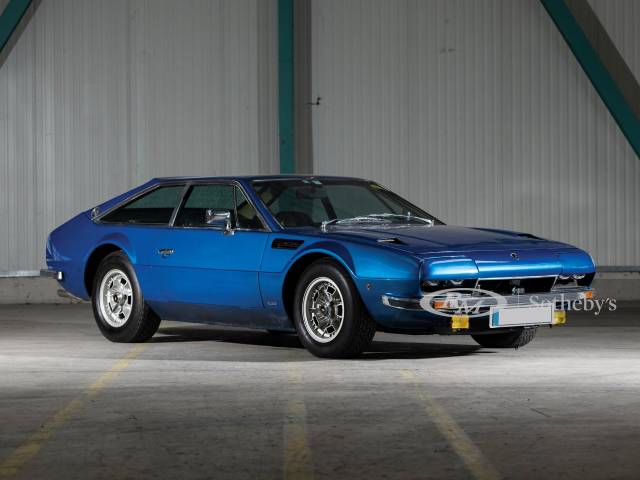
1971 | Lamborghini Jarama 400 GT
Online Only: The European Sale featuring the Petitjean Collection
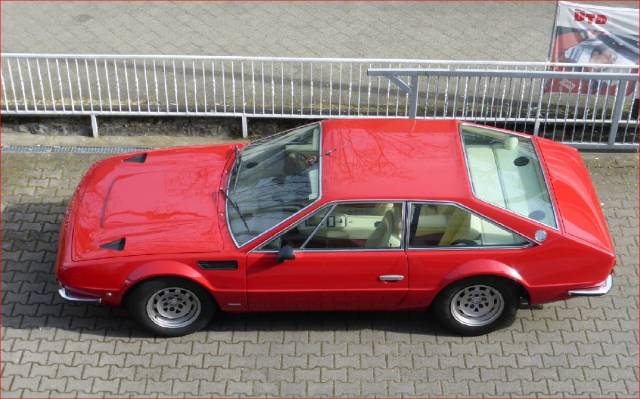
1973 | Lamborghini Jarama 400 GT S
Rare RHD
Lamborghini Jarama Classic Cars: Prices & Market Values
History of the Lamborghini Jarama
Launched in 1970 as the successor to the Islero, the Lamborghini Jarama represented Lamborghini’s approach to combine the driving dynamics of the Miura with the refinement and comfort of the Espada, offering a genuine grand tourer for four. After the relative market hesitation with the Islero, Ferruccio Lamborghini personally prioritised the Jarama project, resulting in an entirely new body by Marcello Gandini, famed designer at Bertone, and a robust, updated chassis. The unique blend of luxury and daily usability led to features such as a large boot, lavish interior appointments, and a driving position enabling good all-around visibility. The car took its name from the Jarama region in Spain, renowned for bull breeding. The Jarama also holds historical significance as the last front-engined Lamborghini under Ferruccio Lamborghini’s direction.
Model History
The Jarama follows the Lamborghini Islero and fills the space between the sporting Miura and the more spacious Espada. Built from 1970 to 1976, production totalled 328 units: 176 Jarama 400 GT (Series 1) and around 150 Jarama 400 GTS (Series 2), along with an estimated two dozen right-hand drive examples. The early Jarama GTs were produced only in the first two years, while the 1973 facelift introduced the Jarama GTS with improved equipment, power steering, and subtle design changes. Production ended in 1976 with no direct successor, closing the chapter on Lamborghini’s classic front-engined GT lineage.
Highlights and Features
The Jarama is visually defined by Gandini’s sharp-edged bodywork, prominent NACA ducts on the bonnet and pop-up ‘eyelid’ headlamps. Inside, luxury features include a leather interior, extensive use of wood in the dashboard and steering wheel, and comprehensive instrumentation. Technical highlights are the all-aluminium 3.9-litre V12 (originally from the Espada), five-speed manual gearbox, rear-wheel drive, high-performance disc brakes and, in later models, power steering for improved manoeuvrability. The combination of extravagant design, innovative engineering and everyday usability makes the Jarama unlike any other Lamborghini.
Technical Data
Special Editions and Collectible Models
Most notable is the one-off Jarama Sport (also referred to as Jarama Rally), built by engineer and test driver Bob Wallace. This unique car was equipped with a lighter chassis, a tuned 3.9-litre V12 developing 380 PS, and was capable of 0–100 km/h in 5 seconds and a top speed of 270 km/h. Despite being designed for motorsport, this special version never officially raced.
Weak Spots and Common Issues
Jarama owners and potential buyers should inspect the state of the steel bodywork, paying attention to early signs of corrosion, especially around the sills and wheel arches. The complex V12 and its six Weber carburettors require regular, precise tuning for optimal performance, and spare parts may be challenging to source. Suspension bushings and electrical systems, particularly the pop-up headlight mechanism, benefit from periodic inspection due to age-related wear. Given the low production numbers, some replacement components might be difficult to find, increasing long-term maintenance costs.
Engine, Transmission and Handling
The front-mounted V12 ensures the Jarama delivers ample power and a unique character distinct from later, mid-engined Lamborghinis. The Jarama GT achieves 0–100 km/h in 6.9 seconds with a maximum speed of 250 km/h, while the GTS enhances this with minor improvements and standard power steering for better handling. The chassis, with a shortened wheelbase from the Espada, gives the car precise cornering compared to its larger sibling. The five-speed manual transmission is renowned for its mechanical directness. Weight distribution leans towards stable, predictable GT behaviour rather than raw sports car extremes. Jarama 400 GT: 3.9L V12, 350 PS, manual gearbox, produced '70–'72. Jarama 400 GTS (S): 3.9L V12, 365 PS, improved interior, power steering, produced '72–'76.
Interior, Comfort, Exterior and Design
Gandini’s styling signature is evident in the Jarama’s wedge-shaped, angular body, contrasting with the flowing lines of earlier Lamborghinis. Wide glass surfaces provide bright, panoramic visibility. While most bodies were finished in classic shades, some cars left the factory in rare tones (e.g. deep green, metallic red, or silver). The interiors typically blend Connolly leather in a range of hues, from black/red combos to light beige, with original wooden dashboard inlays, a wooden gear knob, and, optionally, an 8-track stereo system. Air conditioning and power windows were standard, unusual for the era. Some cars left the line with Miura alloy wheels or unique accessories, further underlining the Jarama’s blend of exclusivity and functionality.
Other Relevant Features
Early US-compliant models featured emission control adaptations, making the Jarama among the first Lamborghinis designed with North American regulations in mind. Original toolkits and comprehensive service manuals are often prized extras. The model’s rarity is reflected not only in low production numbers but also in its diverse interior and accessory combinations.
Summary
The Lamborghini Jarama stands out as a refined, powerful grand tourer combining Italian design flair, engineering sophistication and a usability rarely matched among its peers. Limited production, combined with a unique design and heritage as Ferruccio Lamborghini's personal preference, make it a distinctive entry in the brand’s 1970s line-up—a true alternative for enthusiasts seeking a less commonplace, front-engined twelve-cylinder experience.