Lada Samara Classic Cars for Sale
The Lada Samara, produced from 1984 to 2013, marked a milestone as the first Russian-built front-wheel drive car and was widely appreciated for its affordability and low maintenance costs. With models ranging from practical hatchbacks to rare cabriolets and rally editions, the Samara combined functional Soviet engineering with touches of Western design input, making it a distinctive and utilitarian classic.
Résultats de la recherche
À l'heure actuelle, il n'y a pas d'annonces correspondant à votre recherche.
Create search alert
Let yourself be notified as soon as a listing is published that matches your search filters.
Create listing
Do you have a Lada Samara that you want to sell? Then create a listing now.
Create listingLada Samara listing references from Classic Trader
Below you will find listings related to your search that are no longer available on Classic Trader. Use this information to gain insight into availability, value trends, and current pricing for a "Lada Samara" to make a more informed purchasing decision.
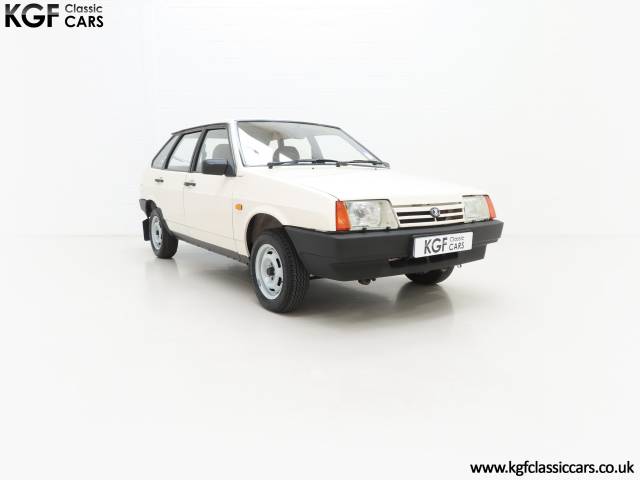
1996 | Lada Samara
An Incredible Lada Samara 1.3S with a Miniscule 366 Miles from New!
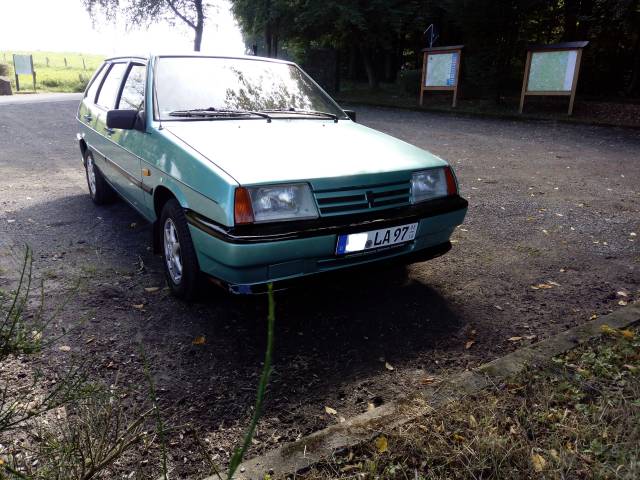
1997 | Lada Samara Baltic GL
Traumhafter Sammlerzustand (Deutschland-/Europaweit kein Vergleichsexemplar)

1991 | Lada Samara
Samara GL
Create search alert
Let yourself be notified as soon as a listing is published that matches your search filters.
Create listing
Do you have a Lada Samara that you want to sell? Then create a listing now.
Create listingLada Samara Classic Cars: Prices & Market Values
History of the Lada Samara
The Lada Samara emerged in 1984 as a compact family car produced by AvtoVAZ in Togliatti, neighbouring the city of Samara, to which the model owes its name. As the first front-wheel drive model from Russia, the Samara marked a technological leap from the Lada Zhiguli and demonstrated AvtoVAZ’s intent to modernise. Its development was influenced by collaborations with Porsche Engineering, and it was engineered to meet export demands with design variations for different markets. The Samara was built in two generations: the initial 1984-2004 series as hatchback and saloon, followed by a second generation launched in 1997, which overlapped in production until 2013. The car established itself as a practical and robust choice amid Europe's automotive landscape.
Model History
The Samara replaced the long-running Lada Zhiguli and set the stage for modern Russian cars. Initially rolling out as a three-door hatchback, the range expanded to include five-door and saloon variants, culminating in the introduction of the second generation with a more angular notchback design in 1997. The Samara remained in production alongside the updated VAZ 21099 (saloon) and was ultimately succeeded by the Lada 110 series and later the Lada Granta. Across the production span, Samara variants included not just standard family models but also motorsport and export-focused editions.
Highlights and Features
The Lada Samara featured notable engineering for its class and time: developed with Porsche Engineering support, it came equipped with a robust chassis, front-wheel drive, five-speed manual transmission, and engines ranging from 1.1 to 1.6 litres with outputs between 40 and 66 kW. Safety and convenience features often included halogen headlamps, heated rear windows, interior enhancements such as full folding rear seats, and practical details like noise insulation and anti-reflective inner door panels. The range also boasted rare rally-bred models like the Samara T3 with Porsche engine, and all-wheel drive rally specials.
Statistically, the supply and demand relate exclusively to one manufacturer code: 100% of Samara listings come under VAZ 2109. The popularity, as measured in both supply and demand, shows Samara enjoying absolute representation among listed classic Ladas, reinforcing its specialist status.
Technical Data
Special Editions and Collectible Models
Several unique Samara versions stand out, such as the 1987 Samara EVA 16 with a turbocharged 1.8L engine, and the Samara 4x4, created for the 1985 Sojus Rally. The Samara T3 rally model is especially noteworthy, housing a Porsche motor and reaching speeds of up to 220 km/h. Besides these, German company Karmann developed a convertible variant based on the Samara platform, unavailable in standard factory production.
Engine, Transmission, and Handling
The Samara's drivetrain setup—front-wheel drive with robust four-cylinder petrol engines—was a significant step forward for Lada. The 1.3L version with ~53 PS offered reasonable acceleration (0–100 km/h in roughly 15.4 seconds) and a top speed of around 148 km/h. The five-speed gearbox provided a practical spread of ratios for both urban driving and motorway cruising. Models built for rallies, such as those with 1.5L or tuned engines, delivered enhanced power and modified suspension setups for motorsport use. Standard vehicles were recognised for predictable handling, uncomplicated maintenance, and robust mechanical architecture. - Lada Samara 1.3S: 1288cc, twin-choke carburetter, ~53 PS.
- Lada Samara T3: Porsche engine, up to 220 km/h, rally-focused.
- Samara 4x4: Designed for Sojus Rally, all-wheel drive.
Interior, Exterior, and Design
Stylistically, the Samara is distinguished by functional, angular Soviet-era lines and offered in both hatchback and saloon forms. While basic in appearance, attention to utility is evident in extensive cabin stowage, full-folding rear seats, and details like laminated windscreens and halogen lighting. Special factory and aftermarket variants, like the Karmann Cabriolet, introduced open-top fun to the range. Standard trim included practical cloth upholstery, straightforward dashboards, and a radio console. Original accessories often comprised Rosava 165/70 R13 tyres, steel wheels, and complete tool and document kits.
Other Features
Factory specification often included a heated rear window, adjustable front seats, manual or heated door mirrors, and enhanced soundproofing. Export models could be provided as right- or left-hand drive to suit international markets. Many well-preserved examples also retain original documentation and service manuals.
Summary
The Lada Samara stands as a hallmark of accessible Soviet engineering, merging purposeful design, mechanical simplicity, and even a dash of motorsport flair thanks to unique special variants. Its blend of affordability, unique market presence, technical robustness, and rare but fascinating special editions makes it an intriguing option for classic car enthusiasts seeking a departure from mainstream European offerings.