Hudson 33 Classic Cars for Sale
The Hudson 33 stands as a symbol of early American automotive ambition. Produced from 1911, this model embodied the success and sporty image of the Hudson brand in the Brass Era, especially with the sought-after "Mile a Minute Roundabout" roadster. Explore unique engineering, vibrant presence, and scarce availability with this milestone in motoring history.
Search results
Currently, there are no matching listings for your search.
Create search alert
Let yourself be notified as soon as a listing is published that matches your search filters.
Create listing
Do you have a Hudson 33 that you want to sell? Then create a listing now.
Create listingHudson 33 listing references from Classic Trader
Below you will find listings related to your search that are no longer available on Classic Trader. Use this information to gain insight into availability, value trends, and current pricing for a "Hudson 33" to make a more informed purchasing decision.
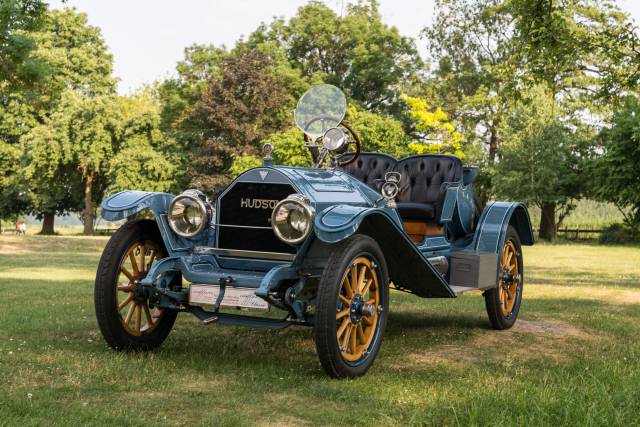
1912 | Hudson 33 'Mile-a-Minute'
THE road racing car for playboys and rich industrialists

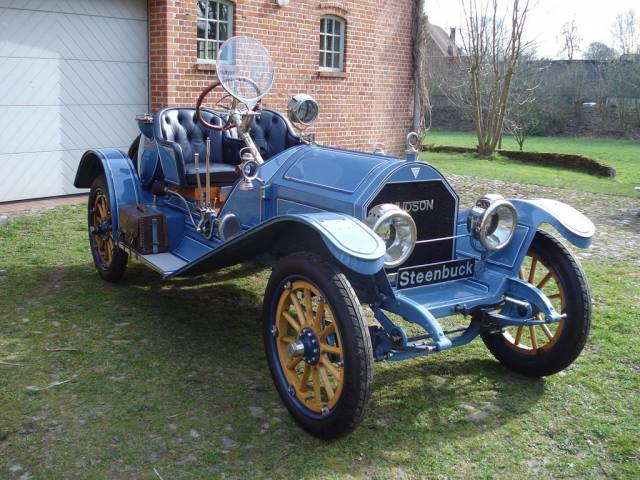
1912 | Hudson 33 'Mile-a-Minute'
Lovingly restored Brass Era car
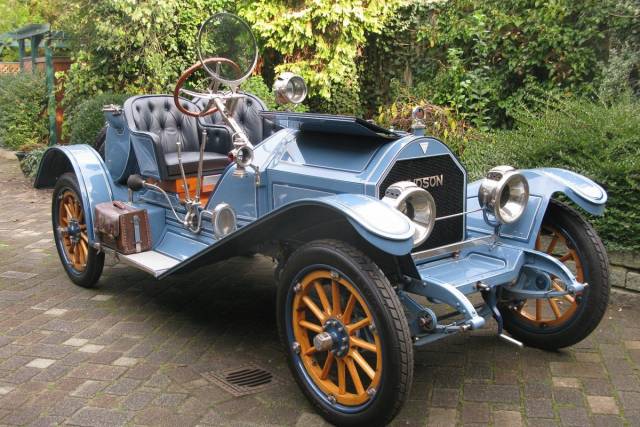
1912 | Hudson 33 'Mile-a-Minute'
Hudson Mile-a-Minute raceabout Roadster
Create search alert
Let yourself be notified as soon as a listing is published that matches your search filters.
Create listing
Do you have a Hudson 33 that you want to sell? Then create a listing now.
Create listingHudson 33 Classic Cars: Prices & Market Values
History of the Hudson 33
Founded in 1909, the Hudson Motor Car Company quickly gained a foothold in the booming US car market. Alongside competitors like REO, Oakland, and Mercer, Hudson became synonymous with quality, reliability, and a vividly sporty orientation. From 1911 onward, the focus shifted entirely to the Hudson 33, a move that cemented the model's standing among early 20th-century American classics. The exclusive dedication to the 33 not only refined Hudson's technical direction but also set it apart in an era rich with automotive innovation.
Model Evolution: Hudson 33
With the Hudson 33, the company condensed its lineup to underline performance and visual impact. There was no direct predecessor within the brand, as prior Hudsons were less focused on outright motoring performance. After the run of the 33, Hudson evolved its cars toward higher-powered and more luxurious offerings, aligning with the fast pace of the American market. However, none of the immediate successors captured the same purist, brass-era character as the 33.
Highlights and Marketplace Data
A true hallmark of the Brass Era, the Hudson 33 is immediately distinguished by its "Mile a Minute Roundabout" variant—one of the most strikingly executed US sports cars of its time. The 33 was engineered for speed and reliability, contributing to the Hudson brand's stellar reputation. Bodywork and mechanicals reflect the innovation of the early 1910s, with robust construction and advanced for-the-time features like conical brakes and a capable four-cylinder engine.
Technical Data
Special Editions and Collectible Models
The standout variant of the Hudson 33 was the "Mile a Minute Roundabout": a sports-focused roadster marketed on its ability to reach (and indeed, sustain) 60 mph—a remarkable feat circa 1911. This edition featured a lighter, open bodywork configuration and minimal design, emphasising speed as well as agility. Few were built, making authentic examples tremendously valuable for period-correct restoration or collection.
Weak Spots and Common Issues
Contemporary records and sources do not detail frequent problems typical to the Hudson 33, but as with most Brass Era cars, prospective buyers should be vigilant about the condition of engine internals (especially lubrication systems), transmission wear, and integrity of the wood-framed coachwork. The sourcing of correct parts is challenging, requiring patience, specialist knowledge, and connections within veteran car circles.
Engine, Performance and Driving Dynamics
The four-cylinder engine of the Hudson 33 stood out for its reliable torque delivery and responsiveness, making it a formidable performer among its peers. The car’s light, open construction in its "Mile a Minute" guise ensured brisk acceleration, particularly for an era dominated by heavier touring sedans. Transmission was fully manual, requiring skillful operation, and braking came via drum setups which, while advanced for their time, demand anticipation when driving today. The "Mile a Minute Roundabout" is the highlight among available Hudson 33 versions, valued for its minimal bodywork and direct connection to early motoring sport. Other open and touring body variations of the 33 offer a glimpse into the diversity of early 1910s American automotive tastes.
Design: Exterior, Interior, Trim and Accessories
The visual impression of the Hudson 33 is shaped by its Brass Era architecture—large-diameter spoked wheels, extensive brass fittings, and signature Hudson radiator. Interiors were spartan and functional, usually trimmed in leather with simple yet elegant dials and controls. The open-bodied Roundabout versions emphasised a direct, wind-in-your-face driving experience. Accessories such as leather bonnet straps, detachable windshields, and acetylene lamps were typical period features. Colour schemes tended toward deep, glossy lacquers with contrasting brass accents.
Other Noteworthy Details
Due to their rarity, Hudson 33s frequently feature in historic motoring rallies and vintage concours events. Specialist clubs in the US and Europe can offer practical advice and sourcing assistance, further underlining the model’s cult status among early brass car aficionados.
Summary
The Hudson 33 encapsulates a formative era in the US automobile industry, blending technical progress with a distinctive sporting flavour. Its "Mile a Minute Roundabout" variant especially stands out for its performance focus and period aesthetics. Demand in the market reflects rarity and enthusiasm among a niche of pre-war car collectors. For those seeking a Brass Era showpiece with proven heritage, the Hudson 33 remains a compelling proposition.