- Car
- Hotzenblitz (0 offers)
Buy Hotzenblitz classic cars
The Hotzenblitz is one of the rarest early electric cars you can buy: a tiny German EV built in roughly 140-150 examples between 1993 and 1996. For Australian buyers, the appeal lies in its mix of historic importance, microcar charm and the sheer improbability of finding one already landed, registered and usable.
Search results
Currently, there are no matching listings for your search.
Create search alert
Let yourself be notified as soon as a listing is published that matches your search filters.
Create listing
Do you have a Hotzenblitz that you want to sell? Then create a listing now.
Create listingHotzenblitz listing references from Classic Trader
Below you will find listings related to your search that are no longer available on Classic Trader. Use this information to gain insight into availability, value trends, and current pricing for a "Hotzenblitz" to make a more informed purchasing decision.
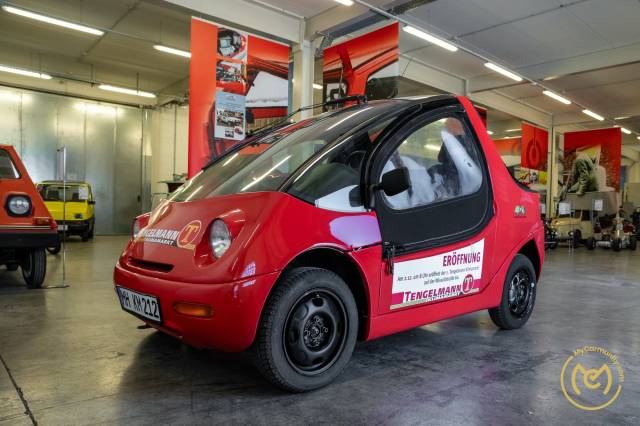
1995 | Hotzenblitz Buggy
Rarität, 1. Hand, Promi Vorbesitz, geringe Laufleistung, Originalzustand

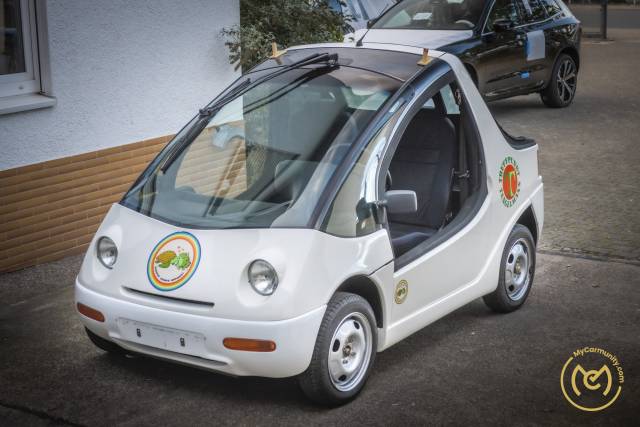
1995 | Hotzenblitz Buggy
Nr 25 von insg. 150 Stk, 1. Hand, einmalige Historie, Ausstellungsstück
Create search alert
Let yourself be notified as soon as a listing is published that matches your search filters.
Create listing
Do you have a Hotzenblitz that you want to sell? Then create a listing now.
Create listingHistory
The Hotzenblitz belongs to a part of motoring history that now looks far more important than it did when new. Developed in Ibach, in Germany’s Hotzenwald region, and built in Suhl from 1993 to 1996, it was not a converted small hatchback or a fleet prototype adapted from a petrol car. It was conceived from the outset as a battery-electric microcar, with its own layout, packaging priorities and visual language. That alone gives it a different status from many early EV curiosities.
The project began around 1989, led by Thomas Albiez and a small engineering team chasing a lightweight, clean, urban vehicle at a time when mainstream manufacturers were still treating battery-electric mobility as a sideline experiment. Contemporary and later sources broadly agree on the key architecture: a tubular steel frame, an aluminium sandwich floor and battery tray, plastic body panels, a compact footprint, and a mission centred on town use rather than autobahn pace. In period, it was genuinely unusual. Seen from today, it looks startlingly prescient.
Its historical claim is strong. The Hotzenblitz is widely described as the first passenger car in the Federal Republic of Germany to be developed, series-produced and sold exclusively as an electric vehicle. That distinction matters because it separates the car from test-bed conversions and one-off research exercises. For collectors, it means the Hotzenblitz is not merely odd; it is one of the earliest credible ancestors of the modern European city EV.
Production volume is central to the car’s identity. Most sources put total output at about 140 to 150 cars, and even that tiny number hides considerable variation. The open Buggy version is the best known and appears to have formed the bulk of production. The more enclosed City is much rarer, using fixed doors, a more complete roof arrangement and, on some examples, a small rear bench or emergency-seat layout. Buyers should not expect neat, major-model generations. This is a low-volume car where build phase, body details and later modifications can matter more than badge or year.
The body story adds another layer. Early Hotzenblitze used hand-laminated GRP bodywork, while later cars moved towards ABS plastic panels in an effort to reduce production cost and make the car easier to industrialise. That industrialisation never really happened. The company ran out of funding before it could make the leap from ingenious low-volume build to stable series production, and the original programme ended in 1996.
Yet the Hotzenblitz did not vanish. It remained alive through owners, small engineering outfits and enthusiasts who saw promise in the platform. Some surviving cars kept their original lead-gel battery systems; others were upgraded to NiCd, NiMH, Li-ion or LiFePO4 chemistry. The platform also supported later experiments such as the DLR Hylite fuel-cell hybrid concept and the Swiss Kruspan conversion, which pushed the car far beyond original range figures. For a modern collector, that afterlife is part of the market. One Hotzenblitz may be a delicate historical artefact; another may be a usable, sympathetically updated EV with much improved real-world practicality.
Highlights
Why does the Hotzenblitz matter to an Australian buyer? Not because of prestige in the usual sense. It has no Le Mans pedigree, no big collector brand halo and no broad domestic dealer history in this market. Its appeal comes from a different set of strengths.
First, it is genuinely scarce. With only around 140-150 cars built, supply is tiny anywhere in the world. In Australia the rarity becomes even sharper because there was no meaningful local delivery programme, no known mainstream Australian-delivered RHD stock and no established owner pipeline. Most Australian buyers will be looking at a European car and doing the hard import thinking themselves.
Second, it is a car that was ahead of its time in concept. The Hotzenblitz put battery mass low in the chassis, used a lightweight structure, focused on urban mobility and relied on single-speed simplicity rather than trying to mimic the feel of a conventional small petrol car. Today that sounds normal. In the early 1990s it was bold.
Third, the car sits at the overlap of two collector niches that have real traction in Australia: microcars and early electric vehicles. Australia may be better known internationally for big Holdens, V8 Falcons and endurance-racing legends, but local enthusiasts have long appreciated small oddities, kei imports and engineering dead ends. The Hotzenblitz speaks directly to that audience. It is tiny, unusual and historically important, but it is also practical enough in the right context to be more than a static museum piece.
Fourth, the Hotzenblitz offers an unusually clear choice between purity and useability. A near-original car with factory-style batteries, period display logic and untouched charging hardware has real documentary value. A well-engineered lithium-converted car is far easier to justify in Australia, where distances are longer, summer heat matters and finding a specialist who understands old lead-gel EV systems may be difficult. The “best” car therefore depends on whether you want a showpiece, a talking-point driver, or a technical preservation project.
Fifth, the Hotzenblitz has enormous conversation value. Park it at an Australian cars-and-coffee morning, a microcar gathering or an EV event and it will attract attention not because people know what it is, but because they do not. It looks like a missing chapter between 1950s micro-mobility and the later wave of premium electric city cars. That makes it particularly attractive for collectors who value story as much as hardware.
Technical Data
Exact specifications vary with body style, build phase and later battery conversions, but the broadly accepted factory data is consistent enough to help serious buyers frame a listing correctly.
Key technical points often cited across authoritative summaries:
- Length: about 2,750 mm
- Width: about 1,480 mm
- Height: about 1,500 mm
- Wheelbase: about 2,050 mm
- Structure: tubular steel frame with aluminium floor / battery tray
- Body: early GRP, later ABS plastic on some cars
- Brakes: front discs, rear drums, plus regenerative braking effect
- Charging: on-board charger around 2 kW
- Charging time: roughly 5-7 hours in original form
- Consumption: around 10-15 kWh/100 km in period descriptions
- Acceleration: some sources quote 0-60 km/h in 5.8 seconds
- Original list price: around DM 32,000 for the basic Buggy and up to DM 54,000 for a better-equipped City
The numbers only tell half the story. For any car now on the market, the crucial technical question is not “what did Hotzenblitz publish in 1994?” but “what exactly is fitted today?” Battery chemistry, charger compatibility, BMS strategy, inverter condition, instrumentation, cooling and fuse protection matter more than the brochure spec. On a Hotzenblitz, the electrical installation is the car.
Market Overview & Buying Tips
The Hotzenblitz market is thin in Europe and thinner still for Australia. There is no domestic pricing curve to lean on, almost no local dealer history, and very little public sold-data from 2024-2026. That forces Australian buyers to work from scattered European references and then add the reality of shipping, biosecurity, approval and state registration.
The main public reference points are modest but useful. Classic Trader currently shows no active Hotzenblitz listings, though its archive references include a 1995 Buggy shown at €1,000 several years ago and another car at price on request. A Classic Driver / MyCarmunity auction listing for a 1995 Hotzenblitz Buggy carried an estimate of €5,000-€15,000 in late 2023. The EV specialist site emission-zero, updated in May 2026, suggests a general used range of €5,000-€15,000. A FirstEV listing from February 2026 offered a running 1993 Hotzenblitz at €16,000. That is not enough data to create a reliable market average, but it does suggest a broad pattern: low-dollar cars are usually projects, while complete and operating cars now sit in meaningful five-figure territory in euro terms.
For an Australian buyer, the landed number matters far more than the European ask. Government guidance is clear that you must obtain an import approval before shipping a road vehicle into Australia. Under the Road Vehicle Standards framework, vehicles 25 years old or older can usually be considered under the concessional older-vehicle pathway, with approval handled through ROVER and entry onto the Register of Approved Vehicles (RAV). That is encouraging for a Hotzenblitz, because every surviving example is now comfortably over the 25-year threshold.
But import approval is only the first gate. Australian guidance also makes clear that approval to import does not automatically guarantee registration in your state or territory. State rules matter, especially for a rare left-hand-drive EV with later battery modifications. Victoria allows LHD vehicles 30 years or older to obtain full registration if they meet the relevant standards, while LHD cars 25 years or older can access club permit pathways in some cases. South Australia’s conditional registration scheme likewise covers historic and left-hand-drive vehicles 25 years and older, but use is limited and club membership is central. NSW historic registration rules are more restrictive on originality and age. In short: an Australian buyer should not buy a Hotzenblitz first and ask questions later. Check the exact registration path in your state before committing.
Biosecurity is another Australian reality. Government guidance and state registration sheets stress that imported vehicles must clear quarantine / biosecurity inspection, and any car with dirt, plant matter or underbody contamination can incur delay and cleaning cost. That matters for old microcars because they often have awkward cavities, exposed suspension points and years of accumulated debris. A rare EV arriving dirty can become an expensive lesson.
Then there is the steering issue. Nearly every Hotzenblitz will be left-hand drive, and there is effectively no mainstream Australian-delivered RHD base to compare it with. On a tiny car with a panoramic cabin this is less awkward than on a big GT, but it still narrows the resale pool. Buyers in Australia, especially outside enthusiast circles, are accustomed to RHD. If your intention is short-term resale, a Hotzenblitz is not the smart pick. If you want a collection piece with tiny supply and a strong story, LHD becomes part of its authenticity rather than a defect.
What should you inspect before buying?
1. Structure and corrosion
Do not be fooled by the plastic body. The risk sits in the steel frame, suspension pick-up points, battery tray and hidden structural sections. A car can look amusingly fresh outside and still be ugly underneath. Ask for underside photos and, ideally, a lift inspection.
2. Battery chemistry and heat reality
Australia’s climate changes the battery conversation. Original lead-gel setups are historically correct but can be fragile, heavy and deeply inconvenient. A professionally documented lithium conversion may be far more sensible for actual use, but only if it is safe, well-engineered and properly declared.
3. Charger and electrical documentation
On a rare imported EV, missing wiring diagrams and undocumented electrical changes can be more serious than paintwork flaws. Ask for invoices, manuals, fuse layouts, charger specifications and any engineering documentation.
4. Import and registration file
You want the original foreign registration papers, proof of age, bill of sale, import approval trail, any engineering sign-off, and clarity around the VIN or chassis number. Without documents, the car can become a permanently stored object.
5. Intended use
In Australia the smartest ownership model may be club registration, show use, local event driving and short weekend runs, not daily commuting. Buy accordingly.
There is one more market perspective worth noting. Australia has shown a real appetite for premium small EVs and unusual urban electric vehicles, even when they are clearly niche products. That does not make the Hotzenblitz directly comparable to a modern boutique EV, but it does suggest there is a collector audience willing to pay for character and rarity, not just range.
Driving Experience
The Hotzenblitz does not drive like a normal classic and it certainly does not drive like a modern EV. That is its charm. It feels light, curious, immediate and slightly experimental, as if you are driving a solved prototype that somehow escaped into public sale.
The first impression is openness. The cabin is airy, the glass area generous, and the body so short that the car seems almost toy-sized on today’s roads. Yet it does not feel like a flimsy toy. Because the battery mass sits low and the structure is more serious than the shape first suggests, the Hotzenblitz has a planted quality at sensible speeds. Period descriptions repeatedly note the benefit of its low centre of gravity, and that makes sense the moment you look at the layout.
In Buggy form the car is especially appealing. The simple roof, transparent side sections and upright cabin give it something of a beach car, cabin scooter and micro-roadster all at once. It is not fast in absolute terms, but it is alert. Around town, the instantaneous response of the electric drivetrain makes the modest power feel more vivid than the figures imply.
Australian buyers do, however, need disciplined expectations. Distances are longer, heat can be severe, and many roads encourage speeds that simply do not suit a 1990s electric microcar. This is not a vehicle for freeway commuting between outer suburbs or for long country runs between towns. The Hotzenblitz is best treated as a short-range occasion car: ideal for club events, local coffee runs, museum outings, curated collection use and short scenic drives where the point is the machine rather than the destination.
That sort of use suits the car beautifully. A Hotzenblitz is enjoyable because it makes you drive differently. You think about state of charge, hills, weather and route choice. You hear electrical whirr rather than exhaust note. You feel the small size in every lane. For some people that sounds like a chore. For the right collector it is exactly the point.
Design
The Hotzenblitz looks like an attempt to invent a visual language for the electric city car before anyone agreed what that language should be. It is neither retro nor conventionally pretty. It is compact, glazed, geometric and optimistic.
Its most memorable feature is the canopy-like greenhouse. One participant later compared the look to a helicopter cockpit, and that feels apt. The screen is large, the overhangs are short, and the body prioritises visibility and packaging over decorative flourish. The result is unusual but honest. Nothing about the car suggests that stylists were pretending it had a combustion engine hidden somewhere under a long bonnet.
The Buggy is the purer expression of the idea. It feels almost recreational, even though it was conceived as a practical commuter. The City is more enclosed and easier to imagine as an everyday runabout, but the Buggy is visually stronger and much more likely to stop seasoned collectors in their tracks.
Material choice also matters. Early GRP bodies underline the low-volume, hand-built feel of the project. Later ABS panel cars tell a different story: the effort to turn a handmade electric curiosity into something manufacturable. Both are collectible, but they carry different meanings. One speaks of experimentation. The other speaks of an unrealised ambition to scale up.
For Australian collectors used to valuing originality, coachbuilt oddity and small-run engineering, the Hotzenblitz has genuine aesthetic depth. It is not merely cute. It is one of those rare designs where you can still see the problem the engineers were trying to solve.
Other: Australian Ownership Reality
Owning a Hotzenblitz in Australia is as much about logistics as romance. The hardest part may not be buying the car at all, but choosing the right pathway afterwards.
The first ownership reality is state-by-state registration complexity. A Hotzenblitz can fit Australian rules because it is old enough, rare enough and light enough, but that does not mean every state will treat every car identically. Left-hand drive, battery modifications and evidence of compliance all matter. You need to know whether you want full registration, club permit, or purely display use.
The second is parts and support. Mechanical wear items may be manageable. The true difficulty lies in body-specific trim, original display systems, roof hardware, zip doors, rare electronic modules and the details of old EV charging hardware. If you buy the car, buy the documentation, spare parts and owner network with it.
The third is collector positioning. In Australia the Hotzenblitz will not appeal to everyone who likes unusual classics. Its buyer is more likely to be someone interested in microcars, EV history, industrial design, alternative mobility or museum-grade oddities. That niche status limits liquidity, but it can strengthen value inside the right enthusiast circle.
The fourth is distance discipline. This is perhaps the biggest practical difference between Australia and Europe. Even a well-sorted Hotzenblitz exists for short hops, local meets and curiosity value, not for the longer ranges Australian owners often take for granted. That is not a flaw if you buy the car for what it is.
Summary
To buy a Hotzenblitz in Australia is to buy a very specific kind of collectible: a 1993-1996 German electric microcar, built in around 140-150 examples, most famously in Buggy form, and historically important because it was designed as an EV from the beginning rather than converted later.
For Australian buyers, the appeal combines extreme rarity, serious early-EV significance and a shape that feels halfway between microcar experiment and future-transport concept. The caution points are equally clear. The public market is tiny, left-hand drive is normal, price evidence is thin, and import logistics matter almost as much as the vehicle itself. You need to think about ROVER/RAV approval, biosecurity, state registration rules, engineering documentation and the practical consequences of battery modifications.
If you find a car with sound structure, proper papers and a coherent battery story, the Hotzenblitz makes excellent sense as a specialist Australian collection piece. Very few vehicles let you tell the story of 1990s European electric ambition with such clarity and such charm. That is why the best Hotzenblitz examples are not just curiosities. They are important survivors.