Hanomag Autobahn classic cars for sale
The Hanomag Autobahn 1.3 Liter stands out among German pre-war compact saloons, designed for reliable autobahn travel and remarkable engineering advances like its OHV engine and streamlined steel body. Its unique technical details, combined with a distinct silhouette and scarce surviving examples, make it one of the more distinctive classic saloons of its era.
Search results
Currently, there are no matching listings for your search.
Create search alert
Let yourself be notified as soon as a listing is published that matches your search filters.
Create listing
Do you have a Hanomag Autobahn that you want to sell? Then create a listing now.
Create listingHanomag Autobahn listing references from Classic Trader
Below you will find listings related to your search that are no longer available on Classic Trader. Use this information to gain insight into availability, value trends, and current pricing for a "Hanomag Autobahn" to make a more informed purchasing decision.
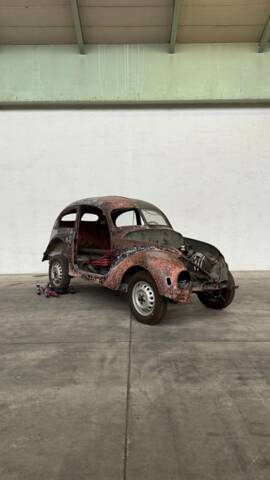
1939 | Hanomag 1.3 Litre Autobahn

Create search alert
Let yourself be notified as soon as a listing is published that matches your search filters.
Create listing
Do you have a Hanomag Autobahn that you want to sell? Then create a listing now.
Create listingHanomag Autobahn Classic Cars: Prices & Market Values
History of the Hanomag Autobahn
Hanomag, originally founded in 1871 as Hannoversche Maschinenbau AG, developed the Hanomag 1.3 Liter during the late 1930s, unveiling the model in spring 1939 as a lower-medium class saloon. The model was also referred to as the 'Autobahn' due to its suitability for fast, long-distance motoring. The 1.3 Liter Autobahn took over from the previous Garant and Kurier models, incorporating a host of modernisations which set new standards in Hanomag’s range. A production run of 9,187 units between 1939 and 1941 was abruptly halted by World War II, and postwar shortages made a direct continuation impossible. In a rare footnote, attempts to revive the concept in the early 1950s in West Germany did not reach series production due to economic obstacles and a lack of tooling, which had ended up in the Soviet-occupied zone after the war.
Model history
The Hanomag Autobahn directly succeeded the Garant and Kurier lines, continuing Hanomag's tradition of practical saloons but with profound technical advancements. Its successor was supposed to be the Hanomag Partner, intended for release in 1951, but due to missing press tools after the war and supply issues, the Partner never reached series production. Thus, the 1.3 Liter Autobahn remains the terminal prewar Hanomag passenger car production model.
Highlights
A technically innovative saloon for its day, the Hanomag Autobahn featured a 1.3-litre, fully throttle-resistant OHV four-cylinder engine and a full-synchromesh 4-speed gearbox, highly advanced for the lower mid-range segment in pre-war Germany. Distinctive for its aerodynamic all-steel monocoque and the unusual rear styling, which earned it the nickname 'Stahlhelm' ('steel helmet'), the Autobahn combined comfort features like a hydraulically operated boot lid and central lubrication.
Technical data
Special Editions and Collectible Models
No specific limited or special editions of the Hanomag Autobahn are documented. All production models were two-door saloons, most recognisable by their streamlined steel bodies and distinctively proportioned front and rear. Variations between models are generally limited to minor trim or detail changes across such a short production span.
Weak Spots and Common Issues
No model-specific weak spots or common faults are known from current sources, but as with many pre-war German cars, body rust and mechanical wear due to age and limited parts availability are potential concerns. Unique aspects to note are the complexity of the pedal-operated central lubrication system and the rubber-based front suspension, both of which require careful inspection on any surviving example.
Engine and Performance, Transmission and Handling
The 32 hp output from the 1.3-litre engine enabled genuine autobahn-capable cruising for pre-war standards. Coupled with the exceptionally smooth, fully synchronised 4-speed gearbox, the Hanomag Autobahn delivered secure and predictable rear-wheel-drive dynamics. The suspension setup, with its independent rubber front mounts and leaf-sprung solid rear axle, results in a firm but controlled ride—more advanced than many rivals of the time. Handling characteristics differ from earlier Hanomag models due to the stiffer body structure and improved chassis layout. Popular specification: Hanomag Autobahn 1.3 Liter Saloon, 32 PS, 4-speed manual, streamlined all-steel body, rear-drive layout, pedal-operated lubrication.
Interior, Comfort, Exterior and Design
The streamlined, self-supporting all-steel construction dominated the model’s visual impression, especially the rounded rear section reminiscent of the VW Beetle, albeit with a much longer and more prominent bonnet. Design highlights include the aforementioned 'Stahlhelm' shape and a dashboard geared towards functionality. Inside, the Autobahn was spartan but practical; only the door windows opened with a crank, whilst a hydraulically operated boot and underfloor spare wheel improved usability for its era. Factory paintwork followed sober pre-war tastes, with monochrome colour choices being prevalent. Special attention was paid to providing modern usability improvements, such as the central lubrication system for reduced servicing effort.
Other features and details
A notable usability feature was the hydraulic opening for the boot, a sophistication seldom seen in pre-war German cars. The model’s nickname, 'Stahlhelm,' reflected its distinctive thick-roof design—a feature that also enhanced structural rigidity. Fuel efficiency from the 1.3-litre engine was also considered competitive for saloons in 1939, enabling 400 km on a single tank if driven conservatively.
Summary
The Hanomag Autobahn 1.3 Liter stands as Hanomag’s most advanced passenger car from the pre-war period, blending robust OHV engine technology with a steel monocoque body and forward-thinking chassis engineering. Its rarity is compounded by short production interrupted by the war and the absence of postwar successors, giving this streamlined saloon an unmistakable technical and historical profile among German automotive classics.