Hanomag 3/16 Classic Cars for Sale
The Hanomag 3/16 from 1931 stands out with its extremely rare presence, original Weymann bodywork crafted from wood, and a period-correct interior in warm brown tones. Its design and technical heritage represent a distinctive chapter in pre-war German automotive engineering.
Search results
Currently, there are no matching listings for your search.
Create search alert
Let yourself be notified as soon as a listing is published that matches your search filters.
Create listing
Do you have a Hanomag 3/16 that you want to sell? Then create a listing now.
Create listingHanomag 3/16 listing references from Classic Trader
Below you will find listings related to your search that are no longer available on Classic Trader. Use this information to gain insight into availability, value trends, and current pricing for a "Hanomag 3/16" to make a more informed purchasing decision.
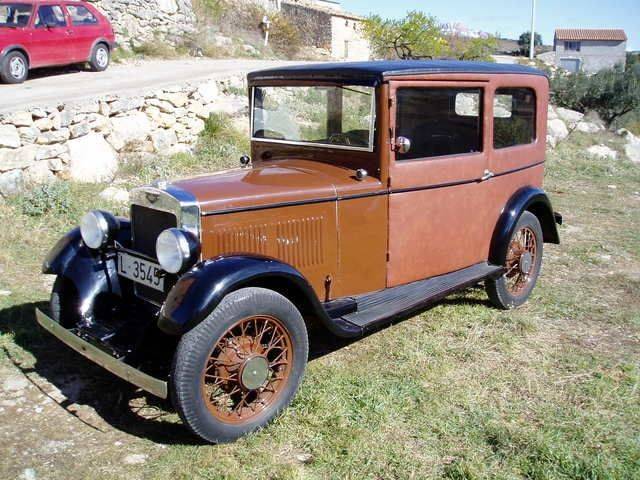
1931 | Hanomag 3/16

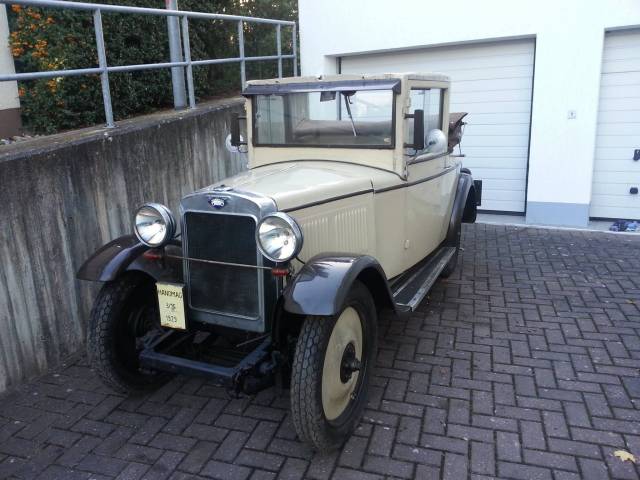
1929 | Hanomag 3/16

Create search alert
Let yourself be notified as soon as a listing is published that matches your search filters.
Create listing
Do you have a Hanomag 3/16 that you want to sell? Then create a listing now.
Create listingHanomag 3/16 Classic Cars: Prices & Market Values
History of the Hanomag 3/16
Manufactured in 1931, the Hanomag 3/16 occupies a unique position in automotive history as a representative of early compact cars in Germany. At a time when cars were a luxury for most, Hanomag intended the 3/16 as a practical and durable vehicle for the middle class. The company, better known for its agricultural machines, channelled its engineering expertise into this compact model, resulting in a design that was both innovative and reliable. Its adoption of the Weymann body construction, which used a wooden frame covered with artificial leather, was in line with contemporary trends that balanced durability and weight saving. Today, only a handful of Hanomag 3/16 survive, making them rare witnesses to a bygone era of motoring.
Model Series History
The 3/16 followed Hanomag's efforts to produce smaller, more accessible vehicles after the economic difficulties of the 1920s. There was no direct predecessor in the Hanomag catalogue with the same technical profile. Instead, the model fits into Hanomag's early ventures into the production of lightweight passenger vehicles. Successors included later Hanomag models that continued the tradition of practical engineering and compact dimensions, but few matched the uniqueness of the 3/16’s construction and concept. The series remained limited, lending the model its current rarity.
Highlights of the Hanomag 3/16
Unmistakable for its Weymann wooden bodywork clad in synthetic leather, the 3/16 also features an interior upholstered in a classic palette of brown. The arrangement of both front and rear seats, alongside the distinctive white headliner, contributes to a period-correct ambience. Practicality was not neglected: its underbody design allowed for easy cleaning, which was quite advanced at the time. One known variant was first sold new in Spain, underlining its international reach even in the early 1930s.
Technical Data
Special Editions and Collectible Models
A notable variant is a Hanomag 3/16 originally delivered in Spain, which may be of additional interest to collectors searching for export or original foreign-market examples. Otherwise, no special editions have been documented in public sources for the 3/16 series.
Weak Spots and Common Issues
No specific common issues or weak spots are documented for the Hanomag 3/16 in the available data. However, considering its wooden frame and artificial leather covering, careful inspection for moisture damage, rot, or deterioration of the upholstery remains advisable for any prospective buyer. Routine checks of the three-speed transmission and period mechanics are also recommended, as original parts can be hard to replace.
Engine and Performance, Transmission and Handling
The Hanomag 3/16 houses a traditional three-speed manual transmission common for cars in 1931. Its compact size and straightforward mechanics lend it handling that would be considered simple and accessible by today's standards, while still reflecting engineering developments of that time. The exact performance parameters, such as power output and top speed, are not recorded in the provided documentation. Its focus was on reliable everyday use, not high speed or luxury. Within the Hanomag range on Classic Trader, the 3/16 stands alone both in supply and demand, underscoring its unique position in both Hanomag history and the broader classic car landscape.
Interior, Comfort, Exterior and Design
The body construction by Weymann, with wooden framing and synthetic leather outer skin, is a hallmark feature. The brown two-tone upholstery on seats creates visual warmth inside, while the white headliner brings lightness to the cabin. The practical yet period-authentic layout allowed for both front and rear seating. Exterior and interior materials were chosen not only for aesthetics but also to keep weight down and ease production complexities in the pre-war period. No information about designer or specific colour options is available, but any surviving accessories or extra equipment from the first registration in Spain could add individual interest to certain examples.
Other Noteworthy Features
The 3/16 was designed for ease of maintenance, exemplified by its easily cleaned underbody, an unusual feature for that time. Vehicles can qualify for historic registration, opening up special usage and preservation incentives in many countries.
Summary
The Hanomag 3/16, built in 1931, represents a rare and historic vehicle, highlighting unique pre-war engineering choices such as Weymann bodywork and practical German design. Scarce on today’s market, the 3/16 is notable for its construction, period details, and distinctive place in Hanomag’s automotive legacy.