- Car
- Gatsby (0 offers)
Buy Gatsby Classic Cars
Gatsby Coachworks built some of the most theatrical American neoclassic cars of the 1980s, blending old-world glamour with Ford-based V8 hardware. For Australian buyers, that makes a Gatsby a rare import with real presence, collector appeal and a clear route to ownership if the numbers, paperwork and condition stack up.
Search results
Currently, there are no matching listings for your search.
Create search alert
Let yourself be notified as soon as a listing is published that matches your search filters.
Gatsby listing references from Classic Trader
Below you will find listings related to your search that are no longer available on Classic Trader. Use this information to gain insight into availability, value trends, and current pricing for a "Gatsby" to make a more informed purchasing decision.
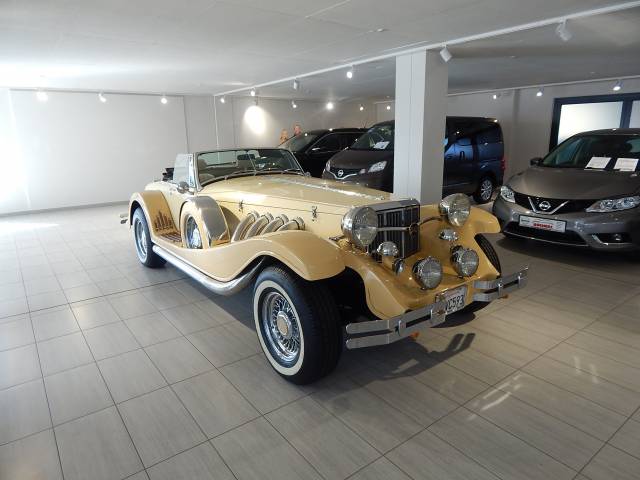
1985 | Gatsby Cabriolet
Einzelstück - H-Kennzeichen - Deutsche Papiere

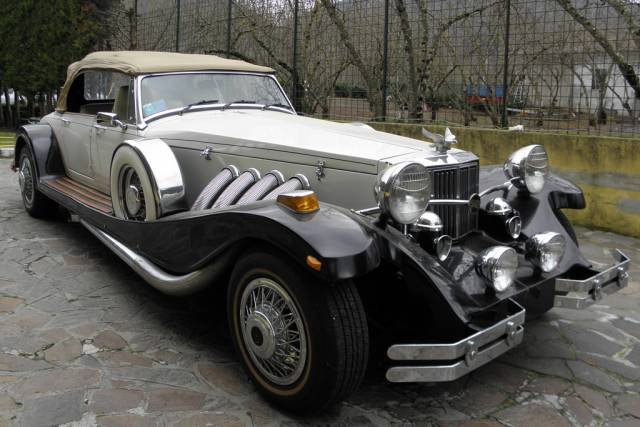
1985 | Gatsby Cabriolet

Create search alert
Let yourself be notified as soon as a listing is published that matches your search filters.
History & Heritage
Gatsby Coachworks Ltd. was founded on 10 April 1979 in San José, California by Sky Clausen and Larry Munson. From the start, the idea was not to copy a single pre-war car, but to recreate the emotional effect of the golden age of coachbuilt motoring: long bonnets, open wheels, lots of chrome and an unmistakable sense of occasion. That approach placed Gatsby squarely in the American neoclassic wave of the late 1970s and 1980s, alongside names such as Excalibur, Zimmer and Clenet.
For buyers in Australia, Gatsby sits in an interesting niche. The brand was never common here, so every example arrives with an imported story. That scarcity adds to its charm. A Gatsby is not a car you buy because you saw one on every local street in the 1980s. You buy it because you want a rare, hand-built American specialty that still feels like a proper show car today.
The first Gatsby model was the Gatsby Cabriolet, introduced in 1979 and built through 1988. It used Ford Thunderbird and Mercury Cougar chassis components, with design cues and body elements inspired by the MG Midget. The result was a curious but effective blend: familiar US underpinnings hidden under a highly stylised body. Early cars were built with a steel body, which gave them a more substantial feel and a traditional coachbuilt character. From 1983, Gatsby also offered fibreglass bodywork, opening the door to lighter construction and easier production.
The next major step was the De Courville Roadster, launched in 1981 and built until 1985. Based on a Ford LTD chassis and powered by a Lincoln 302ci V8, it became the most clearly collectible Gatsby in period and remains so now because only 250 cars were made. Each was numbered, which is exactly the kind of detail collectors like to see. A numbered plaque, a matching paper trail and an honest body become major value points.
Then came the Gatsby Speedster in 1983, a more flamboyant interpretation with Auburn-style proportions and Ford or Chevrolet V8 power. It stayed in production until 1993, making it the longest-lived of the core Gatsby line-up. Finally, the Griffin Roadster appeared in 1988 and ran through to 1998, extending the brand’s neoclassic vocabulary into the 1990s.
At peak output in the early 1980s, Gatsby Coachworks reportedly built up to 50 turn-key cars per year. That is a small number in mainstream car terms, but for a coachbuilt specialty maker it is significant. It shows that Gatsby was not just a styling exercise; it was a real production business serving a small but willing audience.
Today Gatsby is remembered as a genuine participant in the neoclassic movement rather than a one-off curiosity. The cars capture a very specific era in American enthusiast culture: wealthy buyers wanted nostalgia, theatre and V8 ease in the same package. Gatsby delivered exactly that.
What Makes Gatsby Special
What makes Gatsby worth a buyer’s attention is the mix of style, rarity and straightforward mechanical bones. These cars look elaborate, but underneath they are built around familiar American components. That matters in Australia, where long-term ownership depends on whether parts can be sourced without drama.
First, Gatsby cars have real visual impact. They are designed to look like expensive pre-war customs, with upright grilles, swept fenders, exposed running boards, brightwork-heavy surfaces and big whitewall tyres. In a market crowded with imported classic sports cars, a Gatsby still stands out because it does not try to be subtle. It is theatre on wheels.
Second, the brand is tied to a very specific collector era. Neoclassic cars are now appreciated as a period in their own right, not just as retro oddities. Gatsby belongs in that conversation. When bought well, these cars offer a snapshot of 1980s American optimism: custom coachwork, V8 torque and a taste for glamour that modern cars rarely attempt.
Third, the underlying hardware is sensible. Ford and Chevrolet V8 parts are widely known, and in Australia there is useful support through the Ford Australia heritage network and the broader classic V8 parts trade. That does not mean every Gatsby part is easy, but it does mean the mechanical side is usually more manageable than the bodywork suggests.
Finally, Gatsby is uncommon enough to stay fresh. In Australia, classic imports can sometimes become predictable once a few dozen examples are on the road. Gatsby does not suffer from that problem. At a club run or concours event, especially something like Motorclassica Melbourne, it will get attention quickly.
For buyers, the appeal tends to fall into three groups:
- collectors of American neoclassic cars
- enthusiasts wanting a showpiece with usable V8 running gear
- import buyers looking for something rarer than the usual Jaguar, MG or Corvette path
That combination is why Gatsby is a smart make-level page subject. It is rare, distinctive and easier to understand than many specialist coachbuilt names.
Technical Data
The key point is that Gatsby was never a one-spec brand. Buyers should expect variation, because many cars were completed to order or to the taste of the original customer. That can be good news if you want individuality, but it also means you need to verify what is actually on the car rather than assume brochure accuracy.
In practical terms, the most important checks are the following:
- Chassis identity: confirm the donor platform and whether it matches the paperwork.
- Engine specification: check whether the car has a Ford 302ci, a Chevrolet V8 or another period-correct swap.
- Body construction: steel or fibreglass affects rust risk, repair approach and long-term costs.
- Brakes and suspension: these cars are heavy enough that tired components matter.
- Electrics and trim: specialist coachbuilt details are often the hardest things to replace.
For Australian buyers, originality is valuable, but usability matters too. A correctly maintained Gatsby with sensible upgrades can be a better buy than a fragile time capsule that needs months of work.
Market Overview & Buying Tips
The Gatsby market is small, but there is enough recent evidence to give buyers a sensible picture. Most cars sit in the low-to-mid collector range internationally, although well-kept examples with strong provenance can climb higher. For Australian buyers, that needs to be translated into landed cost, not just overseas hammer price.
Recent market references are useful. In June 2023, a De Courville Roadster sold on Bring a Trailer for USD 15,500. That was car number 4 of 250, so a real collector piece, but still priced as a usable classic rather than a blue-chip show car. Bonhams has also shown estimates in the £17,000–22,000 range for Gatsby cars, which supports the view that the best examples are now proper collector items. A French dealer asking €50,000 in 2023 shows that top-condition, well-presented cars can move much higher when the presentation is right.
For Australian buyers, that usually places a Gatsby in an approximate A$23,000–75,000 window once you consider model, condition, originality and import cost. Lower-end project cars can look cheap overseas but become expensive quickly once shipping, duty, GST and compliance are added.
Australian import reality
All Gatsby cars are left-hand drive US imports. That is fine in collector terms, but it does affect how you plan ownership. Australia drives on the left, so right-hand drive is generally preferred for road use. Even so, classic imports remain possible and common enough when the car is genuinely worth the effort.
The main pathways are:
- SEVS (Specialist and Enthusiast Vehicle Scheme) for eligible vehicles
- direct personal import for pre-1989 vehicles
Because Gatsby models sit in the classic import bracket, many examples can be brought in legally if the paperwork is handled correctly. Still, buyers should budget for more than the purchase price. A rough Australian landed-cost model often includes:
- shipping from the US: about A$3,000–5,000
- import duty: about 5%
- GST: 10%
- compliance work: variable, but rarely trivial
- registration and engineering: state-dependent
That means a tempting US buy can rise quickly. A car bought for USD 15,000 may end up materially dearer once it lands in Australia. If the car needs rust repair, re-trim or bodywork, the total moves again.
What to look for
1. Confirm the build identity. Gatsby cars were hand-built and sometimes individually specified. A clean story is worth money.
2. Check rust carefully. Steel-bodied cars need a proper inspection of sills, floors, frame areas and hidden mounting points. Even fibreglass cars can hide corrosion in their chassis or donor running gear.
3. Watch the trim. Chrome, lamps, grilles, badging and coachbuilt interior items can be difficult to replace. Missing trim hurts value fast.
4. Inspect the drivetrain. Ford and Chevrolet V8s are broadly familiar, but cooling, gearbox condition and rear-end wear still matter on a heavy body.
5. Ask about compliance. If the car has already been imported into Australia, the previous approval and engineering path can save a lot of time. If not, make sure the import route is realistic before you commit.
Buying strategy for Australia
Australian classic car buyers are often practical. They like cars that can be enjoyed at club events, shown at concours gatherings and maintained without impossible parts hunts. Gatsby can fit that brief if you buy the right example.
The safest choice is usually a well-documented car with matching or known drivetrain, healthy body structure and presentable trim. The riskier but cheaper route is a project car from overseas, especially if it is incomplete. On a niche car like Gatsby, cheap missing pieces can cost more than they would on a mainstream classic because the supply chain is smaller.
If you want to use the car often, favour a sound mechanical package over perfect cosmetics. If you want a show car, pay up for presentation and provenance. Either way, do not buy on photos alone.
Driving Feel
A Gatsby drives like a large, custom American luxury car should. It is not built for quick direction changes or modern-road precision. It is built for relaxed torque, gentle cruising and a sense of presence.
The steering is typically light rather than sharp, and the ride leans towards comfort. That suits the car’s character. These are not minimalist sports cars; they are statement pieces that happen to move under their own power. The V8 soundtrack is a big part of the experience, especially in low-speed driving where the engine’s presence feels more important than outright speed.
On Australian roads, that means a Gatsby is best enjoyed on open suburban routes, coastal runs and event days rather than tight city traffic. The long nose, wide stance and LHD layout all call for patience. But if you accept that, the car rewards you with a strong sense of occasion every time you set off.
The De Courville Roadster is especially appealing because the Lincoln 302ci V8 gives it the kind of easy torque that suits classic touring. The Speedster feels more dramatic visually, while the Cabriolet has the earliest and most authentic neoclassic feel. The Griffin Roadster extends the concept into later production, and buyers may find its later build years useful if they want a somewhat newer classic.
For Australian owners who attend local classics meetings, Gatsby has another advantage: it is a conversation starter. That matters more than many buyers admit. A car that gets people talking, photographing and asking questions tends to be a car people actually remember.
Design & Coachwork
Gatsby’s design language is the brand’s biggest selling point. These cars use proportion, chrome and visual nostalgia to create a very specific fantasy. They look like they belong to the era of tuxedos, country clubs and jazz-age glamour, even though they are firmly late-20th-century American creations.
The Cabriolet is the most eclectic of the range. Its mix of Thunderbird/Cougar foundations and MG Midget-inspired elements gives it a layered, almost custom-built personality. The car is not trying to be a straight reproduction of one historic model. Instead, it borrows the atmosphere of several eras and turns them into a single object.
The De Courville Roadster is perhaps the cleanest expression of the Gatsby idea. Its lines are formal, balanced and a little aristocratic. Because it was numbered, it has the added appeal of built-in collectability. In the classic car world, a numbered limited series often matters more than sheer production volume, because it gives buyers a clear sense of rarity.
The Speedster pushes the design theme towards Auburn-style drama. It is broader, more expressive and more obviously theatrical. If the De Courville is about elegance, the Speedster is about impact. It suits buyers who want a car that looks like a poster image from the first glance.
The Griffin Roadster continues that visual language while giving Gatsby a later identity. It shows how the concept evolved without losing its core message: long bonnet, open roadster posture, abundant brightwork and an unapologetic old-money look.
For Australian collectors, the design value is important because Gatsby is a brand that wins on first impression. At an event like Motorclassica Melbourne, or any strong local classic gathering, a Gatsby will draw interest from people who may not know the name but instantly understand the styling idea.
Other
Australian ownership and community
There is a growing Australian audience for oddball American classics, especially where the car is rare enough to feel special but not so obscure that ownership becomes impossible. Gatsby fits that sweet spot for the right buyer. It may not have the club density of Mustang or Corvette, but it does benefit from the broader Australian classic car community, where imported V8 cars, coachbuilt specials and neoclassic exotics are welcomed.
If you are buying in Australia, it is worth connecting with local classic import specialists, state-based historic vehicle clubs and general American-car communities. They can help with compliance questions, LHD registration realities and the practical side of running a large US import on local roads.
Parts and maintenance
One of the strongest points in Gatsby’s favour is the use of Ford and Chevrolet mechanicals. Routine service items, V8 consumables and many drivetrain parts are not exotic by Australian standards. That said, body-specific items remain the challenge. Grilles, bespoke lamps, trim pieces, numbered plaques and interior details are where you may need to search in the US or through specialist collectors.
Because of that, the best buying advice is simple: buy the most complete car you can afford. With a niche neoclassic like Gatsby, completeness usually saves money.
Values and position in the market
Gatsby sits below the most famous American classics in price, but that does not mean it is less interesting. In some ways, the opposite is true. It offers a rare blend of period charm, hand-built character and accessible V8 engineering without the inflated pricing of blue-chip collector names.
For buyers who want a classic that is unusual but not impossible, Gatsby can be a clever choice. The best cars will always be the ones with strong provenance, correct details and honest bodywork. A tired example may look tempting, but the total restoration bill can quickly outrun the market value.
Who should buy one?
A Gatsby suits a buyer who values:
- rare design over brand status
- V8 ease over sports-car sharpness
- event presence over daily usability
- import ownership over local familiarity
If that sounds like your brief, Gatsby becomes much easier to justify.
Summary
Gatsby classic cars are among the more distinctive American neoclassics available to Australian buyers. Built in California from 1979 onwards, they combine coachbuilt style, Ford and Chevrolet V8 hardware and real period character in a package that still feels special today.
For the Australian market, the key is to buy with the import realities in mind. These are LHD US cars, so expect SEVS or personal import considerations, plus shipping, duty, GST and compliance costs. If you plan properly, the final price can still make sense, especially for a complete and well-documented example.
The De Courville Roadster is the most collectible of the core models, thanks to its numbered 250-unit run. The Cabriolet has the earliest Gatsby identity, the Speedster brings the most overt Auburn-style drama, and the Griffin Roadster carries the brand into its later phase.
For Australian enthusiasts who want something rare, dramatic and mechanically understandable, Gatsby is a very appealing make to explore on Classic Trader.