- Car
- Fuldamobil (0 offers)
Fuldamobil classic cars for sale
The Fuldamobil is a German microcar from Fulda, built between 1950 and 1969 and known for its pioneering design and innovative safety technology. Its unique three-wheeled layout and compact dimensions made it stand out in the microcar segment, leading to global recognition and licensed production in several countries. Explore the available Fuldamobil classic cars, renowned for their rare engineering solutions and period-specific aesthetics.
Search results
Currently, there are no matching listings for your search.
Create search alert
Let yourself be notified as soon as a listing is published that matches your search filters.
Create listing
Do you have a Fuldamobil that you want to sell? Then create a listing now.
Create listingFuldamobil listing references from Classic Trader
Below you will find listings related to your search that are no longer available on Classic Trader. Use this information to gain insight into availability, value trends, and current pricing for a "Fuldamobil" to make a more informed purchasing decision.
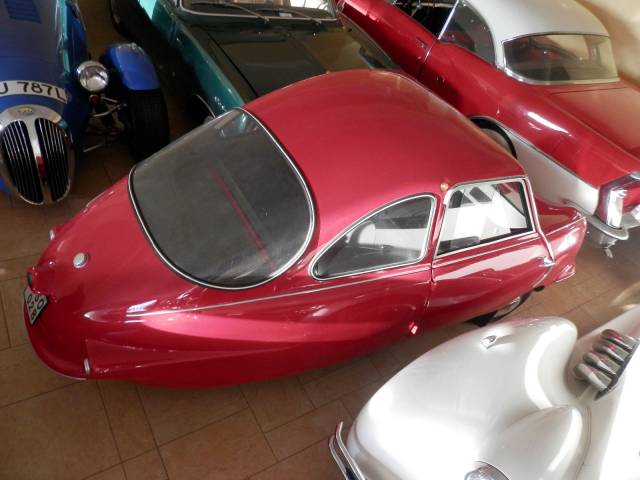
1959 | Fuldamobil Type S7
Fuldamobil Fram King S7 Microcar Threewheeler

Create search alert
Let yourself be notified as soon as a listing is published that matches your search filters.
Create listing
Do you have a Fuldamobil that you want to sell? Then create a listing now.
Create listingHistory of the Fuldamobil
The Fuldamobil's roots date back to post-war Germany, with the first prototype built in 1950 by journalist and engineer Norbert Stevenson. Stevenson aimed to create a car that was affordable for a broader population, targeting a price below that of the Beetle but with greater practicality. Originally featuring a wooden frame and imitation leather, the earliest models soon transitioned to aluminium and later to plastic bodywork. Notably, the Fuldamobil introduced the concept of a negative scrub radius to automotive engineering, marking a significant advancement in driving stability and safety.
Production was handled by Elektromaschinenbau Fulda GmbH and, from the mid-1950s, Nordwestdeutsche Fahrzeugbau (NWF) under licence. By the time production ended in 1969, just under 3000 units had been manufactured. Despite the small production run, Fuldamobil models were assembled under licence in countries as far flung as Sweden, Greece, the Netherlands, Argentina, and the UK, under different names but always retaining the distinctive Fuldamobil DNA.
Model History
Fuldamobil production began with the Type N and S series, initially powered by small-capacity single-cylinder engines from Heinkel, Ilo, and Fichtel & Sachs. The first models used plywood and aluminium, with the 1951 Type N incorporating a 360cc Fichtel & Sachs engine and marking the start of limited exports.
Following types included the S (1954–1955), yielding 673 units, and later models such as the Type S1 and S7. Technological advancements saw the adoption of aluminium and plastic body shells. Later Fuldamobil models often had widened wheelbases for improved stability. Notably, the UK version was marketed as the Nobel, and other licence-built versions appeared in Greece (Attica), Sweden (King), and Argentina (Bambi). The Fuldamobil legacy concluded in 1969 after production rates slowed to just five vehicles per month.
Highlights
Fuldamobil cars stand out for being the first to incorporate a negative scrub radius, contributing to safer and more stable driving—a breakthrough for the era. The cars were compact yet practical, often equipped with two doors, seating for two adults plus children, and a luggage compartment. Their lightweight construction and use of materials like aluminium and plastic made them resistant to rust and suited to Northern European climates. The opportunity to buy licence-built variants in kit form was a unique feature, especially in the UK, where the Nobel version gained attention due to clever marketing stunts. Period advertising highlighted the Fuldamobil as 'safe, fast, economical, and beautiful.'
Technical Data
Special Editions and Collectible Models
Several Fuldamobil variants became collectible due to limited production or unique specifications. Notably, the UK-built Nobel version and the international licence-built models like the Greek Attica or Swedish King are of particular interest to collectors due to their regional adaptations, rarity, and distinct branding—making them standout finds within the microcar community.
Engine, Transmission, and Handling
Fuldamobil vehicles, particularly later models, were powered by two-stroke engines supplying up to 10 hp, coupled to a manual four-speed gearbox. Top speed approached 70 km/h—appropriate for microcars of the time. The combination of low weight and a widened chassis in later models provided surprising stability, and the negative scrub radius suspension improved handling and safety. Owners describe the steering as direct and the ride as robust given the vehicle’s dimensions, with the simple mechanics making them relatively straightforward to maintain with basic technical knowledge. - Type S7: The most popular Fuldamobil variant with a 2-stroke engine, robust chassis, plastic bodywork, and four-speed gearbox.
- Type S1/NWF 200: Early series, built under licence, notable for its compact dimensions and export adaptations.
Interior, Comfort, Exterior and Design
Fuldamobil interiors prioritised functionality, with enough space for two adults and two children. Frequent use of grey upholstery and durable plastics reflected contemporary design trends. The bodywork, first in aluminium and later in plastic, was shaped with pronounced curves and minimal ornamentation, giving the cars a distinctive appearance now associated with so-called 'bubble cars.' Features like rust-resistant materials, plexiglas rear windows, and optional accessories such as sleeping facilities showed a pragmatic approach. The logo—a white inscription on a light green background, intersected by a large 'S'—is an unmistakable brand signature.
Other Features
Notable is the Fuldamobil's role as a technical pioneer, particularly its negative scrub radius innovation and its influence on future small-car designs. The possibility to buy certain fulfilments as DIY kits, especially in export markets for the Nobel and Attica versions, reflected the era's culture of personal engineering and hands-on automobile ownership.
Summary
Fuldamobil classic cars offer a rare insight into 1950s and 1960s microcar innovation, with distinctive engineering, pioneering safety features, and a diverse production history spanning several continents. The most popular variant, the Type S7, dominates both current listings and collector interest due to its blend of technical advances and practical design. Buyers looking for a technically significant, culturally rich classic microcar will find the Fuldamobil a fascinating choice.