FIAT Bravo Classic Cars for Sale
The FIAT Bravo stands out as a practical hatchback, offering drivers a uniquely Italian blend of engineering, comfort, and style from its era. With a secure place in FIAT’s line-up, the Bravo is sought after by enthusiasts who appreciate tangible technology and smart design. For those searching for a manageable, story-rich classic, the Bravo delivers.
Search results
Currently, there are no matching listings for your search.
Create search alert
Let yourself be notified as soon as a listing is published that matches your search filters.
Create listing
Do you have a FIAT Bravo that you want to sell? Then create a listing now.
Create listingFIAT Bravo listing references from Classic Trader
Below you will find listings related to your search that are no longer available on Classic Trader. Use this information to gain insight into availability, value trends, and current pricing for a "FIAT Bravo" to make a more informed purchasing decision.
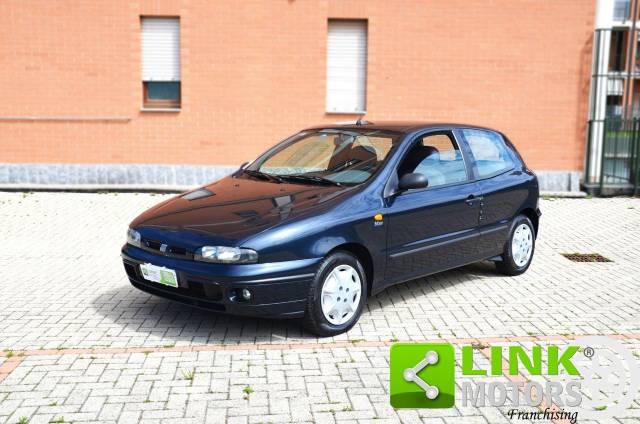
1997 | FIAT Bravo 1.4 SX
FIAT Bravo 1.4i 12V cat SX 80 cv NEOPATENTATI Euro2
Create search alert
Let yourself be notified as soon as a listing is published that matches your search filters.
Create listing
Do you have a FIAT Bravo that you want to sell? Then create a listing now.
Create listingFIAT Bravo Classic Cars: Prices & Market Values
History of the FIAT Bravo
The FIAT Bravo made its public debut in 1995 as a successor to the ageing FIAT Tipo, marking a new chapter for FIAT in the compact segment. Presented as a three-door hatchback, the Bravo was paired with its more conservatively designed five-door sibling, the Brava, to target distinct customer groups. The Bravo emphasised a dynamic driving experience and sporty aesthetics, distancing itself from its predecessor's more staid character. Throughout its production, the Bravo occupied a central role in FIAT’s European strategy, especially in urban settings where its compact dimensions and frugal engines won favour. Production of the first generation ran until 2001 before being succeeded by the Stilo, with the Bravo name returning for a second series in 2007, demonstrating the model’s enduring appeal.
Model History
The Bravo’s lineage starts in 1995 and spans two generations. The initial series (Type 182) offered a dynamic three-door format and focused more on agile handling than the roomier Brava. The Bravo replaced the Tipo and was later succeeded by the FIAT Stilo, before the revived Bravo (Type 198) made its appearance in 2007. The model saw several engine options over the years, including spirited petrols and efficient diesels. Each generation built on the strengths of the previous, focusing on driver engagement and efficiency within the compact car class.
Highlights of the FIAT Bravo
The Bravo distinguished itself with its strong driving dynamics in the segment, especially among front-wheel-drive hatchbacks of the 1990s and 2000s. Its nimble chassis, well-weighted steering, and straightforward mechanicals ensured it was a favourite for enthusiasts seeking hands-on motoring without layers of digital interference. The Bravo’s strong points were the robust FIRE petrol engines and economical JTD diesels, both of which offered reliability uncommon in some of its rivals. Cabin ergonomics, a clear instrumentation layout, and unfussy design made it practical as well as engaging.
Technical Data
Special Editions and Collectible Models
Several limited-edition versions of the Bravo were produced to mark milestones or appeal to sportier tastes—most notably the Bravo HGT with its high-output 2.0-litre petrol engine and distinctive trim. Special edition models often featured unique paintwork, upgraded interior details, and sometimes enhanced chassis tuning, targeting enthusiasts keen on exclusivity and added performance.
Engine, Transmission and Handling
The Bravo is admired for its agile handling and communicative front-wheel-drive setup, delivering direct steering and a chassis tuned for enthusiastic driving. Petrol engines, especially the 1.6 and 2.0 HGT, provide a lively character, while the diesels offer strong torque for everyday usability. The five-speed manual transmission, a staple across the range, is known for mechanical reliability and positive gear action. On the road, the Bravo maintains composure over poor surfaces and allows precise control, making it a rewarding companion on twisty roads as well as in daily traffic. • Bravo HGT 2.0 20V – 147 PS, performance tuning, unique trim • Bravo JTD 105 – notable for efficiency and long-term reliability • Early 1.6 SX – blend of balance and mechanical simplicity
Interior, Comfort, Exterior and Design
The Bravo’s body, marked by smooth lines and compact dimensions, was developed by FIAT Centro Stile. Emphasis was placed on providing a youthful, assertive profile, differentiating the Bravo from the Brava. Inside, the dashboard layout is functional, with clearly marked controls and robust switchgear. Material choices are sensible, focusing on durability. Higher trim levels featured special seat fabrics and coloured inserts, with options for air conditioning, electric windows, and alloy wheels. Externally, the Bravo was offered in a broad palette of metallic and solid colours, including standout deep reds and blues popular with 1990s buyers. Accessories included factory-fitted sunroofs, fog lamps, and body kits on sportier HGT versions.
Summary
The FIAT Bravo has cemented its place as a landmark model in the compact hatchback class through two generations. Its balance of Italian engineering, strong powertrain choices, and straightforward driving appeal continues to resonate with classic car enthusiasts. With 100% of FIAT listing supply and demand in its segment focused on the Bravo, it stands alone as the reference point for classic FIAT hatchbacks.