Ferrari 625 classic cars for sale
The Ferrari 625 series encompasses some of the rarest and most technically advanced racing machines of the early 1950s, including distinguished Grand Prix and sports racers directly tied to Ferrari’s early Formula 1 dominance. From the ingenious Lampredi four-cylinder engine to championship-winning chassis, these cars are benchmarks in racing history and engineering prowess.
Search results
Currently, there are no matching listings for your search.
Create search alert
Let yourself be notified as soon as a listing is published that matches your search filters.
Create listing
Do you have a Ferrari 625 that you want to sell? Then create a listing now.
Create listingFerrari 625 listing references from Classic Trader
Below you will find listings related to your search that are no longer available on Classic Trader. Use this information to gain insight into availability, value trends, and current pricing for a "Ferrari 625" to make a more informed purchasing decision.
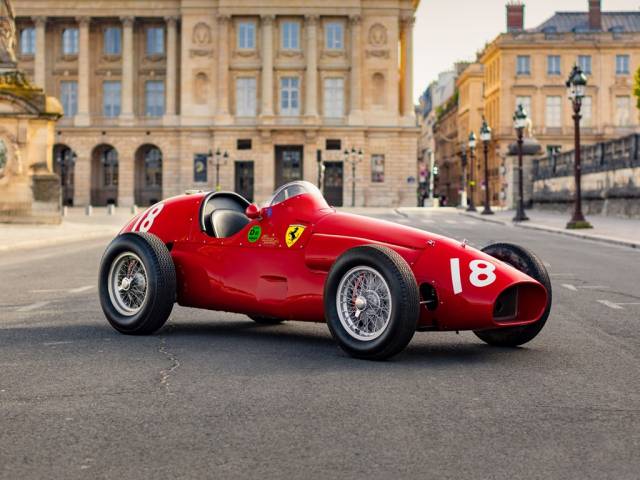
1954 | Ferrari 625F1
1954 Ferrari 625 F1
Create search alert
Let yourself be notified as soon as a listing is published that matches your search filters.
Create listing
Do you have a Ferrari 625 that you want to sell? Then create a listing now.
Create listingFerrari 625 Classic Cars: Prices & Market Values
Introduction and history of Ferrari 625
Ferrari’s 625 models trace their roots to a pivotal era in motorsport—the transition from the 1950s Formula 2 successes toward the full-blooded Formula 1 competition. Developed as direct siblings to the victorious 500 F2, which secured Ferrari’s first two World Championships with Alberto Ascari, the 625s represent the technical leap into the new Formula 1 regulations starting in 1954. Engineered by Aurelio Lampredi, the 625 F1 and its sports racing counterparts not only continued Ferrari's winning ways but also laid the groundwork for its future four-cylinder racing lineage. Their blend of power, minimalism, and functional design made an indelible mark on the sport and led to a string of further technical advancements for the Scuderia.
Model history
The 625 model designation was used on several competitive platforms: the 625 TF (Turismo F), the 625 F1 for Formula 1, and the 625 LM (Le Mans) sports racer. Most 500 F2s—Ferrari’s previous champion—were upgraded by the factory with the Lampredi-designed 2.5-litre engine and entered as 625 F1 monopostos for the 1954 Grand Prix season. These chassis featured a longer wheelbase for F1 adaptation and were complemented by customer and works cars, respectively numbered and sold to selected privateers as 'Starlet' versions. The 625 series would also influence later four-cylinder Ferrari sportscars, including notable models like the 500 Mondial and 750 Monza.
Highlights of the Ferrari 625 series
• Innovative Lampredi four-cylinder with substantial weight savings (92.8 lbs lighter than the V12) • Simplicity and legendary reliability in high-stress racing environments • Minimalist, pure single-seater chassis maximising driver feedback • Key association with great names such as Aurelio Lampredi (engineer) and Alberto Ascari (double World Champion for Ferrari) • Direct link to Ferrari’s dominant period, capturing consecutive world titles in 1952 and 1953 • Strictly limited numbers: 6 works cars, 5 customer 'Starlet' Monopostos, uniquely numbered
Technical data
Special Editions and Collectible Models
Special examples within the Ferrari 625 lineup include the 'Starlet' customer cars built for selected privateers, featuring factory updates and unique chassis numbers. Works cars (chassis 001-006) were later renumbered and further developed, increasing collectibility and making each car’s provenance distinctive among Ferrari historians.
Engine and Performance, Transmission and Handling
Ferrari’s 625 series was engineered strictly for motorsport: the Lampredi inline-four, with markedly simpler architecture and reduced reciprocating mass, delivered increased reliability, lower centre of gravity, and easier servicing than contemporary V12s. The cars accelerated rapidly thanks to their low weight and torque characteristics, while drum brakes and De Dion rear suspension provided handling prowess below the outright grip of later disc-braked Ferraris. The four-speed transaxle incentivised precision from the driver and highlighted the chassis’ responsive balance. Models to watch are the earliest six works cars (original chassis numbers 001-006) and the customer 'Starlet' Monopostos, as well as transitions from 500 F2 to 625 F1 specification.
Interior, Comfort, Exterior and Design
Purpose-defined minimalism marked the Ferrari 625 cockpit. No concessions to comfort: all controls were bare-metal and ergonomically positioned for racing, while the external bodywork focused only on aerodynamic necessity and cooling. Characteristic features include exposed aluminium panels, compact instrument clusters, drilled steering wheels, and a signature Ferrari single-seater silhouette. No special trim colours or luxury accessories—just stripped-back function and form perfectly tuned for the international racing stage.
Summary
The Ferrari 625 series stands as a technical and historical reference point for early postwar Grand Prix and sports racing cars. Directly descended from world-beating champions and set apart by the Lampredi engine’s innovation, these machines dominated both track and enthusiast interest and continue to be sought for their mechanical purity and provenance. Uncompromising in concept and focused on performance, the 625 is utterly representative of Ferrari’s golden era of motorsport.