- Car
- Fendt (0 offers)
Buy Fendt Classic Tractors
Fendt classic tractors blend German engineering, practical design and strong collector appeal. In Australia, they are still rare imports, which adds to the charm and the chase.
Search results
Currently, there are no matching listings for your search.
Create search alert
Let yourself be notified as soon as a listing is published that matches your search filters.
Fendt listing references from Classic Trader
Below you will find listings related to your search that are no longer available on Classic Trader. Use this information to gain insight into availability, value trends, and current pricing for a "Fendt" to make a more informed purchasing decision.
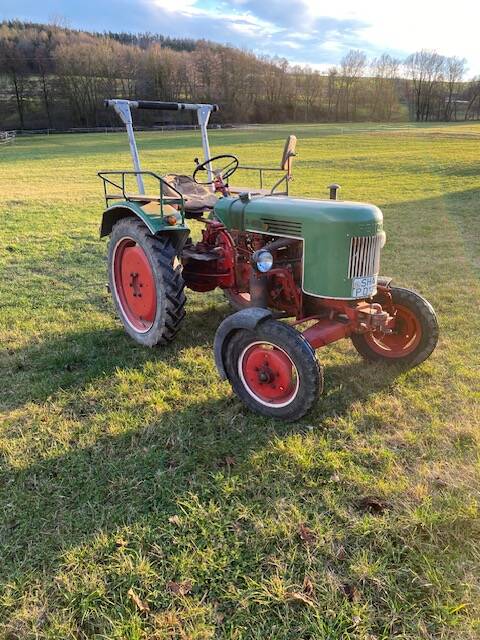
1957 | Fendt Dieselross F 17 L
1957 | Fendt Dieselross F 17 L

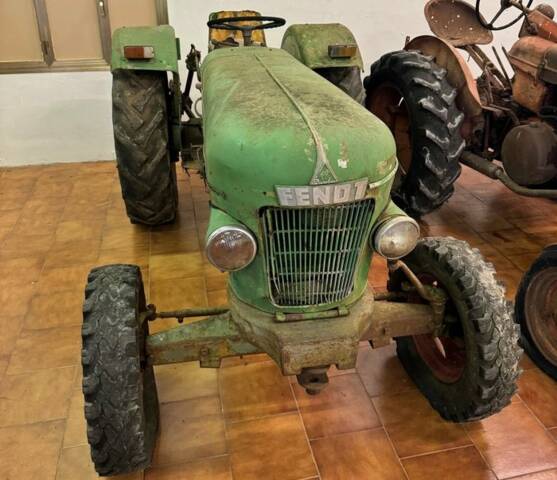
1957 | Fendt Farmer 2
Trattore Fendt - Dieselross Farmer 2 - NO RESERVE - 1957

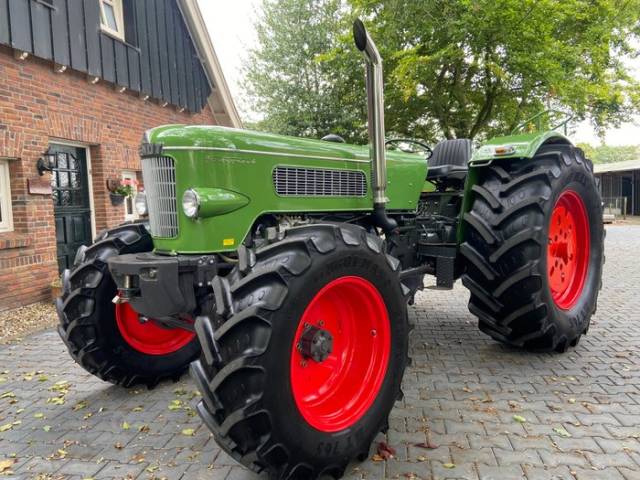
1965 | Fendt Favorit 4
Fendt - Favorit 4 Allrad Rundhauber 1/1 - 1965
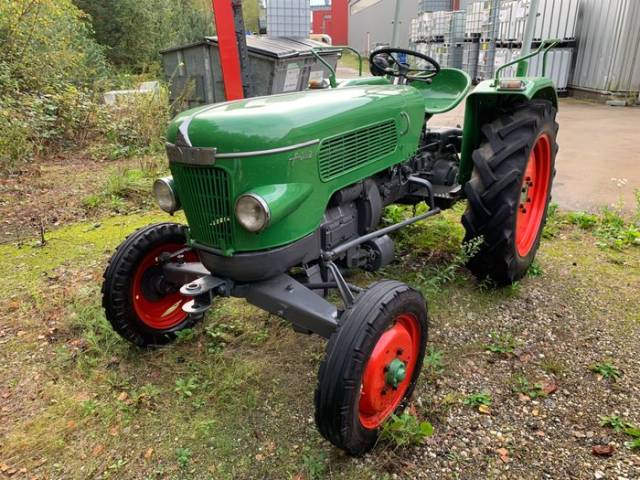
1962 | Fendt Fix 2 L
Fendt - Fix 2 FL120 - 1962
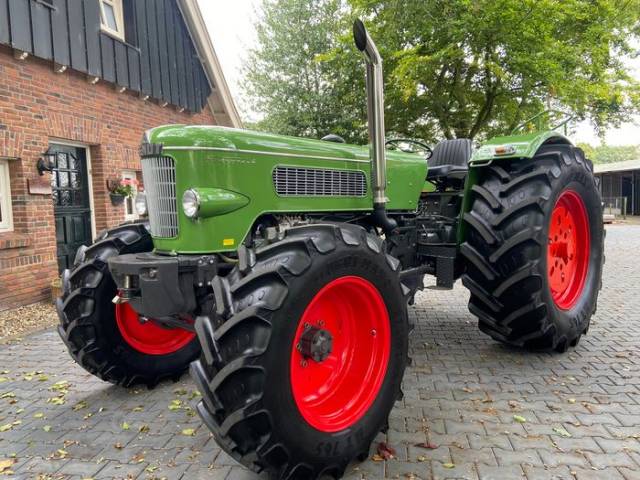
1965 | Fendt Favorit 2
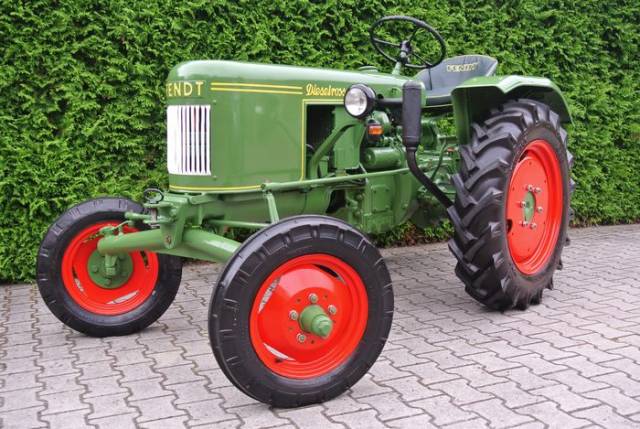
1955 | Fendt Dieselross F 12 GH
Create search alert
Let yourself be notified as soon as a listing is published that matches your search filters.
History
Fendt began in 1928 in Marktoberdorf in the Allgäu region, when the young Hermann Fendt built a motorised mower in the family workshop. What started as a practical local solution quickly grew into one of Germany’s most respected tractor names. By 1930, Fendt delivered its first Dieselross with 6 PS, and a new chapter in European farm machinery had begun.
The Dieselross became the foundation of the brand’s reputation. Early models such as the F 18, F 22, F 28 and F 40 showed how a small family business could create tractors that were durable, intelligent and well finished. They were not glamorous machines in the modern sense; they were work tools. Yet that honesty is exactly what makes them so appealing today.
Fendt kept pushing the technical envelope. In 1953, the Geräteträger GT introduced a concept that was unlike anything else on the market: a tractor designed to carry implements in front, behind and between the axles. That idea gave farmers more flexibility than a conventional layout and became a Fendt signature for decades.
The ff series arrived in 1958 and marked another turning point. Fix, Farmer and Favorit replaced the Dieselross naming era and established a clearer product structure. The Farmer became the practical middle-class tractor, the Favorit the premium line, and the compact Fix handled lighter duties. This was the period when Fendt moved from regional manufacturer to national heavyweight.
The brand’s rise continued through the 1960s and 1970s. The Farmer 100, 200 and 300 families extended Fendt’s reach across different power classes, while the Turbomatik hydraulic clutch from the Farmer 3S in 1966 added real usability in daily work. In 1985, Fendt became number one in German tractor registrations and held that position until 1999.
The modern era arrived with the Favorit 926 Vario in 1995, the first Fendt with the CVT gearbox that would redefine tractor design. AGCO acquired the company in 1997, but the engineering identity remained intact. Geräteträger production finally ended in 2004, closing one of the most distinctive chapters in tractor history.
Highlights
What makes Fendt classics special is not just their rarity, but the way they combine technical originality with everyday usability. These are tractors that still feel purposeful, even when they are decades old.
The Dieselross is the emotional starting point. It represents the early post-war spirit of rebuilding and practical farming. For collectors, it is the purest expression of the brand’s beginnings. For restorers, it offers a satisfying challenge because the machines are simple enough to understand, yet detailed enough to reward careful work.
The Geräteträger GT is the cult hero. Its layout is instantly recognisable and remains one of the most ingenious tractor concepts ever built. For many collectors, a GT is the ultimate Fendt because it is both a conversation piece and a serious machine. Rare versions like the GT 380 and GT 395 are especially prized.
The Farmer series is the most accessible classic Fendt family. It covers a long production span from 1958 to 2002 and includes some of the best-balanced tractors of their time. Early models are charming and mechanical; later 200 and 300 series tractors feel more refined and more capable. That broad spread means there is a Farmer for nearly every type of buyer.
The Favorit line sits at the top. These tractors were built for higher output, comfort and prestige. Early Favorits have a strong mechanical character, the 600 series offers serious old-school muscle, and the 500C models bring the brand into the era of more advanced cab tractors. For collectors who want a flagship machine, Favorit remains the name to know.
In Australia, the appeal is even stronger because vintage Fendts were never common here. Modern Fendt is well known through the AGCO era, but older tractors were usually privately imported from Germany or other European markets. That makes a classic Fendt feel both familiar and uncommon at the same time.
Technical Data
Fendt classics are often defined less by horsepower alone and more by how cleverly they deliver it. The Turbomatik clutch made starts smoother and easier on driveline components. The Vario concept later removed the limits of fixed gear steps altogether, proving just how far Fendt was willing to go.
For Australian buyers, technical condition matters as much as model name. A Tractor that has spent time in dry storage can be far more valuable than a stronger but heavily worn example. Because many vintage Fendts here were imported privately, service history and parts provenance can vary widely.
Market Overview
Fendt classics occupy a niche but very lively part of the collector market. In Europe, the brand has long been respected for engineering quality. In Australia, the story is different: vintage Fendts are scarce, and that scarcity helps support values.
Most older Fendts in Australia arrived through private imports from Germany or elsewhere in Europe. Since Fendt was not widely sold here until the AGCO period after 1997, original local dealer presence is limited for classic-era machines. That means every surviving Dieselross, Farmer, Favorit or GT tells an import story as well as a mechanical one.
Shipping adds to the cost base. Importing from Germany to Australia can add roughly A$3,000–A$6,000 in freight alone, before customs duty and GST. On older tractors, duty is commonly 5%, with GST at 10% applied to the landed value. That does not make a purchase impossible, but it does mean buyers need to calculate the full landed cost rather than the asking price only.
Here are practical price ranges in AUD:
- Dieselross restoration project: A$2,500–A$6,000
- Dieselross good condition: A$6,000–A$15,000
- Dieselross fully restored: A$22,000–A$38,000
- Geräteträger GT basic: A$8,000–A$15,000
- Geräteträger GT good: A$18,000–A$38,000
- Geräteträger GT rare (GT 380/395): A$40,000–A$70,000
- Farmer early (1960s–70s): A$8,000–A$20,000
- Farmer 100-series: A$11,000–A$28,000
- Farmer 200/300-series: A$22,000–A$80,000
- Favorit early: A$12,000–A$32,000
- Favorit 600-series: A$16,000–A$38,000
- Favorit 500C-series: A$70,000–A$100,000
- Favorit 824 Turboshift (comparable): A$105,000+
Within Australia, the strongest collector regions are Victoria, New South Wales and South Australia, where the vintage tractor scene is active and well organised. Club events, field days and farm heritage shows keep demand alive. State-based historic vehicle schemes also help ownership, though the rules differ. Victoria’s Club Permit Scheme is a useful example, but buyers should always check local registration requirements.
That combination of rarity, import effort and enthusiast interest means classic Fendts are often aspirational purchases. They are not the cheapest tractors to buy, but they carry enough status to justify serious attention.
Driving Feel
Driving a classic Fendt is less about speed and more about character. These tractors were built to work for long hours, and that purpose still comes through the moment you start one.
The Dieselross feels old-school in the best way. It starts with mechanical ceremony, idles with a steady thrum and asks the driver to stay involved. Steering is slower, controls are simpler and the whole experience is more physical. For many collectors, that is the attraction: it feels like operating a working relic, not a sanitised museum piece.
The Farmer series is more relaxed and surprisingly versatile. A good Farmer 100 or 300-series tractor still feels direct and confident, especially in regional use. The Turbomatik clutch adds a smoother take-off than many rivals of the era, which makes the tractor pleasant at low speed and in repetitive work. On a working property or at a rally, that usability matters.
The Geräteträger GT has the most unusual driving position. It offers excellent visibility and a very distinctive sense of balance because the machine is designed around its tools as much as around the tractor itself. For enthusiasts, that makes the GT one of the most engaging classics to drive. It feels engineered rather than styled.
Favorit tractors bring more mass, more power and a more substantial road feel. They are the machines you choose when you want a classic with real presence. The larger models can still haul, pull and cover ground with authority, which is why they remain respected beyond the collector world.
For Australian buyers, this matters because many classic tractors are not just display pieces. Owners still take them to shows, use them on small holdings or keep them in functional retirement. A Fendt suits that role well because it was always built with practical intent.
Design
Fendt design has never been decorative for the sake of it. The brand’s visual language comes from function, which is precisely why it still looks so good today.
The Dieselross is the most minimal. Its proportions are slim, its surfaces are honest and its stance is compact. There is little visual clutter. That simplicity gives early tractors a timeless quality and makes them especially appealing after careful restoration.
With the ff series, Fendt introduced the rounder, friendlier front end that many collectors instantly recognise. The curved bonnet and integrated lighting softened the look of the tractor while keeping it purposeful. Later versions became more angular and more modern, but the underlying Fendt identity stayed the same.
The 100, 200 and 300 series show how Fendt refined working tractor design over time. Clean lines, practical cab arrangements and a sense of order define these machines. They look balanced from almost every angle, which is one reason they age so well in photographs and at shows.
The Geräteträger GT stands apart visually. Its form follows its special purpose, so it looks unusual even by classic tractor standards. The central mounting area and the long, practical body create a silhouette that is instantly identifiable. That distinctiveness is part of its collector value.
Later Favorit tractors move into more modern, boxier territory, especially the 500C and 800-era machines. These are the tractors that show Fendt’s path into the high-tech age. They still have a classic feel, but they also hint at the premium brand image that would become even stronger under AGCO.
Other
The Australian classic tractor community plays a bigger role in Fendt collecting than many people expect. Enthusiasts in rural clubs, state field days and machinery museums often know exactly what a rare Fendt is worth. That local knowledge helps protect values and keeps the brand visible even though the original import base was small.
Documentation is important. Because many vintage Fendts here arrived privately, buyers should check import papers, ownership history, serial numbers and any available European records. A well-documented tractor is easier to register, insure and resell. It also makes parts sourcing less risky, especially for rare GT and Favorit variants.
Parts supply is mixed. Common Farmer models are generally manageable, with a broader pool of spares and workshop knowledge. Dieselross and early GT owners often need to rely on specialist suppliers, second-hand parts or careful restoration work. That is not a deal-breaker, but it should influence the purchase decision.
Historic registration can also make ownership easier for limited-use tractors. In Australia, club-based schemes differ by state, but they are often attractive for collector machines that are not used every day. Buyers should check the local rules before importing or registering a vehicle.
The modern Fendt brand also helps classic values. Because contemporary Fendt tractors are highly regarded in Australia, older machines benefit from a strong halo effect. Buyers know the name, trust the engineering reputation and understand that the classics sit at the root of today’s premium image.
That is why Fendt classics feel aspirational here. They are rare, technically interesting and tied to a brand that still stands for quality. For many collectors, that combination is hard to resist.
Summary
Fendt classic tractors are among the most distinctive collector machines in the market. From the first Dieselross in 1930 to the final GTs in 2004, the brand built a reputation on clever engineering, solid construction and a willingness to innovate.
For buyers, the range is broad. A Dieselross offers early tractor history and strong restoration appeal. A Farmer is usually the best all-round entry point, with sensible usability and a wide spread of prices. A Geräteträger GT delivers uniqueness and collector cachet. A Favorit gives you the top tier of Fendt’s classic era.
In Australia, the story is even more interesting because these tractors are still uncommon. Most were privately imported, so every good example feels special. Shipping, customs and GST add to the buying budget, but they also reinforce why a clean, original Fendt stands out.
If you want a classic tractor that combines prestige, practicality and genuine technical heritage, Fendt is one of the best names to search for. Find Fendt classic tractors on Classic Trader and buy the one that fits your collection, your farm or your next project.