- Car
- Eicher (0 offers)
Buy Eicher Classic Tractors
Eicher classic tractors are a rare sight in Australia, but that is exactly why they stand out with collectors and working enthusiasts. From alpine-blue classics to the later 3000-series machines, these Bavarian-built tractors offer strong character, simple engineering and real crowd appeal at shows and field days.
Search results
Currently, there are no matching listings for your search.
Create search alert
Let yourself be notified as soon as a listing is published that matches your search filters.
Eicher listing references from Classic Trader
Below you will find listings related to your search that are no longer available on Classic Trader. Use this information to gain insight into availability, value trends, and current pricing for a "Eicher" to make a more informed purchasing decision.
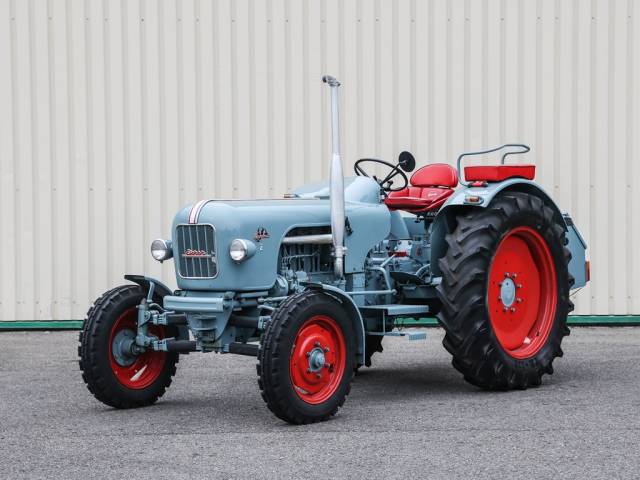
1962 | Eicher EM 600 "Mammut" II
1962 Eicher Mammut 2

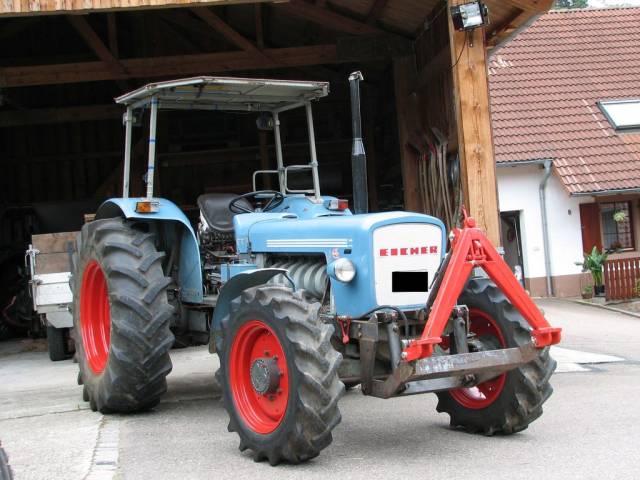
1974 | Eicher 3014 Wotan II A
Eicher Wotan II

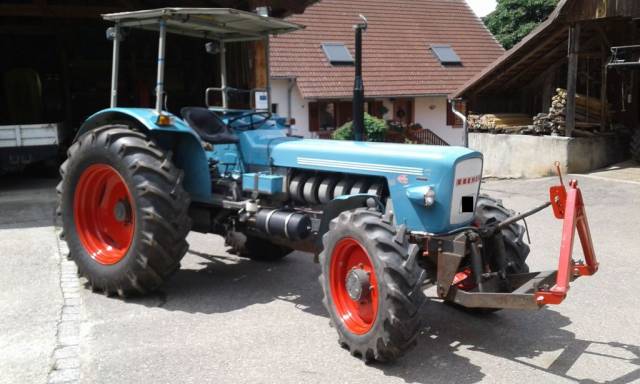
1976 | Eicher 3014 Wotan II A

Create search alert
Let yourself be notified as soon as a listing is published that matches your search filters.
History & Heritage
Eicher is one of those tractor names that makes seasoned collectors pause. Founded in Forstern near Munich, the brand grew from a small land machine repair workshop into one of Germany’s most distinctive tractor makers, and its legacy still resonates wherever air-cooled diesels and colourful classic machinery are appreciated. In Australia, that legacy has a special edge: Eicher tractors were never common here, so every surviving example feels like an import from a different era of farming.
For Australian collectors, Eicher sits in an interesting space between mainstream European brands and genuinely rare specialist machines. The brand built its reputation on robust rural engineering, but also on a strong identity. Long before “brand storytelling” became a marketing phrase, Eicher was already doing it with colour, sound and naming. Leopard, Tiger, Königstiger, Mammut and Wotan were not just model names; they were collector bait.
The company’s early success came from practical post-war farming needs. In the decades after World War II, farmers wanted tractors that were simple, durable and easy to keep going in the cold. Eicher’s answer was the air-cooled diesel. That mattered in Europe, but it also makes sense in much of Australia, where heat, dust and long working days are part of the picture. On a dry inland block, a well-sorted air-cooled tractor has a certain logic: fewer cooling-system worries, less to freeze, and a mechanical feel that suits hands-on owners.
Eicher’s classic era culminated in the famous Raubtierserie, the “predator series”, launched in the late 1950s. It is the period most collectors chase today. Earlier ED models are historically important, especially the ED 16 as a landmark in serial air-cooled diesel tractor production. Later 3000-series tractors added more power, more comfort and a more modern road presence. Across all of them, Eicher’s appeal remained the same: useful, unusual and instantly recognisable.
In Australia, that rarity is part of the attraction. Unlike Massey Ferguson, Fordson, John Deere or International Harvester, Eicher was not broadly established across Australian paddocks. A few may have arrived through private imports, dealer oddities or later enthusiast shipments, but they were never a common commercial presence. That means the local collector market is tiny, highly informed and very curiosity-driven. If an Eicher turns up at a swap meet, on a farm clearing sale, or at a vintage machinery rally, it draws a crowd fast.
For buyers in Australia, the story is therefore not just about the tractor itself but about the hunt. The challenge is often finding the right machine, then deciding whether to buy locally, source from Europe, or import from another collector. That process can be rewarding, but it needs realistic budgeting. A low-priced tractor abroad can become far more expensive once shipping, cleaning, quarantine, customs, duty, GST and inland transport are added.
Highlights
Eicher tractors stand out for a few reasons that matter to collectors in Australia.
Air-cooled diesel character
Eicher’s signature is the air-cooled diesel engine. That means a very different ownership experience from a water-cooled tractor. The sound is sharper, the mechanical layout is easier to read, and there is an unmistakable fan-driven whirr mixed with diesel clatter. At a showground in Victoria, a field day in New South Wales or a vintage pull in South Australia, an Eicher does not sound like anything else.
Rare in the Australian market
Because Eicher tractors were scarcely sold here originally, surviving Australian examples are unusual. That rarity helps collector interest, especially for buyers who prefer machinery with a story. A common tractor can be useful; a rare import can be both useful and conversation-worthy.
Strong visual identity
The alpine blue and red wheel combination is a huge part of the appeal. On a sunny day at an Australian machinery show, Eicher paintwork pops beautifully against dry grass, red dust and corrugated sheds. Even a lightly worn tractor can look good if the colour remains honest.
Practical size range
Many Eicher classics sit in the sweet spot for hobby farming, orchard work, collection displays and light property jobs. That suits Australian buyers who want a tractor that can still mow, tow, drag or parade without needing a huge shed or a heavy transport setup.
Technical individuality
Eicher did not simply follow the crowd. The brand’s modular engine families, distinct model naming and later 3000-series developments give collectors plenty to study. For enthusiasts who enjoy manuals, parts lists and restoration detail, that is a big plus.
Show appeal
Australian tractor rallies, plough days, county shows and field days often reward something visually different. Eicher’s silhouette, colour and sound all help. It is the kind of machine that gets photographed even by people who came to look at something else.
Technical Data
Classic Eicher tractors cover a wide range, from small post-war single-cylinder models to larger six-cylinder machines. For Australian buyers, the most relevant technical question is usually not just horsepower, but whether the tractor suits local conditions, local transport and local use.
The big technical talking point is still the air-cooled layout. In Australia, that can be an advantage in hot, dry regions. There is no radiator to rust through, no coolant freeze issue in colder districts, and generally fewer water-system complications. That said, air-cooled tractors still need proper maintenance. Dirt-packed cooling fins, missing tinware, tired fan belts and neglected fuel systems can quickly turn an advantage into a problem.
Parts availability is mixed but manageable. Common wear items are usually easier to source through European specialists, while rare trim, badging, gauges and model-specific body parts can be harder. For Australian buyers, that often means checking parts supply before purchase, especially if the machine is a rare model or incomplete restoration.
From a local-use perspective, mid-sized models such as Tiger and Königstiger are especially interesting. They are easier to move than big six-cylinder tractors, more practical than tiny single-cylinder machines, and still manageable for club events, light property work and display use.
Market Overview & Buying Tips
The Eicher market in Australia is niche, thin and personality-driven. That can be good for buyers who know what they want, but it also means prices are less predictable than for more common brands. Condition, originality, import quality and completeness matter a lot.
What Eicher prices look like in Australia
Australian buyers should think in landed cost, not just advertised price. European asking prices for usable classics often sit in the mid-thousands of euros, while tidy or restored examples can climb higher. Recent online listings and classifieds in Europe show working Eicher tractors such as a Tiger 74 around the equivalent of A$6,000 to A$8,000, an ES 400 around A$7,000-plus at auction, and cleaner examples of larger or rarer models pushing much further. In Australia, once freight and import costs are included, that number can climb quickly.
As a practical guide, rough Australian buyer expectations often look like this:
- Project or partial tractor: A$4,000–A$9,000 landed, depending on model, completeness and shipping origin.
- Good usable tractor: A$10,000–A$20,000 landed.
- Well-restored or rare model: A$20,000–A$35,000+ landed.
For a tractor sourced from Europe, it is easy for a machine purchased at A$7,000 equivalent to become a much larger total by the time it reaches a shed in Perth, Brisbane, Melbourne or Adelaide. Ocean freight, port charges, customs brokerage, biosecurity cleaning, inland haulage and any registration or roadworthy work all add up.
Australian import considerations
Australia is a great place to own a classic tractor, but import rules are strict. Buyers should plan around:
- Freight and insurance from Europe
- Cleaning and biosecurity requirements
- Customs and GST on the landed value
- Port, wharf and broker fees
- Inland transport from the port to the buyer’s property
- State registration rules if the tractor is to be road used
For tractors imported as road vehicles or road-capable vehicles, Australian approval and customs rules apply. The key point for collectors is simple: do not treat the overseas price as the final price. In many cases, the landed cost lands well above the purchase price, and the gap can be large for heavy machines.
What to inspect before buying
1. Identity and model correctness
Eicher badging can be misleading across generations. Check the type plate, chassis details and engine designation. A seller may advertise a familiar name like Tiger or Königstiger, but the exact variant matters a lot for value and parts.
2. Cooling system condition
Even though Eicher is air-cooled, that does not mean maintenance-free. Inspect fan housings, shrouds, cooling fins and tinware. Missing panels often hint at rough use or incomplete restoration.
3. Engine health
Listen for even firing, excessive blow-by, smoke and cold-start behaviour. A good Eicher should feel lively without sounding strained.
4. Gearbox and brakes
Old tractors are not modern synchronised machines. Expect mechanical shift feel, but avoid obvious grinding, jumping out of gear or weak stopping.
5. Rust, repairs and originality
Australian collectors tend to value honest originality. Repainted tractors can still be good, but sloppy restorations and heavy filler work reduce appeal.
6. Transportability
Think about towing weight, loading height and where the tractor will live. A big Wotan is a different commitment from a compact Leopard.
Where Australian collectors meet these tractors
The classic tractor scene in Australia is strong, and Eicher fits neatly into it. You will see vintage machinery through club days, agricultural shows, restoration open days, museum events and regional field days. Events such as Henty, Quambatook and countless local tractor runs show how deep the collecting culture runs here. Eicher may be rare, but that rarity is exactly why it gets noticed.
If you are buying for show use, aim for completeness and visual presence. If you are buying for light work, prioritise mechanical condition, tyre life and safe operation. In both cases, the Australian environment matters: UV, dust, heat and long storage periods can punish neglected machinery.
Driving Feel
Driving a classic Eicher is a very physical experience. There is no pretending otherwise. These are tractors built before electronics and comfort packages took over, so the whole machine feels direct, honest and mechanical.
The first thing most people notice is the sound. The engine note is dry and purposeful, and the cooling fan adds its own layer of noise. That is part of the attraction. At low revs, a smaller Eicher can feel almost agricultural in the purest sense: enough vibration to remind you what is happening, but enough refinement to keep it enjoyable.
On Australian back blocks, that character has real charm. Many classic tractor owners here use their machines for mowing, hauling trailers, moving firewood, doing parade laps or working small paddocks. Eicher suits that role well because it feels sturdy without being oversized. Mid-range models especially can handle a useful amount of work while still being easy enough to store and maintain.
The steering and braking are old-school. That means more planning, more input and more respect than you would give a modern compact tractor. But collectors generally want that. A classic tractor should feel like a machine, not an appliance.
For field work, the appeal is in traction and simplicity. A well-maintained Eicher can work steadily, and the air-cooled engine can be reassuring on hot days where water-cooled systems sometimes get stressed. In rural Australia, where summer heat can be brutal and dust gets everywhere, that simplicity has obvious appeal.
At a show, the feel changes again. Eicher is not just about utility; it is about presence. Owners often enjoy the response from other enthusiasts who recognise the name, even if they have never seen the model in person. That reaction is part of the value.
Design
Eicher design is one of the brand’s biggest strengths. The look is practical but memorable, and that is a rare combination in the tractor world.
The early post-war tractors are compact, purposeful and visibly engineered around function. They do not have the soft curves of some later European machines, but that is exactly why they age well. Classic Eicher design feels substantial.
The Raubtierserie is where the brand becomes truly iconic. The long bonnet, narrow stance, clean lines and bright paint scheme give these tractors a strong silhouette. On an Australian property, they look especially good against weathered timber, corrugated iron and dry pasture.
Colour matters too. The blue-and-red palette gives Eicher a distinct identity that has aged into classic status. Many collectors try to preserve the original look rather than “modernise” it. That is usually the right approach. An Eicher should look like an Eicher.
Later 3000-series tractors moved toward a more squared-off 1970s language. They are less whimsical but still attractive. For buyers who prefer a slightly more contemporary classic, they can be a very good choice. They also often bring more day-to-day usability than the earliest models.
In Australian collecting culture, visual presence goes a long way. At club events, tractors are judged as much by atmosphere as by horsepower. Eicher scores well there. The brand has enough rarity to feel special, but enough recognisable design to be appreciated immediately.
Other
Eicher in Australia: what makes it different?
Eicher was not a mainstream Australian farm brand, and that is part of the story. Local buyers usually discover them through the collector market rather than from a family farming history. That means provenance can be patchy, but enthusiasm is high. A well-documented import with paperwork, photos and restoration history will always stand out.
Because the brand is rare here, the social side of ownership matters. Australian tractor clubs, museum volunteers, field day exhibitors and regional machinery collectors are often happy to help identify parts, decode model plates or share restoration advice. That support network is valuable when you own a niche tractor.
Importing from Europe: real-world budgeting
If you are buying from Europe, treat the process as a project rather than a purchase. As a rough example, a tractor bought for the equivalent of A$8,000 can easily end up far higher once shipping, handling, quarantine and tax are added. If the machine needs special loading, non-running handling or major cleaning, the total rises again.
That does not mean importing is a bad idea. It just means the best buys are usually complete, honest machines that do not need major mechanical surprises. The cheaper tractor is often the expensive one once it is on Australian soil.
Australian conditions and ownership
Australian heat, dust and long storage periods can expose weaknesses quickly. For classic Eicher ownership, that means:
- keep cooling passages clear
- store under cover if possible
- use fresh fuel and clean tanks
- protect tyres from UV
- check wiring after long storage
- run the tractor regularly
That is especially relevant for collectors in inland regions, where temperature swings can be extreme and parts suppliers are a long way away. A well-maintained Eicher is a durable machine, but neglect is expensive no matter the badge on the bonnet.
Where Eicher fits in the Australian collection mix
Australian collectors often specialise by brand, era or use case. Eicher fits neatly into a few of those lanes:
- European classic collections
- air-cooled engine collections
- rare import displays
- working vintage tractors
- small property utility classics
That versatility is a plus. Some tractors are only for display. Eicher can be either display piece or weekend worker, depending on model and condition.
Summary
Eicher classic tractors offer Australian buyers something genuinely different: rare European character, strong mechanical identity and a collector story that is still underrepresented locally. They are not the easiest classics to find in Australia, but that scarcity is exactly what makes them interesting.
If you want a tractor with presence, sound and a clear design language, Eicher delivers. If you want a rare import that will draw attention at a field day, a show or a club run, even more so. Just buy with your eyes open: landed costs matter, parts planning matters and originality matters.
For Australian collectors, the best Eicher is usually the one that balances rarity with practicality. A good Tiger or Königstiger can be a smart entry. A restored ED 16 or Wotan can be a centrepiece. Either way, an Eicher is never just another old tractor. It is a statement piece with real farming roots.