- Car
- Citroën-Kegresse
- Citroën-Kegresse B2 (0 offers)
Citroën-Kegresse B2 classic cars for sale
The Citroën-Kegresse B2 stands as a fascinating chapter in automotive history, combining Citroën’s pioneering chassis with the innovation of the Kégresse track system. These vehicles are rare survivors of an era in which versatility and adaptability were paramount, appealing to collectors who value technical ingenuity and historic significance.
Search results
Currently, there are no matching listings for your search.
Create search alert
Let yourself be notified as soon as a listing is published that matches your search filters.
Create listing
Do you have a Citroën-Kegresse B2 that you want to sell? Then create a listing now.
Create listingCitroën-Kegresse B2 listing references from Classic Trader
Below you will find listings related to your search that are no longer available on Classic Trader. Use this information to gain insight into availability, value trends, and current pricing for a "Citroën-Kegresse B2" to make a more informed purchasing decision.
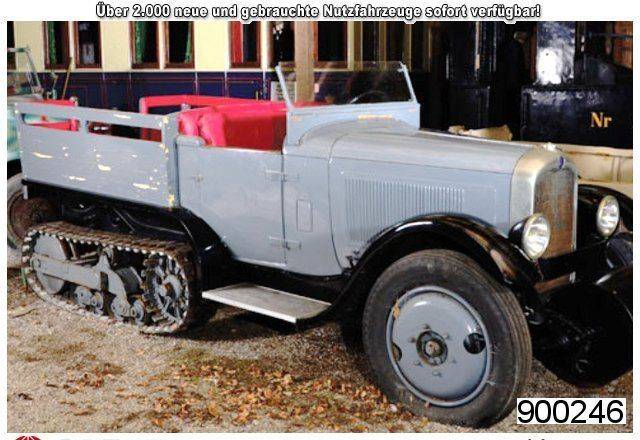
1926 | Citroën-Kegresse B2 10 CV Half-Track
Citroen Kegresse Half-Track Kettenfahrzeug

Create search alert
Let yourself be notified as soon as a listing is published that matches your search filters.
Create listing
Do you have a Citroën-Kegresse B2 that you want to sell? Then create a listing now.
Create listingCitroën-Kegresse B2 Classic Cars: Prices & Market Values
History of the Citroën-Kegresse B2
The Citroën-Kegresse B2 originated in the early 1920s, emerging from a collaboration between André Citroën and Adolphe Kégresse. Kégresse’s developed half-track system was combined with the robust and reliable chassis of the Citroën B2, resulting in a vehicle specifically designed to handle rough terrain where conventional wheeled automobiles struggled. These vehicles played a crucial role in Citroën’s ambitious expeditions across Africa and Asia, demonstrating their prowess on sand, snow, and mud. The B2 Kegresse essentially laid the groundwork for practical off-road mobility and contributed significantly to early intercontinental expeditions.
Model history
The Citroën-Kegresse B2 was based on the standard Citroën B2, which itself was a successor to the Citroën Type A. The integration of the Kégresse track system turned it into a unique model series. No direct successor inherited the half-track system in civilian vehicles, but Citroën continued to refine off-road capabilities in their following models and military projects. The B2 Kegresse’s lineage is distinguished by its association with Citroën’s 'Croisière Noire' and 'Croisière Jaune' expeditions, which set benchmarks for motorised exploration.
Highlights of the Citroën-Kegresse B2
A key feature of the B2 Kegresse is its half-track configuration, which employs a flexible rubber track on the rear axle—offering traction over soft ground where ordinary cars would bog down. This design allowed successful traverses through the Sahara Desert and Central Asia. The rarity of surviving models, coupled with their operational history on expeditions, makes each B2 Kegresse a tangible piece of motoring adventure. These vehicles are sought after by enthusiasts with an interest in early automotive innovation and adventure travel.
Technical data
Special Editions and Collectible Models
Some Citroën-Kegresse B2 units gained particular prominence from their participation in Citroën’s cross-continental expeditions, especially the 'Croisière Noire' (Black Cruise) across Africa and 'Croisière Jaune' (Yellow Cruise) across Asia. Vehicles used in these expeditions are the most coveted among collectors due to their well-documented provenance and the historical impact of the missions.
Weak Spots and Common Issues
Like many vehicles of its age, the Citroën-Kegresse B2 can suffer from perishable rubber track components and wear in the track system undercarriage. Regular replacement of track materials is often required for operational models. The gasoline engine is generally robust, but sourcing original parts, especially for the Kégresse mechanism, can be a significant challenge. Attention should also be paid to body corrosion, given the vehicle's likely exposure to demanding environments during its service life.
Engine and Performance, Transmission and Handling
The B2 Kegresse is characterized by modest engine output but can tackle difficult terrains where wheeled contemporaries would falter. The four-cylinder engine paired with a manual gearbox is reliable but unremarkable in terms of speed. Its real strength is traversing sand, snow, and mud thanks to the efficient half-track layout, making it a preferred vehicle for expeditions aiming to cross challenging landscapes. Relevant B2 Kegresse vehicles include those restored or maintained in expedition configuration, reflecting the specifications and accessories used during Citroën's legendary overseas crossings.
Interior, Comfort, Exterior and Design
The B2 Kegresse retains the spartan utilitarian aesthetic of early Citroëns, prioritizing function over comfort. Cabin materials are simple, often utilitarian fabrics and painted metal components. Special expedition versions included reinforced frames, additional fuel reserves, and navigational equipment tailored for long-distance crossings. Exterior design is dominated by the visible rear track system, giving the vehicle its unmistakable profile. Accessories often included sand ladders and provision stowage, making it immediately recognisable to enthusiasts.
Other relevant features
The Citroën-Kegresse B2 is occasionally featured in museums and historic rallies, where its off-road capabilities are demonstrated for a modern audience. Certain surviving examples are maintained by collector clubs dedicated to preserving early Citroën engineering achievements and the legacy of Kégresse's innovation.
Summary
A Citroën-Kegresse B2 offers much more than its mechanical specification suggests—it is an artefact of early twentieth-century ingenuity, specifically engineered for adventure across unforgiving terrains. Its technical solutions and historic expeditions continue to fascinate enthusiasts seeking the intersection of historical importance and engineering innovation.