BRM P160 classic cars for sale
The BRM P160, crafted by British Racing Motors and conceived by Tony Southgate, made a decisive mark in Formula One between 1971 and 1974 thanks to its 3.0-litre V12 engine. Today, this distinctive racing machine represents the pinnacle of British motorsport engineering from the era.
Search results
Currently, there are no matching listings for your search.
Create search alert
Let yourself be notified as soon as a listing is published that matches your search filters.
Create listing
Do you have a BRM P160 that you want to sell? Then create a listing now.
Create listingBRM P160 listing references from Classic Trader
Below you will find listings related to your search that are no longer available on Classic Trader. Use this information to gain insight into availability, value trends, and current pricing for a "BRM P160" to make a more informed purchasing decision.
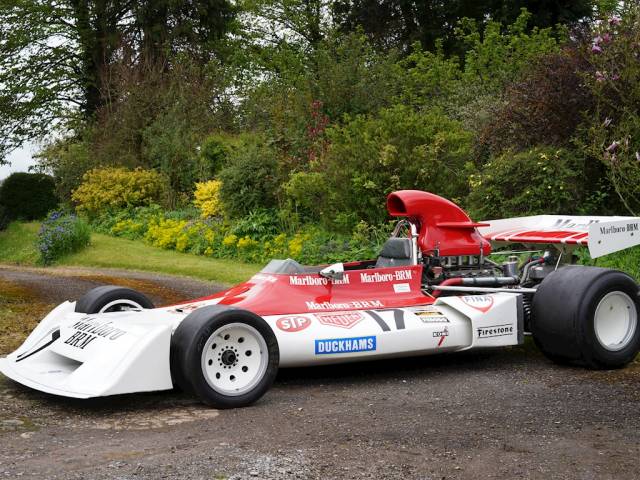
1973 | BRM P160

Create search alert
Let yourself be notified as soon as a listing is published that matches your search filters.
Create listing
Do you have a BRM P160 that you want to sell? Then create a listing now.
Create listingBRM P160 Classic Cars: Prices & Market Values
History of the BRM P160
British Racing Motors introduced the P160 in 1971 as an evolution in their pursuit of racing supremacy in Formula One. Designed by Tony Southgate, the P160 succeeded the previous BRM models, bringing innovative technical concepts to the grid. Its competitive debut marked a fresh chapter for BRM, as the team sought to challenge the dominance of established rivals. Spanning four Formula One seasons, the P160 took part in numerous Grand Prix events, making it a familiar sight on circuits throughout the early 1970s.
Model History
The BRM P160 followed a series of technically advanced BRM Formula One racers. Southgate’s approach was a response to the rapid technical developments in the sport, embodying cutting-edge aerodynamics and a refined chassis. Over its competition life, the P160 saw several iterations to improve reliability and handling. After the P160's racing career, BRM continued to evolve their F1 machines, though the team's competitive edge waned later in the decade.
Highlights of the BRM P160
The P160 stands out thanks to its robust 3.0-litre V12 engine—an engine configuration that characterised top-tier Formula One cars of its day. Technical innovation extended to its suspension and braking systems, which were adapted race-to-race according to tracks and racing conditions. The car’s legacy is closely associated with British motorsport engineering of the 1970s, blending raw power with sophisticated technical solutions.
Technical Data
Special Editions and Collectible Models
The BRM P160 underwent several iterations, such as the P160B, P160C, and P160E updates, each introducing incremental technical advancements in engine tuning and chassis adaptations. These variants are notable among Formula One historians and collectors for their unique engineering solutions and race-winning potential.
Engine and Performance, Transmission and Handling
The P160’s 3.0-litre V12 engine delivered considerable power, a key factor for its competitive standing in Formula One. Mated to race-optimised gearboxes and advanced suspension geometry, it offered a driving experience centred on precision and agility. Handling benefit from continued development, as the BRM engineering team worked to fine-tune balance and responsiveness throughout the model’s racing career. Key P160 variants—such as the P160B through to the P160E—are recognised for their distinctive technical increments, each designed to address challenges faced in Grand Prix racing, such as reliability improvements or chassis rigidity.
Interior, Comfort, Exterior and Design
True to single-seater racing tradition, the BRM P160 featured a purposeful, stripped-down cockpit focused entirely on the needs of the driver—clear instrumentation, minimal upholstery and maximised ergonomics for race conditions. The exterior, with its svelte lines and functional aerodynamic aids, was forged by the demands of speed and downforce rather than ornamentation. Liveries typically showcased the team's British heritage, often accentuated with period-typical sponsors and paintwork.
Summary
The BRM P160 defined an era of British Formula One engineering, combining an expressive V12 with a chassis evolved through racing innovation. Today, it remains the singular BRM presence in both supply and enthusiast demand, making it a reference point for connoisseurs of early 1970s Grand Prix technology.