Brabham BT36 classic cars for sale
The Brabham BT36 stands as a technically advanced Formula 2 racer from the early 1970s, engineered for competitive edge in European motorsport. Designed by Ron Tauranac, the BT36 is renowned among historic racing enthusiasts for its refined chassis, remarkable mechanical layout, and potent Ford-Cosworth FVA engine. This car's legacy is shaped by on-track results and its significance in motorsport engineering.
Search results
Currently, there are no matching listings for your search.
Create search alert
Let yourself be notified as soon as a listing is published that matches your search filters.
Create listing
Do you have a Brabham BT36 that you want to sell? Then create a listing now.
Create listingBrabham BT36 listing references from Classic Trader
Below you will find listings related to your search that are no longer available on Classic Trader. Use this information to gain insight into availability, value trends, and current pricing for a "Brabham BT36" to make a more informed purchasing decision.
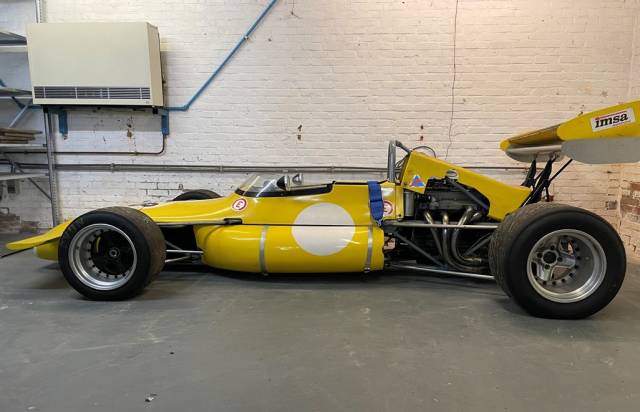
1971 | Brabham BT36
Ford Brabham BT36-20 F2
Create search alert
Let yourself be notified as soon as a listing is published that matches your search filters.
Create listing
Do you have a Brabham BT36 that you want to sell? Then create a listing now.
Create listingBrabham BT36 Classic Cars: Prices & Market Values
Introduction and History of the Brabham BT36
The Brabham BT36 emerged from the workshop of Ron Tauranac and the Brabham team in 1971 as their entry for the European Formula Two Championship. Competing against strong opposition, the BT36 soon secured its place in history, largely thanks to the driving talent of Carlos Reutemann. Despite winning a single race, Reutemann’s consistent performances—including six podium finishes—secured him a remarkable second place overall in the championship. This blend of engineering prowess and racing results established the BT36 as a notable Formula 2 machine of its era, directly linking technical innovation to track success.
Model History
The BT36’s development reflects Brabham’s evolution in Formula 2 design at the dawn of the 1970s. While its immediate predecessor, the BT35, carried forward the established formula, the BT36 introduced a more robust tubular space frame and improved aerodynamics. Its direct successors in the Brabham lineup included the BT38 and later models, each adapting the team’s lessons from the BT36’s campaign. The BT36 remained a favourite for privateers in subsequent seasons, thanks to its reliability and adaptable engineering.
Highlights of the Brabham BT36
Key features of the BT36 include a tubular space frame chassis, providing excellent rigidity and weight distribution, as well as the celebrated Ford-FVA Cosworth four-cylinder engine, delivering 220 hp. The car’s lightweight, well-balanced configuration allowed it to be competitive on a variety of circuits and particularly favoured by skilled drivers for its precise handling. The BT36’s performance in the 1971 European Formula Two Championship, especially in the hands of Carlos Reutemann, serves as a testament to its racing pedigree.
Technical Data
Special Editions and Collectible Models
No factory-official special editions of the Brabham BT36 are documented. Every chassis was constructed to competitive Formula 2 specifications, although individual cars may carry historical significance due to their race provenance, such as those driven by Carlos Reutemann.
Weak Spots and Common Issues
While specific recurring issues for the BT36 are not documented, prospective owners should carefully inspect the space frame chassis for hidden corrosion or fatigue, particularly in examples that have led an active race life. Mechanical components such as the Ford-FVA engine and Hewland transmission require expert maintenance; proper rebuild histories and verifiable service records are essential. As with all historic race cars, availability of specialist parts and skilled technicians is critical to continued performance and usability.
Engine and Performance, Transmission and Handling
The Ford-FVA Cosworth engine delivers 220 hp to the rear wheels, ensuring strong linear power delivery and high-revving capability. Coupled with the Hewland F.T.200 five-speed manual, the BT36 provides direct and mechanical shifting, a staple of early 1970s Formula cars. Predictable chassis dynamics and a balanced layout make the BT36 especially rewarding for experienced drivers, with the strong tubular frame facilitating precise control at high speed. Among BT36 chassis, those piloted by notable drivers such as Carlos Reutemann attract particular interest for both race history and engineering significance. All BT36s share the same fundamental technical base; provenance and maintenance differentiate individual examples.
Interior, Comfort, Exterior and Design
The Brabham BT36’s exterior exudes the purposeful, minimalist appearance typical of 1970s Formula 2, free from unnecessary embellishments. The car is defined by its exposed space frame, compact bodywork and driver-centric cockpit. While comfort is minimal due to its pure race focus, attention to function dictated every design element—ergonomic controls, basic yet sturdy seat, and straightforward instrumentation. Special variants or rare paint schemes are generally the result of specific team or sponsor liveries rather than factory options.
Other Relevant Features
The BT36 is representative of a formative period in Formula 2, bridging older engineering techniques with the coming wave of ground-effect and composite material technologies. Its continued presence in historic racing underscores both the ongoing practical value of its mechanical design and its appeal to dedicated motorsport enthusiasts.
Summary
The Brabham BT36 presents itself as a technically advanced Formula 2 machine, built for uncompromising on-track performance in a period of major motorsport innovation. Its legacy is anchored in strong engineering, consistent race results, and its role in shaping subsequent open-wheel design. Well-maintained examples offer a distinct opportunity for collectors and drivers seeking authentic period racing machinery.