Amilcar C3 Oldtimer kaufen
The Amilcar C3 is a nearly century-old rarity from 1927, engineered for pure, open-air driving and unmistakable pre-war sports car character. Lightweight aluminium bodywork, a simple, functional cockpit, and a 998cc four-cylinder make this model a fascinating piece for aficionados of historic rallies and genuine vintage race experiences.
Suchergebnisse
Zur Zeit sind keine passenden Inserate zu Ihrer Suche veröffentlicht.
Create search alert
Let yourself be notified as soon as a listing is published that matches your search filters.
Create listing
Do you have a Amilcar C3 that you want to sell? Then create a listing now.
Create listingAmilcar C3 listing references from Classic Trader
Below you will find listings related to your search that are no longer available on Classic Trader. Use this information to gain insight into availability, value trends, and current pricing for a "Amilcar C3" to make a more informed purchasing decision.
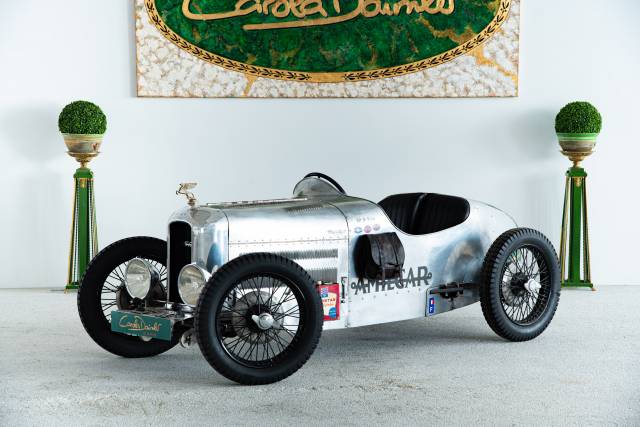
1927 | Amilcar C3
Series 26 | Expert´s report grade 2 | Restored org. condition
Create search alert
Let yourself be notified as soon as a listing is published that matches your search filters.
Create listing
Do you have a Amilcar C3 that you want to sell? Then create a listing now.
Create listingAmilcar C3 Classic Cars: Prices & Market Values
History of the Amilcar C3
Amilcar was established in Paris in 1921 by Edmond Moyet and André Morel. The founders, in collaboration with financiers Emil Akar and Joseph Lamy—whose names form 'Amilcar'—set out to create lightweight, agile vehicles known as cyclecars. As the company advanced, Amilcar retained the 'CC' designation for its sporting cars, even when regulations rendered the original meaning obsolete due to increased vehicle weight.
The late 1920s saw the pinnacle of Amilcar’s creative engineering. The C3, introduced circa 1927, embodied the brand’s commitment to lightweight construction and driving purity, directly linked to the rise of light, competitive models like the CGS. The company continued producing these mechanical delicacies until production halted in 1939. Many of these vehicles, treasured for their authenticity, have survived the decades as artefacts of interwar automotive ambition.
Model History
The C3 series followed the lineage of Amilcar's cyclecars, which began with the 'CC'. The immediate predecessors of the C3 were the diminutive, lower-powered early cars, while its technological kinship lies closest to the CS and CGS models—the latter of which, with a 1100cc engine and 33 hp, laid the groundwork for the C3's development. While the CGS boasted 115 km/h top speed and brought fame to the marque, the C3 established itself as a lighter variant with a smaller 998cc engine and a focus on reduced weight, continuing the brand’s ethos of accessible, spirited sport motoring. After this generation, Amilcar drifted away from lightweight sportscars, as financial troubles and the political climate led to the company’s decline and eventual cessation of vehicle production in 1939.
Highlights of the Amilcar C3
- Composed of unpainted aluminium bodywork for reduced weight and a pure racing look from the 1920s.
- Distinct teardrop-shaped sports car silhouette with an open cockpit—no windscreen or roof, intensifying the raw driving experience.
- Genuine Amilcar four-cylinder inline engine, providing a 36 hp output from 998 cc and matched to a three-speed manual gearbox.
- Functional, straightforward dashboard with classic four-spoke steering wheel.
- Highly suitable platform for historic events or vintage rallies thanks to its rarity and authentic engineering.
Technical Data
Special Editions and Collectible Models
No specific limited-run or special editions of the Amilcar C3 are documented; each surviving example is distinct due to the hand-crafted body construction and rarity—especially models prepared specifically for historic rallies or period competitions.
Weak Spots and Common Issues
No specific weak spots are listed in our current data. Prospective buyers should consider the brittle nature of nearly century-old aluminium panels and scrutinise mechanical components for wear typical of 1920s engineering. Regular inspection of the engine and manual transmission, as well as authenticity of rare interior fittings, is recommended.
Engine and Performance, Transmission and Handling
The 998 cc four-cylinder delivers a direct, mechanical response that characterises interwar race-derived road vehicles. At 36 hp and with a top speed of 105 km/h, performance is brisk for vehicles of its era, and the three-speed manual transmission demands a committed, period-correct approach to driving. The minimal kerb weight owing to the aluminium bodywork enhances agility at modest speeds. The absence of a roof or windscreen means the driver must be prepared for a fully exposed, visceral engagement with the road. In this generation, the Amilcar C3 stands alone as the only model present in the market, highlighting its singular significance for pre-war automotive enthusiasts.
Interior, Comfort, Exterior and Design
The Amilcar C3’s exterior is defined by a streamlined, teardrop body formed in bare aluminium, reflecting the fanatical attention to lightweight construction of late-1920s engineers. The vehicle has neither roof nor windscreen, presenting both a challenge and unique thrill for the driver.
Inside, the cockpit is stripped-back but functional, furnished with a four-spoke steering wheel and minimal instrumentation, focusing purely on the task of driving. Special features include hand-formed body panels, which mean each C3 possesses distinctive visual details. The minimalistic nature of accessories and comforts was intentional, to reduce clutter and mass.
Other relevant features
The C3’s construction method—using hand-shaped aluminium and absence of paint for saving weight—gives every vehicle individual characteristics and patina. Many owners use their cars in historic rallies thanks to the authentic driving dynamics that are true to pre-war sporting ideals.
Summary
The Amilcar C3 stands as a singular figure among vintage French sports cars, prioritising lightness, simplicity, and authentic road feel. Its solid aluminium teardrop body, exposed cockpit, and 998cc engine define it as a connoisseur’s selection for vintage rally events and collectors valuing uniqueness and direct mechanical connection.