Allard K1 classic cars for sale
The Allard K1 stands as an early post-war British sports car, blending American V8 muscle with the lightweight British chassis approach. Its rarity and engineering choices make it a unique proposition for those valuing raw 1940s roadster experiences.
Search results

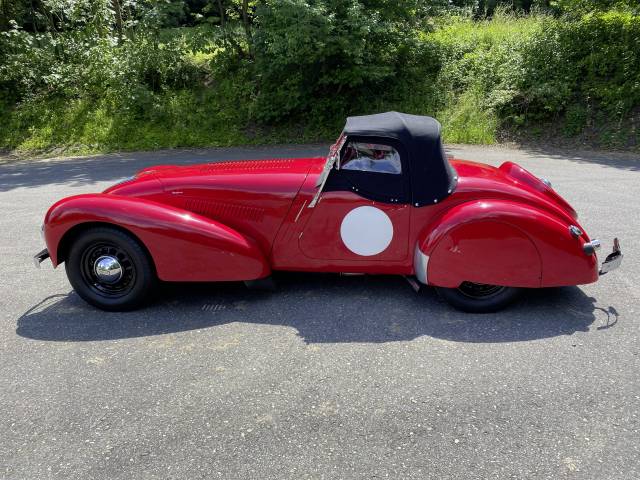
1948 | Allard K1
1948 ALLARD K1 Roadster umfangreich restauriert und top-Zustand Mille-Miglia Teilnehmer !FIVA-Pass

Allard K1 listing references from Classic Trader
Below you will find listings related to your search that are no longer available on Classic Trader. Use this information to gain insight into availability, value trends, and current pricing for a "Allard K1" to make a more informed purchasing decision.
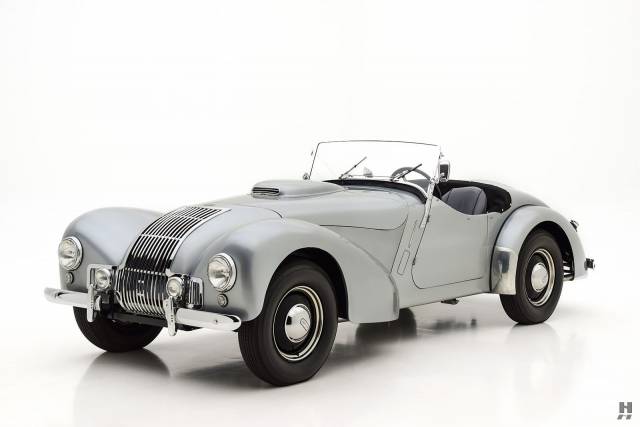
1950 | Allard K1
Allard K1
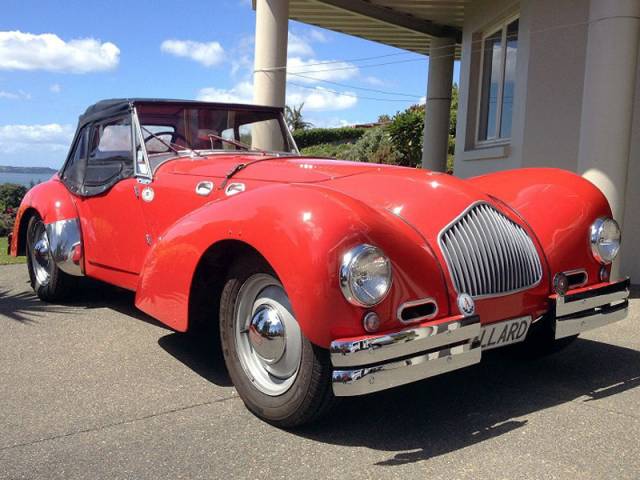
1948 | Allard K1
Auction Duxford: 29.03.2017 Estimate: £150000 - 180000*

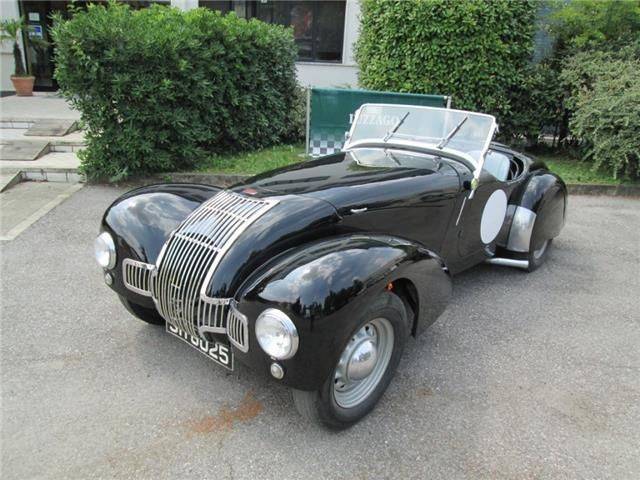
1947 | Allard K1
Oldtimer Allard K1 SPORT

Allard K1 Classic Cars: Prices & Market Values
History of the Allard K1
Launched in 1946, the Allard K1 is one of the pioneering post-war British sports cars, conceptualised and built by Sydney Allard. Intended as a performance-focused roadster, the K1 borrowed engineering inspiration from pre-war specials, notably featuring large-displacement American V8 engines nestled in a lightweight, British-designed ladder frame chassis. Its design ethos centred around performance above luxury, aiming to capture thrill-seeking drivers in a decade bound by post-war austerity. Against a backdrop of limited resources, the K1 carved a niche as a high-torque, fast and simplistic open two-seater, with competition ambitions. Production numbers were modest, underlining its exclusivity and unique place in immediate post-war motoring history.
Model History
The K1 kicked off Allard’s post-war production, preceding the better-known J2 and more refined K2 models. It didn’t have a direct predecessor, as Allard’s pre-war output primarily revolved around competition specials. The K1 laid the groundwork for later models, marked by continuous development of chassis dynamics and further engine experimentation. After its production run (1946-1949), the K1 was succeeded by the K2, featuring incremental improvements in both comfort and handling, but it was the raw and uncompromised nature of the K1 that defined Allard's early identity.
Highlights of the Allard K1
• American V8 power (often Ford or Mercury) provided outstanding acceleration for the era. • Lightweight chassis construction for a favourable power-to-weight ratio. • Rare survivor: Built in limited numbers, K1 models today are seldom seen on the market. • Mechanical simplicity: The blend of British design with American reliability made maintenance comparatively straightforward for a post-war sports car.
Technical data
Special Editions and Collectible Models
Factory documentation does not indicate official K1 special editions. However, period modifications (such as engine swaps to larger V8s) were common, and provenance-linked cars — such as those with known competition history — are considered particularly noteworthy among collectors.
Engine and Performance, Transmission and Handling
The K1 delivers strong straight-line performance thanks to its torquey V8 and light weight. With minimal driver aids, recirculating ball steering, and a basic suspension layout, handling can be rewarding for experienced drivers but requires respect especially in wet or tight conditions. The manual gearbox is robust but unsophisticated by modern standards. Braking performance is limited compared to later sports cars, making pre-emptive driving essential. The K1 itself is the sole representative of the early Allard K-Series, with all examples equipped roughly to similar technical specifications, though enthusiast modifications (engine tuning or alternative V8s) occasionally appear.
Interior, Comfort, Exterior and Design
The K1’s body is a study in functional simplicity, featuring minimal ornamentation and purposeful lines. Its cycle fenders and open cockpit define the character. Interiors are sparse, focused on driving, with limited weather protection and few concessions to comfort. Materials used include metal dashboards and basic leather trim. Aftermarket or owner-added accessories such as period-correct racing wheels or auxiliary gauges are common. Paint finishes were typically conservative, but restored examples sometimes feature unique historically inspired colours.
Other Features
Competition legacy is a notable aspect—some K1s were campaigned in period, adding extra value for provenance-focused enthusiasts. The car’s design philosophy, bringing together American and British engineering, foreshadowed later developments in Anglo-American sports car building.
Summary
The Allard K1 stands as a rare and desirable classic for purists, offering a visceral 1940s sports car experience that pairs American V8 delivery with the British tradition of lightweight, racer-inspired chassis design. Limited surviving examples and a focus on performance over comfort define its appeal, reinforced by clear supply and demand figures within its segment.