Adler Favorit classic cars for sale
The Adler Favorit stands as a striking example of late-1920s German engineering, offering six-cylinder luxury proportions with a more practical four-cylinder drivetrain. With a 1,943 cc engine and a range of coachbuilt body styles, the Favorit bridges robust construction and classic elegance for enthusiasts seeking rarity and authenticity.
Search results
Currently, there are no matching listings for your search.
Create search alert
Let yourself be notified as soon as a listing is published that matches your search filters.
Create listing
Do you have a Adler Favorit that you want to sell? Then create a listing now.
Create listingAdler Favorit listing references from Classic Trader
Below you will find listings related to your search that are no longer available on Classic Trader. Use this information to gain insight into availability, value trends, and current pricing for a "Adler Favorit" to make a more informed purchasing decision.
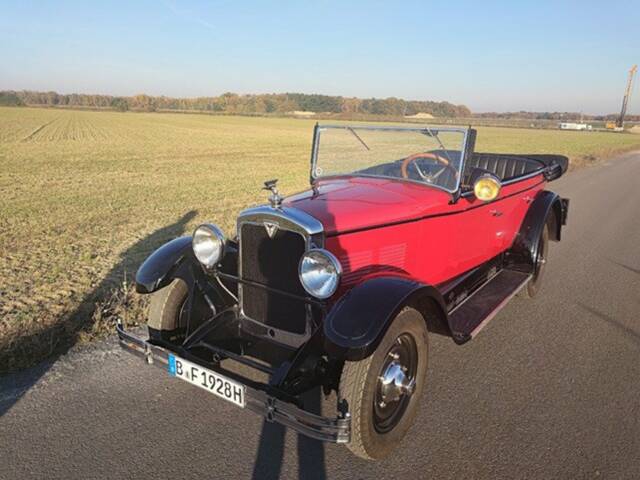
1928 | Adler Favorit 8/35 PS
Sehr seltener Oldtimer ADLER-FAVORIT-TOURER (Cabrio)

Create search alert
Let yourself be notified as soon as a listing is published that matches your search filters.
Create listing
Do you have a Adler Favorit that you want to sell? Then create a listing now.
Create listingAdler Favorit Classic Cars: Prices & Market Values
History of the Adler Favorit
Introduced in early 1929, the Adler Favorit emerged from Frankfurt as a response to the rising demand for more affordable, yet substantial saloons. Adler had already made an impact with the Standard 6, and the Favorit followed closely in its footsteps, sharing the same generous 2,840 mm wheelbase. While the Standard 6 boasted a six-cylinder heart, the Favorit was fitted with a newly developed four-cylinder, 1,943 cc engine—delivering 35 PS—which made it more accessible without sacrificing road presence. A strong rivalry in the German automotive market forced Adler to innovate, and with renowned coachbuilders offering diverse body configurations, the Favorit quickly etched a unique place in interwar motoring culture.
Model History of the Adler Favorit
The Favorit was essentially the four-cylinder sibling to the Standard 6, inheriting much of the latter’s chassis and engineering philosophy, but positioned lower in the range to attract customers seeking the stature of a limousine with lower running costs. Production began in early 1929 and shared many mechanical components with its bigger brother, streamlining maintenance for owners. Successor models did not appear under the 'Favorit' name—Adler soon shifted focus toward smaller front-wheel-drive models and innovative designs in the 1930s, making the Favorit a unique milestone with limited direct lineage in the brand's evolution.
Highlights and Unique Features
The Adler Favorit distinguished itself with a limousine-like stature on a four-cylinder platform, blending the road authority of larger cars with improved efficiency. Buyers could select from several body styles, crafted by top coachbuilders of the era—this variety makes surviving Favorits especially interesting to today’s collectors. The car’s engineering, rooted in Adler’s reputation for robust build quality and innovation, delivered both reliability and a sense of understated prestige.
According to recent Classic Trader data, every Adler classic car listing for this model series corresponds to the Favorit (manufacturer code 8J), accounting for 100% of Adler’s model-series listings. The same complete share is reflected in listing views, underscoring the Favorit’s singular role among Adler vehicles currently available on the market.
Technical Data
Special Editions and Collectible Models
Multiple body configurations were made available through cooperation with leading coachbuilders. While no factory-limited editions under the 'Favorit' name are documented, coachbuilt variants—especially those with custom interiors or one-off designs—command special interest in the collector's market today.
Engine, Performance, Transmission and Handling
The 1,943 cc four-cylinder engine’s 35 PS output gave the Favorit adequate performance for its era, prioritising smooth cruising over sporting acceleration. Its long wheelbase ensured good straight-line stability, a characteristic appreciated on interwar roads. Transmission was typically a manual unit, robust and relatively straightforward to maintain thanks to shared components with other Adler models. Different body styles and weights meant some performance variation, with lighter variants offering more responsive handling.
Fuel consumption and running costs were kept in check—an important attribute given the economic context of the late 1920s. The solid chassis construction and availability of spare parts (at least in period, due to Adler’s sharing strategy) further contribute to the Favorit’s reputation for reliability among surviving pre-war vehicles. Saloon and cabriolet variants attract particular attention due to their rarity and craftsmanship, often depending on the specific coachbuilder involved.
Interior, Comfort, Exterior and Design
Interior appointments in the Favorit reflected the standards of its class and era, with plush upholstery, ample room for passengers, and elegant detailing on switchgear and instruments. Externally, the car’s proportions are defined by its long wheelbase and gracefully flowing lines—enhanced by the individual flair of coachbuilt bodies. Notable design elements include classic swept wings, vertical radiator grille, and understated use of chrome accents. Accessories such as period luggage racks, spare wheel mounts, or bespoke dashboards could be specified, further personalising each Favorit.
Summary
The Adler Favorit is a representative of late-1920s German saloon engineering that balanced size, comfort, and a distinctive four-cylinder drive. With its dedicated presence in the classic car market—according to listing statistics—and its coachbuilt diversity, the Favorit combines historic appeal with mechanical straightforwardness for collectors who value individuality and authenticity.