- Car
- Saporoshez
- Saporoshez 965 (0 offers)
Saporoshez 965 Classic Cars for Sale
The Saporoshez 965, produced in the Ukrainian 'Zaporizhzhia Automobile Building Plant' from 1960 to 1969, is a rare sight in Western Europe but a highlight at any classic car gathering. This compact car stands out for its robust engineering, unique styling, and fascinating history, making it a talking point for knowledgeable enthusiasts.
Search results
Currently, there are no matching listings for your search.
Create search alert
Let yourself be notified as soon as a listing is published that matches your search filters.
Create listing
Do you have a Saporoshez 965 that you want to sell? Then create a listing now.
Create listingSaporoshez 965 listing references from Classic Trader
Below you will find listings related to your search that are no longer available on Classic Trader. Use this information to gain insight into availability, value trends, and current pricing for a "Saporoshez 965" to make a more informed purchasing decision.
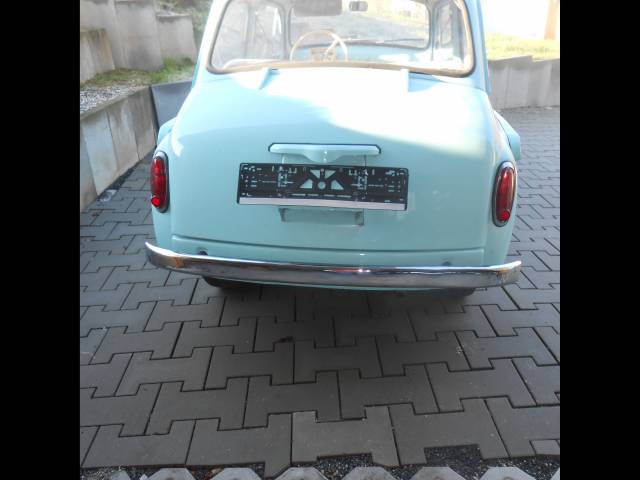
1966 | Saporoshez 965 A
Seltener Oldtimer

Create search alert
Let yourself be notified as soon as a listing is published that matches your search filters.
Create listing
Do you have a Saporoshez 965 that you want to sell? Then create a listing now.
Create listingSaporoshez 965 Classic Cars: Prices & Market Values
History of the Saporoshez 965
Presented to the public on June 18, 1959, the Saporoshez 965 shook up automotive expectations in the Soviet Union. Its unibody design echoed the Fiat 600, but key differences in the rear and technology set it apart. Entering serial production in November 1960, the 965 was powered by an air-cooled V4 aluminium engine and gained attention for its characteristic silhouette, earning quirky nicknames like 'The Hunchback' in East Germany. The early models featured handcrafted construction before shifting to assembly-line production in late 1961. Despite a well-earned reputation for cold weather start reliability, the car's weak heating system proved inadequate for Ukrainian winters. In total, 322,166 vehicles of the various 965 types rolled off the line, making the model significant in Eastern Bloc motoring history.
Model History of the 965 Series
Launched as a follow-up to the initial Saporoshez offerings, the 965 became the backbone of the post-war Zaporizhzhia plant’s small car production. From 1961, the original 746 cc/23 PS engine set the benchmark, with a 1962 update bumping displacement to 887 cc and power to 27 PS. The evolution involved minor visual tweaks and technical upgrading, then came special variants like right-hand-drive models for the postal service and accessible versions fitted with electromagnetic clutches. After 1969, the 965 was followed by the 966 series, which sported a more modern body and further technical enhancements.
Highlights of the Saporoshez 965
Mechanically, the Saporoshez 965 distinguishes itself with its rear-mounted, air-cooled V4 engine – a rare feature in the compact class of its era. Its idiosyncratic, bulbous styling drew as much attention as its engineering. Because the vast majority of 965s were built for the Soviet bloc, finding an original example in Western Europe or the UK remains a rarity. Enthusiasts particularly value the authentic condition of preserved examples, especially those retaining their period wiring and hardware.
Technical Data of the Saporoshez 965
Special Editions and Collectible Models
From 1962 onwards, several special variants emerged, including a right-hand-drive model for postal services, complete with a letter shelf replacing the rear bench. In 1963, an accessible version with an electromagnetic clutch catered for drivers with disabilities – both are now particularly sought after among collectors due to their rarity and specific purpose-built adaptations.
Weak Spots and Common Issues
Potential buyers should pay close attention to the heating system, as the original equipment struggled to heat the interior effectively in cold weather. As with many vehicles of this era, the heating output rarely exceeded 15°C during harsh winters. Bodywork corrosion and sourcing period-correct parts require diligence, although many spares are reproduced to the original factory specification.
Engine and Performance, Transmission and Handling
The Saporoshez 965 is notable for its air-cooled V4 engine, rear-wheel drive, and straightforward mechanical design. While modest in output, the lightweight construction and compact footprint make the 965 nimble enough for urban driving, albeit with performance limitations dictated by its sub-1-litre engine series. The primary appeal lies in simplicity over speed, with the 965’s engine often prized for its robust cold weather starting and simple maintenance. - 965 (initial 746 cm³, 23 PS)
- 965A (887 cm³, 27 PS, improved efficiency)
Interior, Comfort, Exterior, and Design
The Saporoshez 965 exhibits a distinct, rounded silhouette with its 'hunchback' rear end and pronounced air intake modifications following the 1962 facelift. Interiors were functional, reflecting utilitarian Soviet sensibilities but offered occasional extras like right-hand-drive layouts or modified letter trays for the post edition. The redesign introduced a new logo and subtle changes to exterior trim, helping enthusiasts date specific build years. The dashboard and switchgear remain period-correct in original cars, and historic details such as the electromagnetic clutch in disability models are testament to the manufacturer's ingenuity.
Other Noteworthy Features
Saporoshez 965 vehicles can be found at classic car shows in Germany and are eligible for classic vehicle registration, making them stand out at any meet. Reproduction parts following original specifications help with authentic restoration, and the 965’s reputation for reliable starting, even in cold conditions, further adds to its appeal among hands-on car enthusiasts.
Summary
The Saporoshez 965 is a fascinating chapter from Soviet-era automotive engineering, combining unusual technical solutions, distinctive styling, and targeted variants. Its rarity in Western markets, special editions, and authentic restoration opportunities position it as a unique classic for those seeking something unorthodox from the Cold War period.