- Car
- Mercedes-Benz
- Mercedes-Benz G-Class(37 offers)
Mercedes-Benz G-Class classic cars for sale
The Mercedes-Benz G-Class combines uncompromising off-road capability with craftsmanship and a distinctive boxy exterior. Developed for military and utility use, yet refined into luxurious civilian variants over decades, the G-Class remains synonymous with rugged engineering and individual style.
Search results
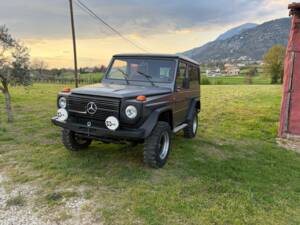
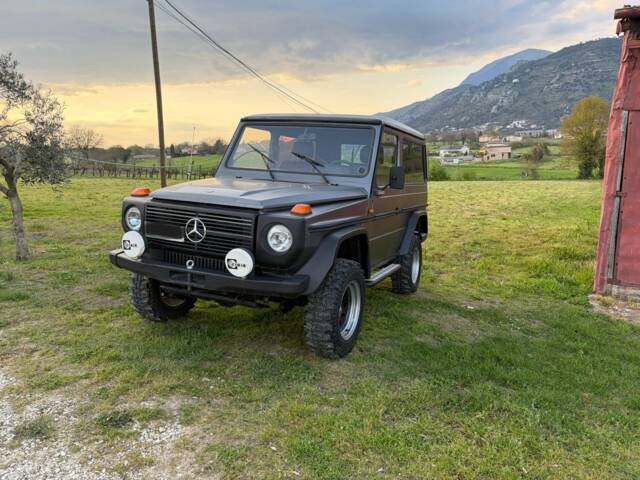

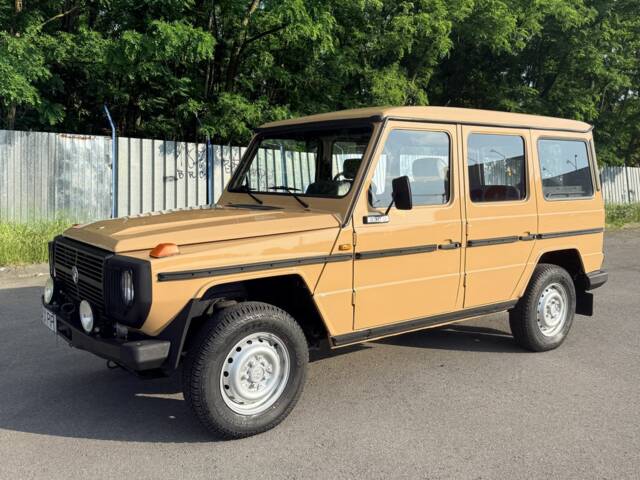
1983 | Mercedes-Benz 230 G (SWB)
Mercedes-Benz 230 G | 1983 | Route 66 Auctions - For sale by auction. Estimate 20500 EUR

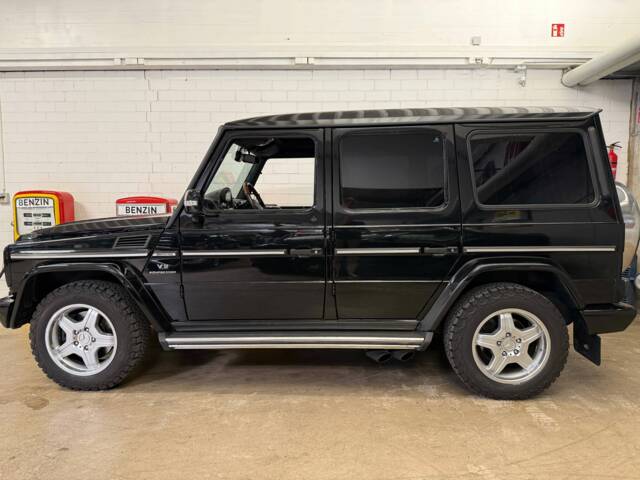
2005 | Mercedes-Benz G 55 AMG Kompressor (LWB)
Mercedes-Benz G 55 AMG

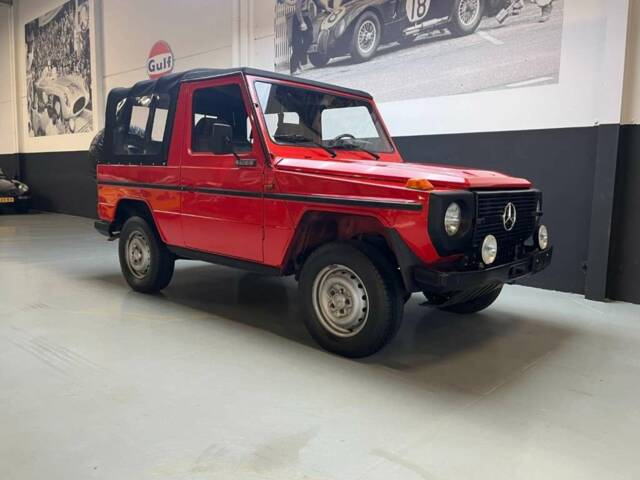
1981 | Mercedes-Benz 230 GE (SWB)
Mercedes-Benz 230
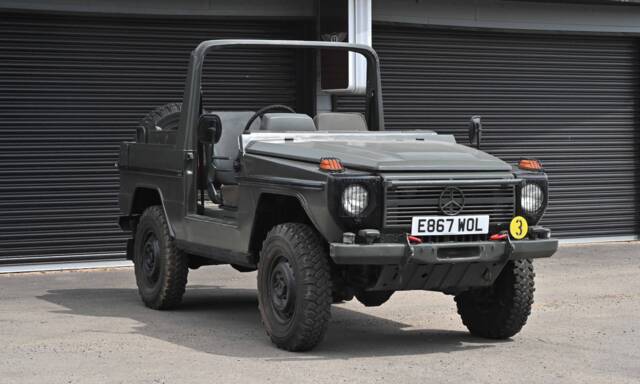
1987 | Mercedes-Benz 240 GD (SWB)
1987 Mercedes-Benz G Wagen 240 GD Convertible

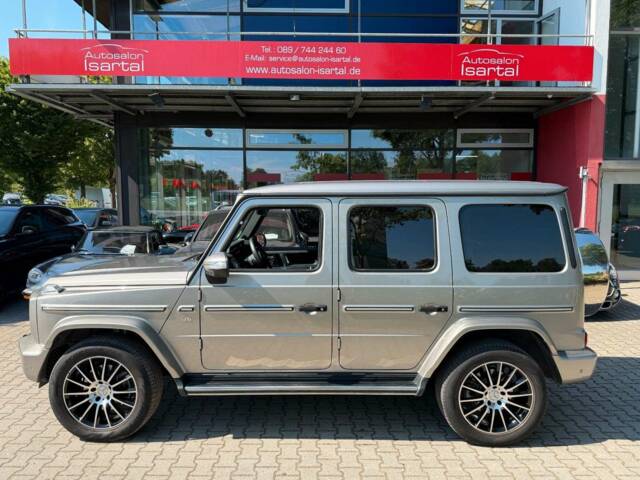
2019 | Mercedes-Benz G 500 (LWB)
Mercedes-Benz G 500
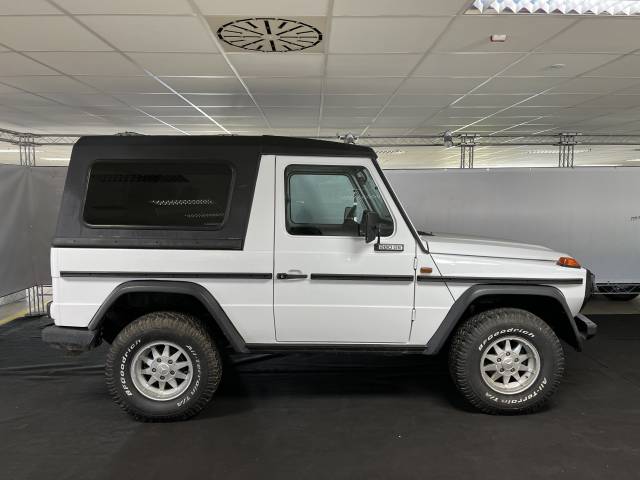
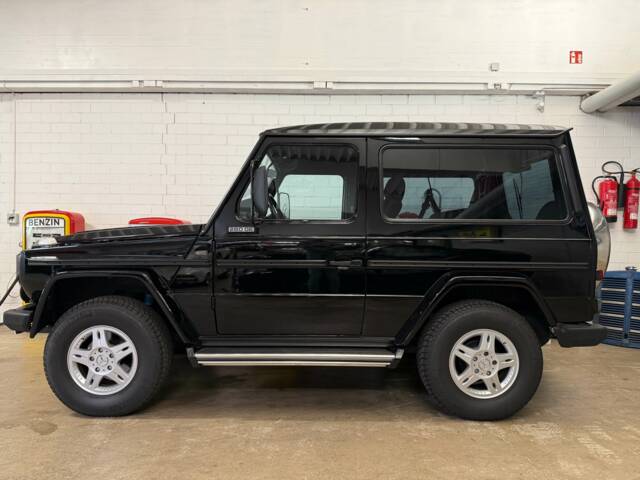
1984 | Mercedes-Benz 280 GE (SWB)
Mercedes-Benz G 280
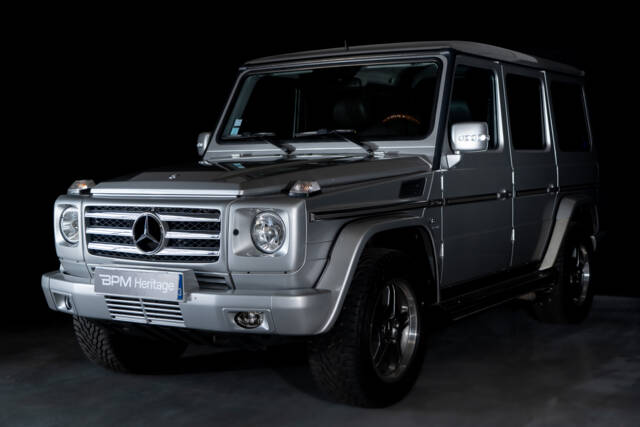
2003 | Mercedes-Benz G 55 AMG (LWB)
68 000 km d'origine


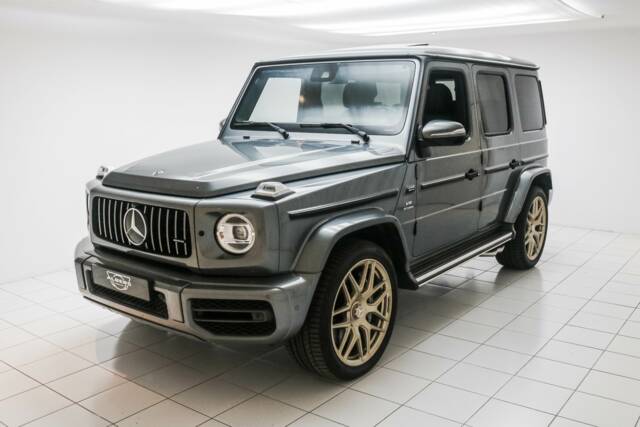
2020 | Mercedes-Benz G 63 AMG (LWB)
Rear entertainment - Glass roof - Burmester - 2 owners - Dealer maintained

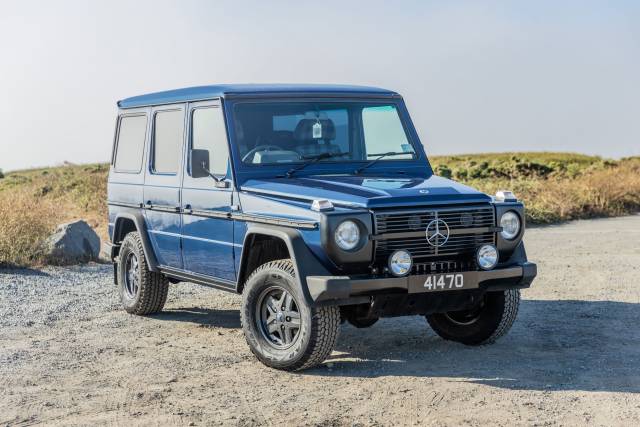
1989 | Mercedes-Benz 300 GD (LWB)
Mercedes-Benz G Wagen 300GD LWB

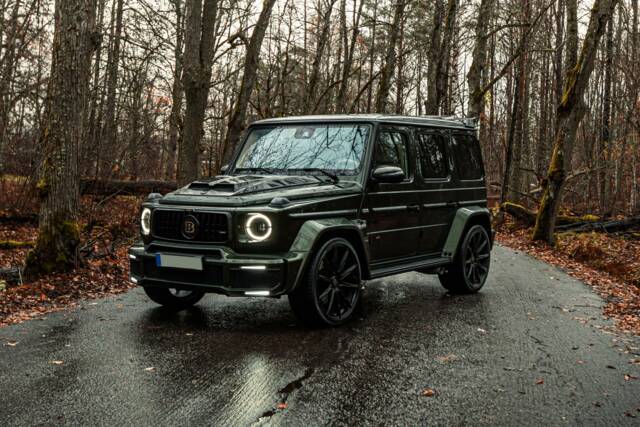
2019 | Mercedes-Benz G 63 AMG (LWB)
Brabus G800 Widestar
VAT is reclaimable

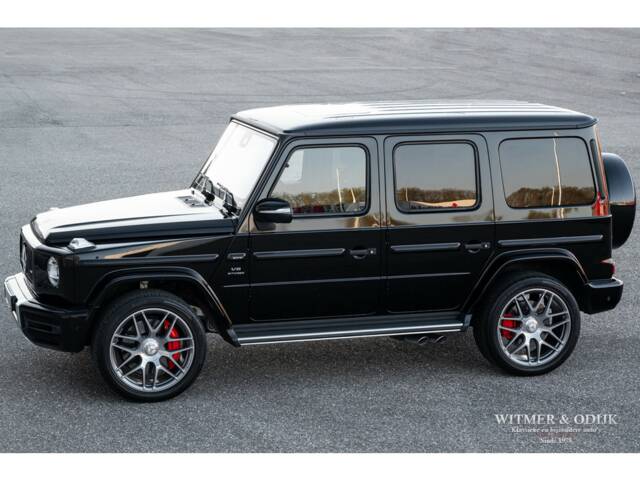

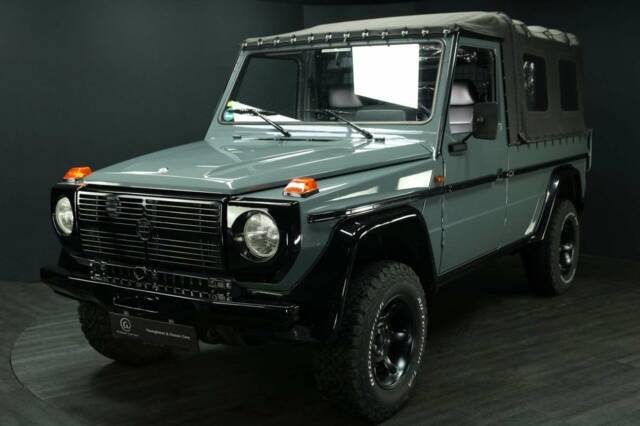
1993 | Mercedes-Benz G 230
Mercedes-Benz G 230

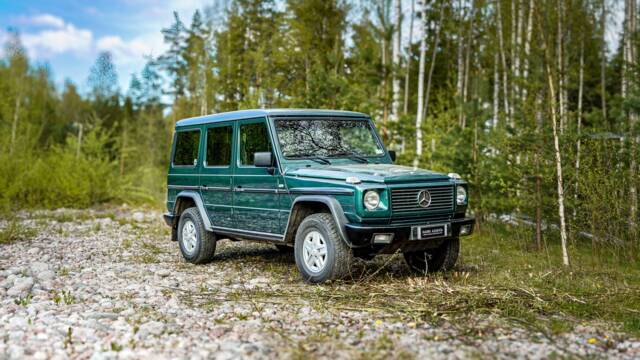
1991 | Mercedes-Benz 300 GE (LWB)
Extensively overhauled by last owner, great condition
Mercedes-Benz G-Class Classic Cars: Prices & Market Values
The market value of Mercedes-Benz G-Class classic cars is primarily determined by the specific manufacturer code and variant, as well as technical condition, originality and mileage. Additional factors include rarity, history and documentation. A well-maintained, largely original vehicle with low, verifiable mileage and complete history including appraisals and documentation typically achieves significantly higher prices than a comparable vehicle with deferred maintenance, many modifications or unclear provenance.
Mercedes-Benz G-Class: Market Prices & Value Trends
Based on sales data from the Classic Trader marketplace, the Mercedes-Benz G‑Class (classic and modern) shows a firm to rising market over the period 2021 to January 2026, with demand strongest for well-specified W463 models and clean, usable early W460/W461 cars. Most mainstream classics from the 1980s to mid‑1990s (such as 230 GE, 280 GE, 300 GD and 250 GD “Wolf”, in SWB/LWB) typically sit in a realistic €25,000–€60,000 band, with project-grade examples occasionally dipping below that and top-condition cars pushing above it. Later performance and luxury variants (G 55 AMG, G 63 AMG, G 500) commonly trade around €70,000–€170,000, reflecting higher running costs but also stronger brand pull and everyday usability. Ultra-rare specials (e.g., 6x6, Maybach Landaulet, “Final Edition”) appear at much higher figures and should be treated as outliers rather than a guide to the wider market. Overall, buyers face a competitive market, while sellers of well-documented, original cars benefit from steady liquidity across Europe, especially in German and Benelux stock.
History of the Mercedes-Benz G-Class
The genesis of the G-Class traces back to a unique collaboration between Daimler-Benz and Steyr-Daimler-Puch in the early 1970s. Originally, the project emerged as a response to a request from the Shah of Iran for a robust off-roader capable of handling tough terrain. In 1979, the G-Class made its debut with body-on-frame construction and selectable four-wheel drive. Early models exuded utilitarian flair—delivering reliability for military ventures, forestry services, and challenging environments. Production has always been handled in Graz, Austria, with hand-built elements remaining a point of pride. The G-Class found almost instant success, not only as an expedition vehicle but by proving its rugged credentials in events like the Paris-Dakar Rally. Over the years, refinement and comfort features increased, but the design’s core DNA remained genuinely functional. The vehicle’s distinct visual presence, marked by angular bodywork, became a signature element, surviving through generations with only evolutionary changes.
Model History of the G-Class
The original W460 generation (from 1979) focused on practicality and hard-wearing simplicity, with variants including convertible, short and long wheelbase bodies. Utility and commercial use continued with the W461, which evolved from the W460 in 1990 and mostly served military and professional fleets. The W463, introduced also in 1990, marked a major pivot toward civilian luxury, adding permanent 4WD, higher-grade trim, and extensive comfort equipment. Engines ranged from modest four-cylinders to high-performance V12s in the top AMG models. Since 2018, the W464 has continued this evolution, blending classic external styling with updated underpinnings and technology. Throughout all generations, the G-Class has maintained a wide variety of applications, from military service vehicles to bespoke luxury SUVs and limited-run collector’s editions.
Highlights and Unique Features
The G-Class is distinguished by its ladder-frame chassis, permanent or selectable all-wheel drive, and fully lockable front, centre and rear differentials—hardware rare among luxury vehicles. Body styles range from classic short- and long-wheelbase wagons to convertibles, pickups, 6x6 variants, and even ambulances. The catalogue of available powertrains is unrivalled: naturally aspirated and turbocharged petrol and diesel units, from inline-fours and fives to V8s and the exceedingly rare V12. Mercedes’ Designo and AMG options allow for individual customisation—from special paints and materials through performance upgrades. The G-Class continues to be actively chosen by militaries and specialist agencies worldwide, underlining its engineering credibility.
Technical Data
Special Editions and Collectible Models
Distinct limited editions have shaped the G-Class’s reputation among collectors: The 500 GE V8 (1993) introduced V8 power to the lineup. AMG models such as the rare G36 AMG (~120 units), G55 AMG, G63 AMG, and top-tier G65 AMG (V12) embody extreme performance in the classic body. Exotics like the G63 AMG 6x6, G500 4x4² and the G650 Maybach Landaulet—limited to 99 units—showcase the immense versatility of the G platform. Anniversaries have also spawned special ‘Classic’, ‘Professional’, and 'Wolf' (military-spec) models, often with numbered series and bespoke trim, prized by collectors.
Weak Spots and Common Issues
Mechanical robustness is a key G-Class strength, particularly with basic drivetrains. However, as with any body-on-frame, check for rust in chassis and body seams. Early diesels, while renowned for longevity, may require injector and pre-chamber attention at higher mileage. W463 models often have more sophisticated electronics—ensure all electrical components, including locking differentials and infotainment, operate as intended. Later AMG models require careful engine and transmission inspections due to high power outputs. Interiors, especially those with Designo leather, should be inspected for age-related wear. Documented service history is a strong plus, supporting future value retention.
Engine, Transmission & Handling
Early G-Class models were geared towards off-road reliability with low-range gearboxes and robust suspensions. Steep approach and departure angles, which remain among the best in the SUV segment, allow the G to traverse challenging obstacles. Since the W463, on-road manners improved significantly—air conditioning, multi-speed automatic transmissions, and high-performance engines, particularly in the AMG range, turned the G-Class into a formidable cruiser, not just a rock crawler. Modern iterations, especially the W463 and W464, blend outright pace with comfort, boasting sub-6 second acceleration to 100 km/h in some AMG versions and smooth highway composure, while retaining formidable all-terrain prowess. - G500: V8 performance, civilised luxury.
- G55 AMG / G63 AMG: AMG power, distinctive styling, high specifications.
- G65 AMG: Rare V12, collector interest.
- G500 4x4² and G63 AMG 6x6: Portal axles, extreme off-road features.
- W460/W461: Utilitarian, military application, collectable for purists.
Interior, Comfort, Exterior & Design
The boxy, hand-welded exterior follows minimal evolutionary shifts, with details like exposed door hinges and flat glass remaining from the first model. Interior appointments, particularly since the W463, have featured increasing luxury: premium leathers (including Designo), real wood or carbon fibre dash inserts, and multi-contour adjustable seating. Options include exclusive Designo customisation, high-grade sound systems (Burmester, Harman/Kardon), ambient lighting, and state-of-the-art infotainment including COMAND and smartphone integration. Cabrios, extended wheelbase models, 6x6s, and the ultra-rare Maybach variants spotlight the sheer breadth of individuality possible. Traditional colours range from military greens to striking metallics and AMG-specific hues. Special equipment lists extend to auxiliary heating, power sunroofs, multi-zone climate, advanced driver-assist technologies, and even conference seating in executive versions.
Other Notable Features
The G-Class has been adapted for use in ambulances, military scouts, heavy-duty transport and even served as the Popemobile. The spare parts ecosystem remains strong, with a host of OEM and aftermarket specialists. Export models adapted for emissions and local market needs retain much of the domestic vehicle’s integrity. Unlike most SUVs, even older models frequently retain roadworthiness due to their robust build and strong parts availability. Insurance and registration, particularly for H-plate classic vehicles in Germany, enhance their appeal in the collector market.
Summary
Mercedes-Benz G-Class classic cars occupy a unique position in automotive culture, merging authentic off-road performance with perennial engineering and design values. Collector interest stays high across all generations, especially for special editions and AMG variants. Classic Trader’s listing and demand data confirm ongoing enthusiasm for both workmanlike and luxury G-Class vehicles. The G-Class’s continuous production, wide customisation options, and hand-finished build make it a landmark in both off-road and luxury motoring.