- Motorcycle
- Saroléa (0 offers)
Buy Saroléa Motorcycle
From 1903 to 1960, the Herstal factory in Belgium produced motorcycles blending British engineering with Belgian craftsmanship. Today, these rare machines are among the most sought-after rarities for collectors of European classics in Australia.
Search results
Currently, there are no matching listings for your search.
Create search alert
Let yourself be notified as soon as a listing is published that matches your search filters.
Saroléa listing references from Classic Trader
Below you will find listings related to your search that are no longer available on Classic Trader. Use this information to gain insight into availability, value trends, and current pricing for a "Saroléa" to make a more informed purchasing decision.
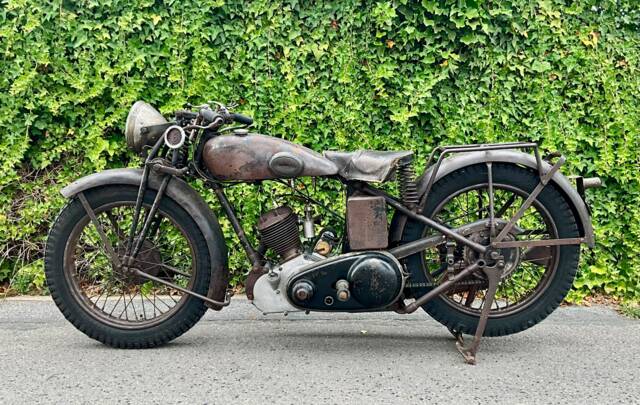
1933 | Saroléa 33A Touriste
matching numbers!!

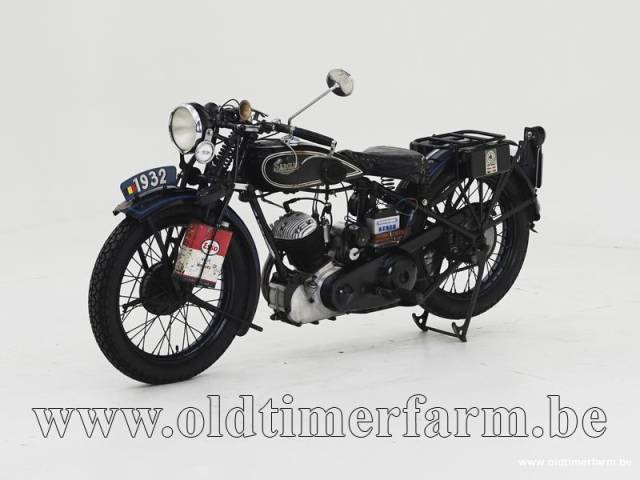
1932 | Saroléa 32A Touriste
1932 Sarolea 32F '32
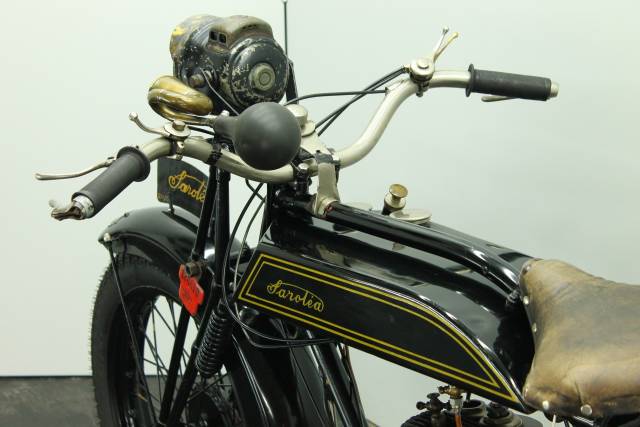
1925 | Saroléa Super Sport 500
Sarolea T23 1925 500cc tourist version
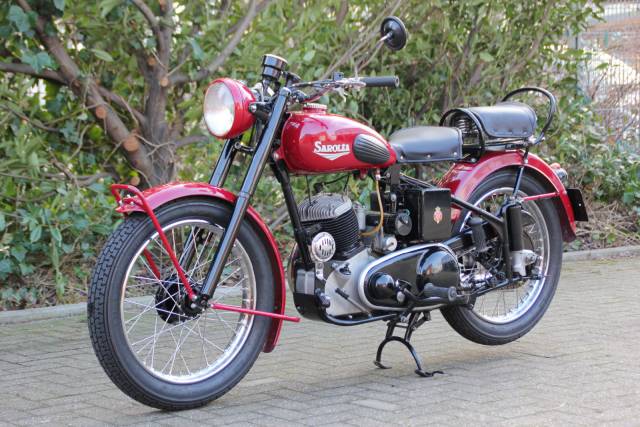
1953 | Saroléa 400 Estafette
Sarolea 400 Estafette

Create search alert
Let yourself be notified as soon as a listing is published that matches your search filters.
History & Heritage
The roots of Saroléa date back to 1850, when the company was founded in Herstal near Liège as a weapons manufacturer. From 1892, the product portfolio expanded to include bicycles, followed by motor tricycles and small cars from 1896. The decisive step occurred in 1903 with the entry into motorcycle production – making Saroléa one of the pioneers of the Belgian motorcycle industry.
The first models featured 2.75 hp and 3.5 hp single-cylinder four-stroke engines, characterized by solid workmanship. As early as 1906, Saroléa presented a 5 hp V-twin, which catapulted the brand technically into the top tier. The designs were so mature that they were even exported to England and sold there under the Kerry label – a remarkable success for a continental European manufacturer.
A technical milestone was achieved in 1914 with a 546 cc engine with side valves. In the following years, Saroléa concentrated on proven 346 and 496 cc single-cylinders with either overhead (OHV) or side valves (SV). The philosophy was clear: British components of the highest quality combined with Belgian manufacturing precision. Amal carburetors, Best & Lloyd oil pumps, and Sturmey-Archer gearboxes defined the technical profile.
The 1930s marked the sporting peak: Saroléa maintained a factory team with OHC racing engines and developed revolutionary single-cylinders with bevel gear drive and double overhead camshafts in 1938 – a design ahead of its time that gained international recognition.
After World War II, Saroléa ventured into larger displacements. Between 1950 and 1959, the Atlantic series was created with a parallel-twin engine, initially with 500 cc, later bored out to 600 cc. However, the market changed: small cars became more affordable, and the motorcycle boom subsided. Saroléa sought collaborations with British manufacturers and experimented with two-stroke engines from Sachs, but the decline was unstoppable. In 1960, classic motorcycle production ended.
The brand experienced a surprising comeback in 2014 with the electric Saroléa SP7 – a symbolic bridge between tradition and the future.
Highlights & Special Features
What distinguishes Saroléa motorcycles is the unique synthesis of Anglo-Belgian engineering. While British brands like Norton or Velocette became world-famous, Saroléa remained an insider tip – today a decisive advantage for collectors in Australia looking for exclusivity.
The 31A series from the early 1930s is considered the epitome of the robust touring motorcycle. Originally introduced as Type 250 and renamed in 1931, it served as a mass-market motorcycle for everyday riders. The machine combined reliability with affordable maintenance – virtues that made it the workhorse of its era.
Technically more sophisticated were the models 38AL and 38AS from 1938/39. The 38AS received an oval three-speed gearbox, while the 38AL was equipped with a tall rectangular four-speed gearbox – subtle differences that delight connoisseurs today. Both variants embody the peak of pre-war construction at Saroléa.
For motorsport enthusiasts, the 30R from 1930 remains the highlight: the brand's first dedicated racing motorcycle laid the foundation for later successes. In 1937, a model with bevel gear drive followed – a technical refinement that only a few manufacturers mastered. From the late 1930s, the focus shifted to motocross, where Saroléa also set accents.
The Atlantic 500 and 600 of the post-war period represent the last major innovation: the parallel-twin was intended to lead Saroléa into the modern era. Although this was not commercially successful, the engine still impresses today with its refined smoothness and solid torque.
An often overlooked detail: many Saroléa models bear Belgian type plates with French designations – a charming testimony to their multilingual home and today a mark of authenticity during restorations.
Technical Data
The technical diversity of Saroléa reflects 57 years of motorcycle construction. Here is an overview of the most important models:
Common features of many pre-war models:
- Rigid rear frame or plunger suspension
- Drum brakes front and rear
- Amal carburetors (British license)
- Sturmey-Archer gearboxes (British supply)
- Best & Lloyd oil pumps
- Magneto ignition (often Lucas or Bosch)
The Atlantic series marked a technological leap: telescopic forks at the front, swingarm at the rear, a modern chassis for the 1950s.
Market Overview & Buying Tips
Saroléa motorcycles are among the rarest European classics on the market – accordingly, the price structure is quite specific. While British or German makes are available in larger numbers, Belgian machines appear only sporadically, especially in the Australian market.
Price ranges by model and condition (Estimated values 2024/2025 in AUD):
- 31A (Touring model, pre-war): Restoration projects from A$6,000–A$10,000, roadworthy A$13,000–A$20,000, Concours condition A$25,000–A$33,000
- 38AL/38AS (Pre-war, 4-speed): Needing restoration A$8,500–A$13,500, well-preserved A$20,000–A$30,000, flawless A$33,000–A$46,000
- Racing models (30R, Monotube): Extremely rare, at auctions A$30,000–A$58,000 depending on racing history and originality
- Atlantic 500/600 (Post-war): Projects A$6,500–A$11,500, roadworthy A$15,000–A$25,000, restored A$26,000–A$40,000
Market Trends: Prices for Belgian rarities have been rising steadily since 2020, as collectors increasingly look for alternatives to overpriced British classics. Saroléa benefits from the rediscovery of continental European brands – similar to FN or Gillet. In Australia, the rarity factor adds a premium, though shipping costs from Europe must be factored in.
Buyer Profile: Typical Saroléa buyers are either specialists for Belgian motorcycles or lovers of British technology seeking a more exclusive alternative to Triumph or BSA. Motocross historians also value the racing models.
What to look for when buying:
- Check Originality: Many Saroléas were "repaired" with spare parts from British manufacturers – this reduces the value. Check frame number, engine number, and type plate for matching.
- Test the Gearbox: Sturmey-Archer gearboxes are robust, but spare parts are rare. Stiff shifting or neutral problems indicate wear. Revision cost: A$1,300–A$2,500.
- Inspect the Engine Block: Single-cylinder engines tend to have oil leaks at the pushrod guides. Check for moisture and oil traces. Cylinder head gaskets are available, but custom-made ones are expensive.
- Check Electrics: Lucas or Bosch magneto ignitions are durable but often worn out after 70+ years. Functional originals are worth their weight in gold – revisions cost A$500–A$1,000.
- Examine Frame for Cracks: Belgian steel frames are stable, but welds at the headstock and rear swingarm should be crack-free. Restoration costs: from A$2,000.
- Clarify Parts Availability: Wear parts like piston rings, valves, or bearing shells are available through specialists or Belgian Saroléa enthusiasts. Specific housing parts often require remanufacturing (from A$800).
- Demand Documentation: Original brochures, operating manuals, or Belgian registration papers significantly increase the value. A complete ownership history is crucial for such rare machines.
Restoration Costs: A complete restoration of a 31A or 38AL ranges between A$20,000 and A$33,000, depending on the initial condition. Atlantic models are at A$25,000–A$41,000 due to the more complex twin technology.
Investment Perspective: Saroléa motorcycles are collector's items with appreciation potential. The small numbers and growing recognition of continental European brands speak for stable to rising prices – however, the market is illiquid. Sales can take months.
Riding Experience & Performance
Riding a Saroléa means experiencing British character with Belgian composure. The single-cylinder models like the 31A or 38AL convey that unmistakable flair of pre-war motorcycles: a rhythmic thumping that travels through the rigid frame directly into your spine. The power delivery is gentle, without surprises – perfect for relaxed cruising on Australian country roads.
The 38AL with four-speed gearbox reveals sportier ambitions: shifting requires feeling and timing, but those who master the Sturmey-Archer gearbox are rewarded with precise gear changes. The braking effect of the drum brakes requires foresight – modern disc brakes are a different world. But it is precisely this deceleration that makes it appealing.
The Atlantic models of the 1950s feel significantly more modern. The parallel-twin runs more refined than a single-cylinder, with fewer vibrations and more pull in the mid-rev range. The telescopic fork and rear swingarm offer comfort that can keep up with contemporary British twins – albeit without the glamour of a Triumph Thunderbird.
Racing models like the 30R are naturally more uncompromising: hard suspension, spartan seating position, but an agility that impresses even on modern vintage racetracks. The OHV engine revs willingly but requires frequent oil changes and attentive care.
Overall, Saroléa motorcycles are character machines for connoisseurs, not for acceleration hunters. They demand active riding, anticipation, and finesse – and reward with a riding experience that modern perfection lacks.
Design & Equipment
Saroléa motorcycles follow the classic design language of British constructors, characterized by functionality and reduction. The tanks are bulbous and set high, often painted in subtle colors like black, dark green, or burgundy. The Saroléa logo – a stylized script with a flourish – sits proudly on the side panels, signaling its origin.
Characteristic of the pre-war models are the black frame constructions with nickel-plated attachments: handlebars, mudguards, lamp holders. The attention to detail is shown in handmade leather straps for tool bags and sprung saddles with brass rivets. Every element tells of an era when motorcycles were still handcrafted masterpieces.
The Atlantic series marked a stylistic break: streamlined tanks, integrated seats, chromed side covers. The design was oriented towards American and Italian influences – an attempt to capture the spirit of the 1950s. For purists too modern, for post-war fans just right.
Target Group: Saroléa always aimed at solid middle-class buyers – craftsmen, merchants, rural residents. Not a luxury brand, but solid and trustworthy. This down-to-earth nature is reflected in the design: no playful details, but clear lines and robust materials.
A special feature: many Saroléa models bear multilingual type plates (French/Dutch) – a silent witness to Belgian linguistic diversity and today a sought-after feature for collectors.
Racing & Successes
Saroléa was not a pure racing brand like Norton or Velocette, but the Belgians certainly held their own. In the 1920s and 1930s, Saroléa machines competed in Grand Prix races and at the Isle of Man TT – though without overall victories, they achieved respectable placements.
The 30R and the Monotube model with bevel gear drive were technical masterpieces that won numerous national races in private hands. Especially in Belgium and France, Saroléa riders dominated regional championships.
From the late 1930s, the focus shifted to motocross – a discipline in which Belgian brands excelled. Saroléa developed robust off-road machines that impressed with durability and ease of maintenance. In the 1950s, local successes were achieved, but international competition from CZ and Husqvarna was overwhelming.
Today, Saroléa racing motorcycles are coveted exhibits at vintage races like the Chimay Classic in Belgium – where the brand once contested its home races.
Summary
Saroléa motorcycles are hidden treasures of European motorcycle history. Those who appreciate British technology but seek exclusivity will find a fascinating alternative in these Belgian machines. The combination of solid construction, historical depth, and relative rarity makes them rewarding collector's items – however, they require patience in the search and expertise in restoration.
The pre-war models (31A, 38AL/AS) impress with robustness and character, the Atlantic twins represent the transition to modernity, and the racing models delight technical enthusiasts. Common to all: they tell the story of a brand that was never in the spotlight – and is precisely for that reason all the more fascinating today.
Find your Saroléa motorcycle on Classic Trader – and become part of an exclusive collector community.
Collector's Context: Saroléa in Australia
For the Australian collector, owning a Saroléa is a statement of individuality. While the market is dominated by British and Japanese classics, a Belgian machine stands out at any "Show and Shine" or vintage rally.
Shipping and Logistics: When buying a Saroléa from Europe, expect shipping costs to Australia to range from A$2,500 to A$5,000 for a full motorcycle, depending on whether it is crated or shipped via specialized vehicle logistics. Import GST (10%) and potential luxury car tax (though rarely applicable to vintage bikes) should be factored into your budget.
Parts Sourcing from Down Under: While local parts for Saroléa are virtually non-existent in Australian wrecking yards, the global community is well-connected. Most mechanical parts (Amal, Sturmey-Archer) can be sourced from British classic specialists who ship to Australia. For Saroléa-specific tinware or engine castings, you will likely need to establish contacts within the Belgian Veteran Motorcycle Club or similar European organizations.
Clubs and Community: In Australia, Saroléa owners often find a home in the Antique Motorcycle Club of America (AMCA) - Australian Chapter or the various Veteran and Vintage Motorcycle Clubs in each state. These communities provide invaluable support for registration (Club Plates) and technical advice.
Technical Deep Dive: The Monotube Innovation
The 1935 Monotube series deserves special mention for its engineering bravery. At a time when most manufacturers were sticking to traditional diamond frames, Saroléa introduced a massive single-tube backbone. This not only increased rigidity but also gave the bike a unique, muscular silhouette. For an Australian collector, a Monotube is the "Holy Grail" of the brand – a machine that combines avant-garde 1930s design with the raw power of a 600cc OHV single.
The Atlantic Twins: A Belgian Swan Song
The Atlantic 500 and 600 parallel twins were Saroléa's answer to the post-war British twin boom. While they lacked the aggressive marketing of Triumph's Speed Twin, they offered a more "continental" feel. The engines were smooth, the cycle parts were high-quality, and the overall build was exceptionally sturdy. In the vast distances of Australia, an Atlantic twin makes for a surprisingly capable vintage tourer, provided the ignition system has been modernized for reliability in the heat.
Restoration Philosophy for the Australian Climate
When restoring a Saroléa in Australia, special attention should be paid to the cooling and fuel systems. The Belgian climate is significantly cooler than an Australian summer. Ensuring that the Amal carburetor is correctly jetted for local fuel and that the oiling system (Best & Lloyd) is functioning perfectly is critical to prevent overheating. Many Australian owners opt for subtle upgrades like electronic ignition hidden within the original magneto housing to ensure reliable starting in humid or hot conditions.
Conclusion for the Serious Investor
Investing in a Saroléa is not just about the machine; it's about the history of Herstal – once the "Silicon Valley" of motorcycle engineering. With brands like FN and Gillet, Saroléa formed the "Big Three" of Belgium. As the classic market matures, these "alternative" European brands are seeing the highest percentage growth. For the Australian investor, a well-documented Saroléa is a blue-chip asset that offers both riding pleasure and long-term value stability.
Find your piece of Belgian history today. Browse our listings and discover the world of Saroléa.