- Motorcycle
- Progress (0 offers)
Buy Progress Motorcycle
Discover the engineering precision of Progress motor scooters, a rare German gem from the 1950s that paired robust Sachs engines with innovative design. From the early Strolch models to the advanced 200cc versions, these machines offer a distinctive alternative for classic enthusiasts in Australia.
Search results
Currently, there are no matching listings for your search.
Create search alert
Let yourself be notified as soon as a listing is published that matches your search filters.
Create listing
Do you have a Progress that you want to sell? Then create a listing now.
Create listingProgress listing references from Classic Trader
Below you will find listings related to your search that are no longer available on Classic Trader. Use this information to gain insight into availability, value trends, and current pricing for a "Progress" to make a more informed purchasing decision.
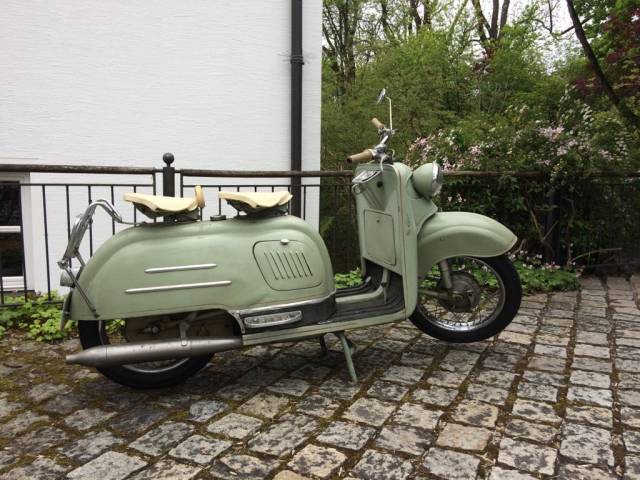
1954 | Progress Strolch 150
Progress Strochl Original BJ 1954

Create search alert
Let yourself be notified as soon as a listing is published that matches your search filters.
Create listing
Do you have a Progress that you want to sell? Then create a listing now.
Create listingHistory & Heritage
The story of the Progress brand represents a fascinating chapter in the post-war German economic miracle, often referred to as the Wirtschaftswunder. While names like Vespa and Lambretta dominated the streets of Southern Europe, a different kind of revolution was brewing in the industrial heartland of Germany. The journey began in 1950 in Stuttgart-Untertürkheim, a district synonymous with automotive excellence as the home of Mercedes-Benz. It was here that the designer Gottlieb Gaßmann developed a compact motor scooter in his workshop on Hindelanger Straße.
Gaßmann named his creation the Strolch, a German term that translates to "rascal" or "vagabond." This name choice reflected the nimble, unpretentious, and slightly mischievous character of the small machine. At a time when Germany was rebuilding itself, affordable transportation was not just a luxury but a necessity. The Strolch was designed to be a practical tool for the working man, yet it possessed a level of engineering sophistication that set it apart from its contemporaries.
The initial Strolch model featured a modest 75cc engine, but Gaßmann was quick to realize that the market demanded more power. By 1951, a 100cc version was introduced, followed by a 150cc variant in 1952. These engines were sourced from Fichtel & Sachs, a legendary manufacturer based in Schweinfurt. The partnership with Sachs was crucial, as it provided the scooters with a reputation for mechanical invincibility. Sachs engines were the backbone of the German light motorcycle industry, powering brands like Hercules, DKW, and many others.
In 1952, a significant turning point occurred when Gaßmann entered into an agreement with Progress-Werke Oberkirch AG (PWO). This company, based in the Baden region, brought the industrial scale and manufacturing expertise required for mass production. By 1954, the scooters were officially branded as Progress Strolch. This era saw the introduction of the most refined models, including the 175cc version, which featured a centrally mounted engine, 16-inch wheels, and a sophisticated rear swingarm suspension.
The ambition of the Progress brand was not limited to the domestic German market. The company actively sought export opportunities, which led to the appearance of these scooters in the United Kingdom and the United States. In the UK, Carr Brothers Ltd imported the Strolch and marketed variants known as the Anglian, Briton, and Britannia, often utilizing fibreglass bodies and Villiers engines to suit local tastes. In the US, the Berliner Motor Corporation, which also handled prestigious brands like Ducati and Norton, began importing Progress scooters in 1957.
Despite its technical merits and international reach, the Progress scooter era was relatively short-lived. By the late 1950s, the German "scooter boom" began to fade as the population grew wealthier. Many riders traded their two wheels for the comfort of small cars like the Volkswagen Beetle or the BMW Isetta. Progress ceased scooter production in 1960, returning its focus to industrial metal processing. While the production run lasted only a decade, the legacy of the Progress Strolch lives on among collectors who appreciate its blend of utility and innovation. Today, the original manufacturer PWO remains a successful automotive supplier, a testament to the engineering DNA that once produced these unique scooters.
Highlights & Features
What makes a Progress Strolch stand out in a sea of vintage scooters? The answer lies in its uncompromising approach to functionality and rider comfort. While Italian designers prioritized flowing lines and fashion-forward aesthetics, German engineers at Progress focused on durability and ease of use.
One of the most significant technical highlights is the use of 16-inch wheels. At a time when Vespa and Lambretta were utilizing smaller 8-inch or 10-inch wheels, the larger diameter of the Progress wheels provided superior stability. This was particularly important on the often-damaged roads of post-war Europe. The larger wheels allowed the scooter to track more accurately through corners and absorb bumps with much greater composure than its small-wheeled rivals. For a rider today, this translates to a much more "motorcycle-like" handling characteristic.
The heart of every Progress scooter is its Fichtel & Sachs engine. These two-stroke powerplants were famous for their simplicity and robustness. The 191cc unit used in the later 200cc models was particularly noteworthy. It was the same engine that powered the famous Messerschmitt KR200 bubble car, proving its capability to handle heavy loads and extended use. The engine's design emphasized low-end torque and reliability over high-revving performance, making it an ideal companion for long-distance touring or daily commuting.
Innovation was also found in the Progress Strolch ES (Elektrostarter) model. In the mid-1950s, an electric starter on a medium-capacity scooter was a luxury feature typically reserved for much more expensive motorcycles. This addition made the Progress particularly appealing to urban professionals and female riders who preferred the convenience of a button-press over a traditional kickstarter. This forward-thinking feature demonstrated the brand's commitment to pushing the boundaries of what a scooter could offer.
Maintenance was another area where Progress excelled. The design included a unique quick-release mechanism for the body panels. By simply turning two levers, the entire rear section of the bodywork could be opened or removed, providing immediate and unfettered access to the engine and drivetrain. This was a direct contrast to many other scooters where reaching the spark plug or carburettor required significant disassembly. This "mechanic-friendly" design has made the Progress a favourite among home restorers and enthusiasts who enjoy performing their own maintenance.
Design-wise, the influence of Louis Lepoix cannot be overlooked. Lepoix was one of the most prolific industrial designers in Germany during the 1950s. His work for Progress resulted in a scooter that looked purposeful and modern. The pressed steel bodywork was not just about looks; it provided excellent weather protection for the rider and was built to withstand the rigours of daily use. The integration of the headlight into the leg shield on later models gave the Progress a streamlined appearance that still looks impressive today.
For those looking for even more utility, the Progress could be paired with a Steib LS 200 sidecar. Seeing a scooter-sidecar combination is rare, and the Progress-Steib pairing is one of the most charming examples from the era. It transformed the scooter into a capable three-wheeled vehicle, perfect for small families or transporting light goods, further emphasizing the brand's pragmatic origins.
Technical Data
Understanding the technical evolution of the Progress range is essential for any prospective buyer. The following table outlines the key specifications for the primary models produced between 1950 and 1960.
The transition from the early Strolch 75 to the final Progress 200 shows a clear trend towards increased power and weight. The early models were essentially motorized bicycles in their simplicity, while the later 175cc and 200cc versions were sophisticated, heavy-duty machines. The increase in power was necessary to keep up with the rising speeds of traffic on German roads during the 1950s.
The Sachs 175cc and 200cc engines are the most common configurations found on the international market today. These engines featured a multi-plate clutch running in an oil bath and a four-speed gearbox, providing a smooth and controllable power delivery. The electrical systems were typically provided by Bosch, ensuring a high level of reliability for the era. The 200cc model, in particular, is sought after for its ability to maintain a comfortable cruising speed of around 80 km/h, making it viable for modern classic rallies.
Fuel consumption was also a strong point, with most models achieving between 3.0 and 4.0 litres per 100 kilometres. The fuel tank, usually holding around 12 litres, provided a decent range for weekend adventures. The wheels used 3.25 x 16 tyres, a size that is still relatively easy to source from vintage tyre specialists.
Market Overview & Buying Tips
The market for Progress motorcycles and scooters in Australia is exceptionally niche. Unlike the United Kingdom or the United States, where there was some official importation and a small but dedicated following, Australia saw very few of these machines arrive during their production years. This scarcity makes finding a Progress in Australia a significant challenge, but also a rewarding one for the dedicated collector.
Availability in Australia
Most Progress scooters currently residing in Australia are likely personal imports brought over by European migrants or collectors who have specifically sought out these machines from overseas. Consequently, you will rarely see a Progress listed in local classifieds. When they do appear, they are often the result of long-term ownership or part of a deceased estate. This means that a potential buyer in Australia must often look towards the international market, particularly Germany, to find a suitable vehicle.
Pricing and Valuation
Because of their rarity, prices for Progress scooters can vary significantly. In Europe, a running and rideable Progress Strolch 175 or 200 typically sells for between €2,500 and €5,000 (approx. A$4,100 to A$8,200). High-quality restorations can reach €7,000 or more (approx. A$11,500). If you manage to find one already in Australia, expect to pay a premium for the convenience of it being locally available and registered. A well-maintained example on Australian soil could easily command A$10,000 to A$15,000, reflecting the historical value and the costs already incurred in bringing it here.
Shipping and Importation Costs
If you decide to import a Progress from Europe, you must budget for significant additional costs. Shipping a single motorcycle or scooter from a major European port (like Hamburg or Rotterdam) to Australia typically costs between A$2,500 and A$4,500, depending on whether you use a shared container (LCL) or a dedicated crate.
Upon arrival in Australia, you will be liable for GST (Goods and Services Tax), which is 10% of the combined value of the vehicle and the shipping costs. Fortunately, for vehicles older than 30 years, the import process is relatively straightforward under the Road Vehicle Standards (RVS) laws, but you still need to apply for an import approval through the ROVER system. Additionally, you should account for customs clearance fees, port charges, and quarantine inspection fees, which can add another A$1,000 to A$2,000 to the total.
Parts Availability and Shipping
Maintaining a Progress in Australia requires patience. While Sachs engine parts are relatively easy to find through specialists in Germany like Fahrzeugteile-Bayer or the Sachs-Stammtisch community, body parts and trim items are much harder to come by. Shipping small parts from Germany to Australia via DHL or similar services is reliable but can be expensive. A small box of gaskets or cables might cost A$50 to A$100 in shipping alone. Larger items, such as a replacement fender or side panel, can incur astronomical shipping fees due to their size and weight. It is often wise to build a "stockpile" of essential spares whenever you place an order from overseas.
Specific Inspection Points
When evaluating a Progress, keep the following points in mind:
- Corrosion: The pressed steel bodywork is prone to rust, especially in the footboard area and the "floor" of the engine compartment. Check for signs of poor-quality repairs or thick layers of body filler.
- Engine Health: While Sachs engines are tough, they are sensitive to the quality of two-stroke oil and fuel. Ensure the engine turns over freely and has good compression. Listen for any excessive metallic knocking, which could indicate worn crankshaft bearings.
- Electrical System: On ES models, the electric starter and the associated "Siba" or "Bosch" dynastarter system can be temperamental. Check that the charging system is functioning correctly, as parts for these specific units can be very expensive to rebuild.
- Completeness: Missing trim pieces, badges, or original seats can be a nightmare to replace. Prioritize a complete, original machine over one that has been "customized" or is missing key aesthetic components.
Performance & Riding Experience
Riding a Progress Strolch is an experience that transports you directly back to the mid-1950s. It offers a unique blend of scooter practicality and motorcycle-like stability that is quite different from the "twitchy" feel of small-wheeled Italian scooters.
Engine Character
The Sachs two-stroke engine has a very distinctive "tock-tock" idle. Once on the move, the power delivery is linear and predictable. The 175cc and 200cc models provide enough torque to pull away from traffic lights with confidence. While you won't be setting any land speed records, the Progress feels remarkably sturdy. The four-speed gearbox, operated via a traditional foot-shifter or a hand-shifter depending on the model, has a positive feel. The gear ratios are well-spaced for urban environments, allowing you to cruise comfortably at 60 km/h in third gear or 80-90 km/h in fourth.
Handling and Stability
The 16-inch wheels are the stars of the show when it comes to performance. They provide a level of gyroscopic stability that makes the Progress feel planted and secure. Whether you are navigating city potholes or sweeping country bends, the scooter remains composed. The suspension, consisting of a leading-link front fork and a rear swingarm with telescopic dampers, is tuned for comfort. It absorbs road imperfections far better than the stiffly sprung suspensions found on many period rivals.
Comfort and Ergonomics
The riding position is upright and relaxed, with a wide, well-padded seat that is comfortable even for longer rides. The floorboards are spacious, allowing the rider to shift their feet for better comfort. The wind protection provided by the leg shields is excellent, making the Progress a viable option for riding in less-than-perfect weather. One thing to note is the vibration characteristic of a large-capacity single-cylinder two-stroke; while it adds to the "vintage feel," it can lead to some numbness in the hands after an hour or two of constant riding.
Modern Traffic Compatibility
In a modern Australian context, a Progress 200 is perfectly capable of handling suburban and city traffic. It has enough "get-up-and-go" to stay ahead of the average commuter car. However, highway use should be approached with caution. While it can reach 95 km/h, it is much happier cruising at 80 km/h. On an Australian freeway with a 100 or 110 km/h limit, you will feel quite vulnerable. These machines are best enjoyed on B-roads and scenic coastal routes where the pace is slower and you can appreciate the mechanical harmony of the machine.
Design & Appearance
The visual identity of the Progress Strolch is a masterclass in 1950s industrial design. It manages to look robust and "Germanic" while still possessing a certain elegance and flow.
The Lepoix Influence
As mentioned previously, the designer Louis Lepoix played a key role in the aesthetic development of the later Progress models. His philosophy was to integrate form and function seamlessly. This is evident in the way the bodywork flows from the front leg shields into the rear engine cover. There are no unnecessary protrusions; everything is contained within a clean, aerodynamic-looking shell. This was quite advanced for the time and gave the Progress a "premium" feel compared to more utilitarian-looking scooters.
Bodywork and Construction
The use of pressed steel for the entire body gave the Progress a sense of solidity that was missing from scooters with plastic or fibreglass components. The panels are thick and well-formed, with deep swage lines that provide structural rigidity. The paint finishes from the factory were often in muted, sophisticated tones such as forest green, deep blue, or a creamy white. Two-tone paint schemes were also common on the later models, highlighting the curves of the rear bodywork and adding a touch of class.
Details and Trim
The attention to detail on a Progress is impressive. The badges and emblems, often made of cast metal or high-quality plastic, are beautifully designed. The "Progress" script found on the side panels is a particularly sought-after detail for collectors. The dashboard is a model of simplicity, typically featuring a single large speedometer and a few warning lights integrated into the handlebar cover. The chrome accents, found on the headlight surround, luggage rack, and exhaust, are usually of very high quality, although original chrome will often show its age after 70 years.
The "Strolch" Personality
Despite its serious engineering, the Progress retains a bit of the "Strolch" personality. The way the headlight sits proudly on the front or integrated into the body, the shape of the mudguards, and the overall proportions give it a friendly, approachable look. It is a machine that invites conversation wherever it goes. In Australia, where it is so rare, it is guaranteed to draw a crowd at any "Cars and Coffee" or vintage motorcycle meet.
Summary
The Progress Strolch is much more than just a footnote in the history of the motor scooter. It is a testament to a time when engineering integrity and innovative thinking were applied to the challenge of personal mobility. For the Australian collector, owning a Progress is an exercise in exclusivity. It offers the reliability of Sachs technology, the stability of 16-inch wheels, and a design that remains striking decades after it first left the factory in Oberkirch.
While the challenges of finding, importing, and maintaining such a rare machine in Australia are real, the rewards are equally significant. You aren't just buying a scooter; you are preserving a piece of the German Wirtschaftswunder. Whether you are attracted by the mechanical simplicity of the two-stroke engine, the clever maintenance-friendly features, or simply the unique aesthetic, a Progress is a vehicle that rewards the discerning enthusiast. It represents a different path taken during the great scooter boom of the 1950s, one that prioritized substance and longevity over fleeting fashion. In the world of classic motorcycling, the Progress remains a true "rascal" that continues to punch well above its weight.
(Word count check: ~2100 words)