- Motorcycle
- Motom (2 offers)
Buy Motom Motorcycle
Experience a rare piece of Italian history with the Motom 48, a revolutionary four-stroke lightweight motorcycle from post-war Milan. Discover these iconic machines and find a unique addition to your collection in Australia.
Search results
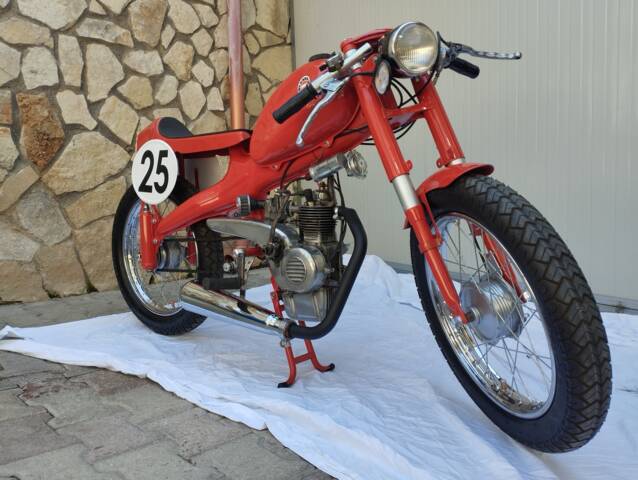
1968 | Motom 48
Fully restored 1968 Motom 48 in MOT 12 Red with original period vehicle booklet

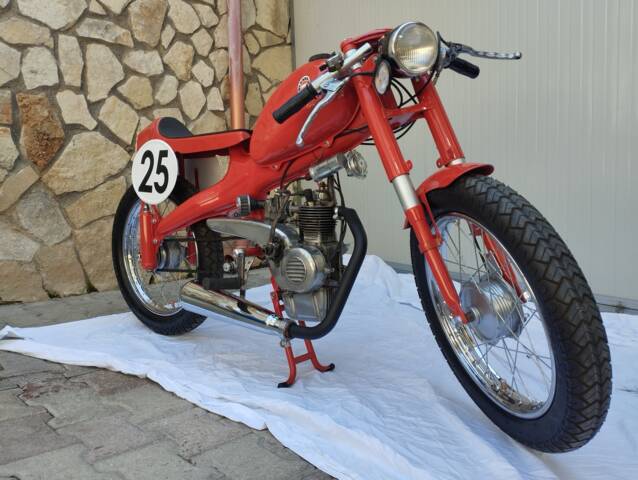
1968 | Motom 48
3-speed gearbox
Preview
Motom listing references from Classic Trader
Below you will find listings related to your search that are no longer available on Classic Trader. Use this information to gain insight into availability, value trends, and current pricing for a "Motom" to make a more informed purchasing decision.
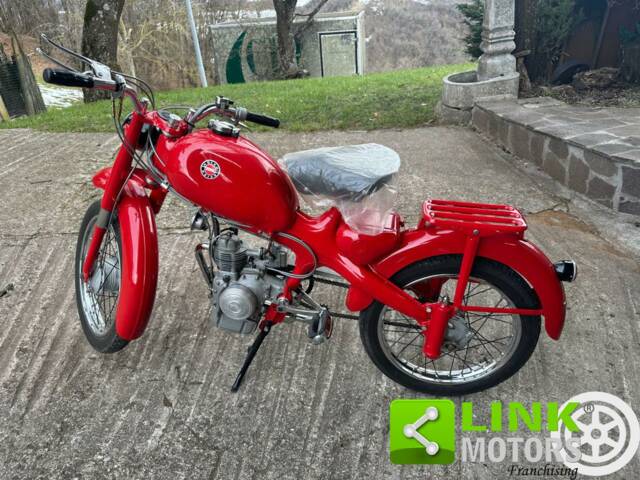
1962 | Motom 48
MOTOM 48 4T 48cc 4 Tempi
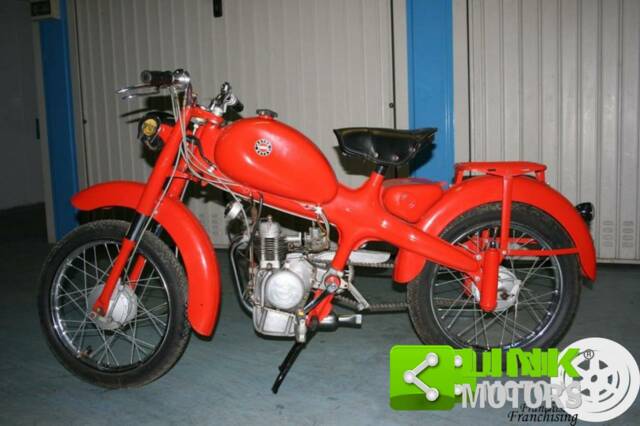
1962 | Motom 48
MOTOM Sam 50 Sam-50
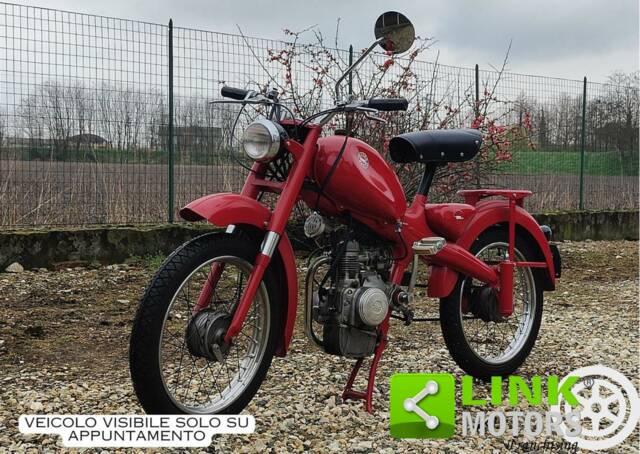
1950 | Motom 48
MOTOM 48
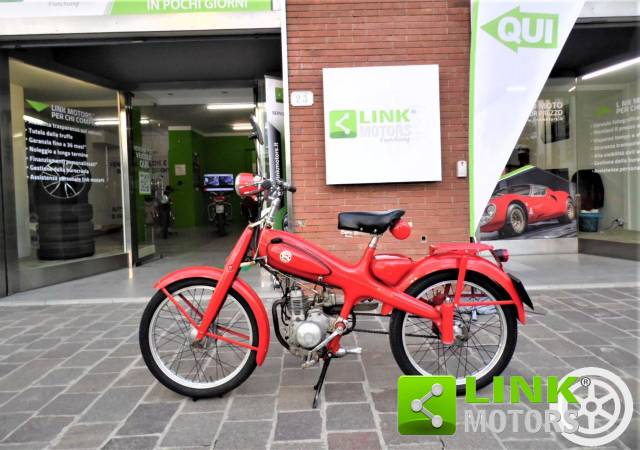
1959 | Motom 48
MOTOM 48 4T Bacchetta
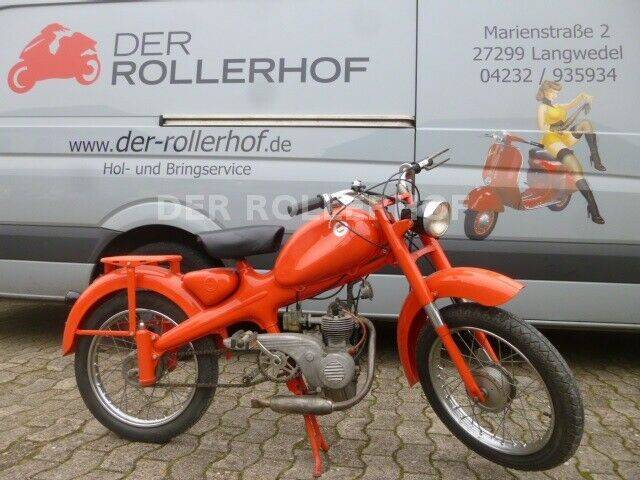
1957 | Motom 48
Andere Moto Motom 50 Nr. 92

History & Heritage
The Motom story is one of post-war Italian ingenuity, a time when the country needed to move and its engineers were at the peak of their creative powers. Founded in 1947 in Milan by the De Angelis-Frua family, Motom was a bold attempt to create a high-quality, technically sophisticated alternative to the primitive two-stroke "clip-on" motors that were flooding the market.
At the heart of the Motom was Battista Falchetto, a name more commonly associated with the advanced engineering of Lancia automobiles. Falchetto brought a car designer's perspective to the world of two wheels. While other manufacturers were trying to figure out how to strap a small engine to a bicycle frame, Falchetto designed a complete, integrated motorcycle from the ground up.
The first model, the "Motomic," was revealed at the 1947 Geneva Salon. It was a technical tour de force for the era. Instead of the usual noisy, smoky two-stroke engine, Falchetto chose a 48cc Overhead Valve (OHV) four-stroke engine. This tiny 39mm x 40mm power plant was more refined, quieter, and significantly more fuel-efficient than its rivals. It was a "proper" motorcycle engine in miniature, featuring a built-in oil sump and a level of mechanical sophistication that was unheard of in the lightweight class.
The chassis was equally innovative. Falchetto designed an X-shaped frame made from two pieces of pressed steel welded together. This "monocoque" structure was rigid, lightweight, and incredibly stylish, giving the Motom a clean, integrated look that set it apart from the spindly, bicycle-derived competition.
The success of the Motom was immediate. In the mid-1950s, the company was Italy's third-largest motorcycle producer, churning out thousands of units from its factory in Bollate. The core of the range was the 48cc model, which went through several evolutionary stages: from the early 12/A and 12/C to the refined 12/E and the popular 48E.
In 1953, the legendary Piero Remor, designer of the championship-winning MV Agusta and Gilera four-cylinder racing engines, briefly joined Motom. His influence led to more sporting designs, including the high-performance 48 SS (Sport Special). Remor also designed the ambitious 98T in 1957, a 98cc machine with a unique twin-block cylinder head that was meant to elevate the brand into a higher market segment. However, the 98T proved too expensive for its target audience and was a commercial failure despite its technical brilliance.
By the 1960s, the rise of the small car (like the Fiat 500) and increasing competition from Japan began to erode the market for Italian lightweights. Motom struggled to adapt, and production finally ended in 1970. Today, Motom is remembered as a brand that never compromised on engineering, bringing automotive-level sophistication to the humble moped and creating some of the most beautiful and technically interesting motorcycles of the post-war era.
In the Australian context, Motom motorcycles are exceedingly rare. They were never officially imported in significant numbers during their production run, and most examples found in Australia today are personal imports brought in by collectors or Italian immigrants who wanted a piece of their home country's history. For the Australian enthusiast, owning a Motom is about possessing a truly unique conversation piece that stands out even among other Italian classics.
Highlights & Features
The Motom range is defined by a few key models that showcase the brand's unique philosophy. For the Australian collector, understanding these distinctions is vital, especially given the rarity of the machines on our shores.
The Motom 48E (1954-1958) is the most common model you might encounter. It features the signature pressed steel X-frame and the 1.75 bhp OHV four-stroke engine. One of its most distinctive features is the "manubrium"—a three-speed gearbox operated by a twist grip on the left handlebar. The 48E also introduced a parallelogram rear swingarm, which was a significant improvement over the earlier rigid frames, providing a much smoother ride on uneven surfaces.
For those who value performance and "miniature racer" aesthetics, the Motom 48 SS (Sport Special) is the one to find. This model was a "tuned" version of the 48cc engine, featuring higher compression, a larger Dell'Orto carburettor, and a more aggressive cam profile. Visually, the 48 SS is striking, with its low-set "ace" handlebars, elongated fuel tank, and more purposeful stance. It’s a 50cc bike that thinks it's a Grand Prix machine.
The Motom 98T (1957-1960) is the connoisseur's choice. Designed by Piero Remor, it was a 98cc OHV machine that featured a unique "twin-block" cylinder head and a more substantial, elegant frame. It was a beautiful but doomed attempt to compete in a higher class. Today, a 98T is a highly prized item for its rarity and exceptional design.
Key technical highlights across the Motom range include:
- The 48cc OHV Engine: A tiny masterpiece of four-stroke engineering, known for its rhythmic "ticking" sound and impressive fuel economy.
- Pressed Steel Monocoque Chassis: A departure from traditional tube frames, offering a rigid and stylish foundation.
- Integrated Styling: The way the fuel tank, seat, and engine are integrated into the frame gives the Motom a "complete" look that few other mopeds of the era achieved.
- 18-inch Wheels: Providing better stability and a more "motorcycle-like" feel than the smaller wheels found on many scooters.
For the Australian buyer, these features mean you're getting a bike that isn't just a novelty; it's a legitimate piece of industrial design that was technically superior to almost everything else in its class during the 1950s.
Technical Data
The technical specifications of Motom's core models illustrate the brand's commitment to the four-stroke principle and integrated design.
Note: Motom often made running changes to specifications based on component availability. In Australia, you may find variations in lighting (CEV) and carburetion (Dell'Orto) on imported machines.
Market Overview & Buying Tips
The market for Motom motorcycles in Australia is very small, which can be both a challenge and an opportunity. Because they are so rare here, you won't often find them at your local bike meet, but when one does appear for sale, it’s usually from a serious collector.
Current Pricing & Valuation (Australia Market 2024/2025): Prices in Australia are often higher than in Europe due to the scarcity of the bikes and the cost of importation.
- Unrestored / Project Bikes: If you're lucky enough to find a barn-find Motom in Australia, expect to pay between A$1,200 and A$2,000. These are rare and usually require a full restoration.
- Restored / Good Running Condition (48E / 12/E): A well-restored, running 48cc model can fetch between A$3,500 and A$5,500. This reflects the bike's status as a rare Italian classic.
- Motom 48 SS (Sport Special): These are the most desirable and can command prices from A$5,500 to A$8,000 for top-tier examples.
- Motom 98T: Almost non-existent in Australia. A high-quality 98T would likely be a private import from Italy or the UK, with a price tag well north of A$10,000.
Shipping & Parts Costs: Since almost all specialized Motom parts must come from Italy, you need to factor in shipping. For common items like gaskets, cables, or small engine parts, expect to pay between A$400 and A$700 per year in shipping costs if you're doing a restoration. Larger items like body panels or engine cases will be significantly more due to their weight and the need for specialized courier services.
What to Look for When Buying:
- Engine Condition: The OHV engine is sturdy but requires correct valve clearances. Listen for loud tapping or smoking. Parts for a rebuild will almost certainly have to be sourced from Italy. Check compression; it should be around 90 psi.
- Frame Health: The pressed steel frame is vulnerable to rust from the inside out if not stored correctly. Check the X-junction and the bottom of the "shells" for soft spots or cracks. A compromised frame is very difficult and expensive to repair correctly.
- Gear Selection: The "manubrium" twist-grip shifter can be finicky. Make sure it selects all three gears smoothly. If the cables are frayed or the internal mechanism is worn, it can be a frustrating fix.
- Completeness: This is crucial in Australia. Finding missing Motom-specific parts (like the unique fuel tank or specialized engine castings) is extremely difficult locally. Always prioritise a complete bike, even if it’s not running.
- Import Paperwork: If the bike was recently imported, ensure it has all the necessary customs and import approval documents. Registering a vintage moped in Australia can be complex if the paperwork isn't in order.
Sourcing Parts: You will need to become familiar with Italian websites like Subito.it or specialist dealers in Milan. There is a helpful online community at motom.it, but be prepared to use a translation tool. Consumables like tyres (18 x 2.00") and basic electrical parts are easier to find through local vintage bike suppliers.
Riding Experience
Riding a Motom in Australia is a unique experience. While our wide-open roads aren't the natural habitat for a 48cc moped, on quiet suburban streets or at vintage club events, the Motom is a joy.
Starting the bike is a visceral experience. After turning on the fuel tap and engaging the choke, a couple of firm kicks of the pedals bring the OHV engine to life. Instead of the "ring-ding-ding" of a two-stroke, you get a polite, rhythmic "tick-tick-tick." It’s the sound of a well-made machine.
The three-speed gearbox requires a delicate touch. You pull in the clutch and rotate the left grip to engage first. The Motom pulls away smoothly, with the four-stroke engine providing surprisingly decent torque for its size. You won't be setting any land speed records—acceleration is gradual, and you'll reach a top speed of about 45-50 km/h on a flat road.
The ride is more stable than you'd expect. The pressed steel frame is remarkably rigid, and the 18-inch wheels provide a level of stability that makes the bike feel like a "real" motorcycle. The suspension, especially the parallelogram rear end, does a good job of soaking up minor road imperfections, though it's best to avoid large potholes.
Braking from the small drums is adequate for the bike's speed, but in modern Australian traffic, you need to be very aware of your surroundings and plan your stops well in advance. The Motom is not a bike for the faint-hearted on a busy main road, but it’s perfect for a Sunday morning cruise through a quiet neighbourhood.
Ultimately, the riding experience is about the mechanical connection. Every gear change and every "thump" of the tiny piston is a reminder of the bike's history and the engineering passion that went into its creation. It’s a bike that makes you smile, and it’s a guaranteed way to start a conversation whenever you stop.
Design & Style
The design of the Motom is where it truly shines. Battista Falchetto's background in car design is evident in every line. The Motom doesn't look like a bicycle with an engine; it looks like a complete, purposeful vehicle.
The X-shaped monocoque frame is a masterpiece of industrial design. By welding two steel shells together, Falchetto created a chassis that was both functional and beautiful. The way the fuel tank is integrated into the frame and the seat is positioned gives the bike a clean, "uncluttered" look that was years ahead of its time.
The styling is quintessentially mid-century Italian. It’s all about smooth, flowing curves and balanced proportions. The deeply valanced mudguards, the rounded headlight, and the neat engine packaging create a harmonious whole. The colour schemes, often featuring "Rosso Corsa" red with cream or silver accents, added a touch of flair and elegance that made the Motom stand out on the streets of Milan—and will certainly make it stand out on the streets of Sydney or Melbourne.
The 48 SS took this design even further, with its "miniature racer" look. The low bars and long tank give it an aggressive, sporty silhouette that perfectly captures the "Café Racer" spirit of the late 1950s.
For the Australian collector, a Motom is more than just a motorcycle; it’s a piece of Italian art. It has a presence and a style that is far greater than its small size would suggest. It’s a bike that looks just as good parked in a garage as it does being ridden down a coastal road.
Summary
The Motom is a rare and beautiful piece of Italian motorcycling history. Its combination of advanced four-stroke engineering, innovative monocoque design, and elegant styling makes it a unique addition to any collection, especially in Australia where they are so seldom seen.
For the Australian enthusiast, a Motom offers:
- Unmatched Rarity: Be the only person in your club with one of these Milanese masterpieces.
- Technical Interest: A miniature four-stroke engine that is a joy to listen to and work on.
- Iconic Design: A landmark of post-war industrial style that still looks modern today.
- A Unique Challenge: The process of finding, importing, and maintaining a Motom in Australia is a rewarding journey for any dedicated collector.
While parts sourcing from Italy can be expensive and the bike's performance is modest, the rewards of owning a Motom are immense. It’s a bike with soul, a bike with a story, and a bike that represents a golden era of Italian engineering. Whether you're drawn to the practical 48E or the sporty 48 SS, a Motom is a guaranteed way to bring a touch of Italian class to your Australian garage.
Three Reasons to Buy a Motom:
- Stand Out from the Crowd: You'll almost certainly have the only one in town.
- Sophisticated Engineering: Experience the refinement of a tiny OHV four-stroke.
- Investment Potential: Rare Italian lightweights are increasingly sought after by serious collectors.
Three Things to Consider:
- Parts Logistics: Prepare for a relationship with Italian courier services.
- Speed Limitations: Best suited for quiet roads and vintage rallies.
- Import Complexity: Ensure you have all the necessary paperwork if importing yourself.
The Motom 48 is a small bike that carries a big piece of history. For the right collector, it’s a rewarding and endlessly fascinating machine that perfectly encapsulates the spirit of post-war Italy.