- Motorcycle
- DOT (0 offers)
Buy DOT Motorcycle
Born in Manchester in 1903, DOT motorcycles lived up to their "Devoid of Trouble" slogan by dominating the post-war trials and scrambles scene. These lightweight, Villiers-powered machines offer a pure, mechanical connection to British off-road heritage and remain a favourite for vintage competition enthusiasts in Australia.
Search results
Currently, there are no matching listings for your search.
Create search alert
Let yourself be notified as soon as a listing is published that matches your search filters.
DOT listing references from Classic Trader
Below you will find listings related to your search that are no longer available on Classic Trader. Use this information to gain insight into availability, value trends, and current pricing for a "DOT" to make a more informed purchasing decision.
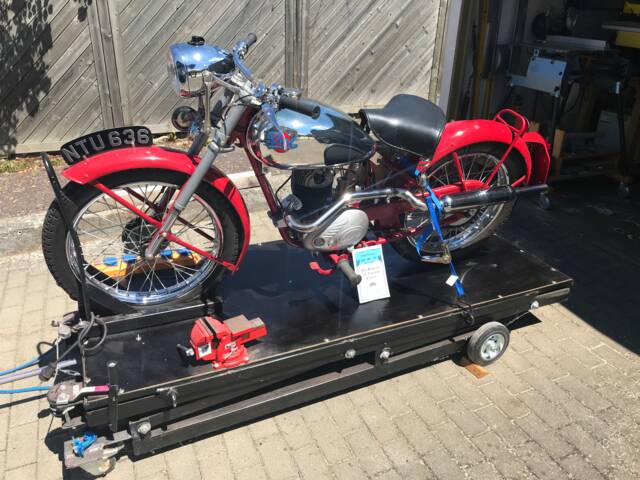
1951 | DOT 200 RST
75 Jahre alter Rarität. Kein zweites Exemplar in Deutschland bekannt

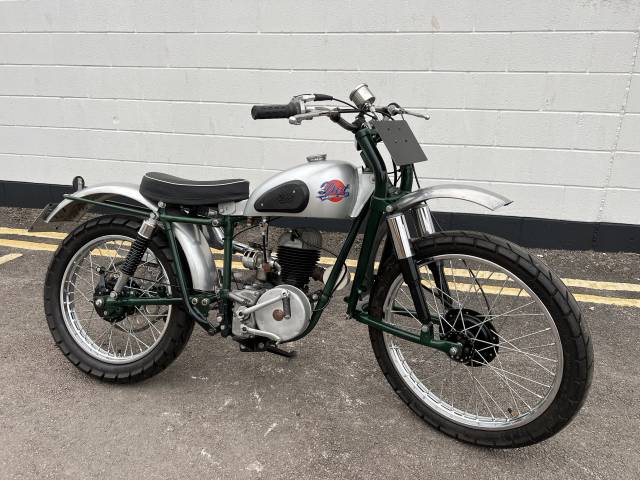
1927 | DOT 350
Stripped Scrambler 197CC NOT 350 1953 NOT 1927

Create search alert
Let yourself be notified as soon as a listing is published that matches your search filters.
History & Heritage
The story of DOT (Dot Cycle and Motor Manufacturing Company) is a quintessential chapter in the industrial history of Manchester, England, but its influence reached far across the globe, including the rugged landscapes of Australia. Founded in 1903 by Harry Reed in Salford, the company initially focused on bicycle production before quickly transitioning to the burgeoning world of motorised transport. Reed was not just a manufacturer but a passionate and successful racer, a fact that would define the brand's DNA for decades to come. By 1907, DOT had introduced its first motorcycle, powered by a proprietary engine—a strategy of using high-quality external components that would become a hallmark of the brand.
The name "DOT" was famously marketed with the slogan "Devoid of Trouble". In an era when motorcycling was often synonymous with mechanical failure and roadside repairs, this was a bold claim. However, DOT backed it up with robust engineering and a focus on competition-proven reliability. Harry Reed himself demonstrated the prowess of his machines by winning the multi-cylinder class at the Isle of Man TT in 1908, setting the stage for DOT's reputation as a serious performance brand.
During the inter-war years, DOT expanded its range to include a variety of road-going machines, from lightweight commuters to powerful sporting mounts using engines from JAP, Villiers, Blackburne, and Python (Rudge). Like many British manufacturers, DOT struggled during the Great Depression of the 1930s, and production largely ceased as the world moved toward the Second World War.
The post-war revival of the brand under the leadership of Burnard Scott Wade marked the beginning of DOT's golden age in the off-road sector. Wade astutely identified the growing popularity of trials and scrambles and pivoted the company to specialise in lightweight, two-stroke competition machines. While the "Big Three" (BSA, Norton, Triumph) continued to rely on heavy four-stroke singles, DOT embraced the agility and simplicity of the Villiers two-stroke engine. This focus allowed DOT to dominate the British trials scene in the 1950s and 60s, with their machines becoming the weapon of choice for both factory riders and privateers.
In Australia, DOT motorcycles found a niche among enthusiasts who appreciated their lightweight and robust nature, particularly suited for the demanding conditions of local trials and scrambles. While never as common as the larger British marques, DOTs were imported in modest numbers and earned a reputation for being tough and reliable. Today, they are celebrated at events like the Bay to Birdwood in South Australia or the Broadford Bike Bonanza in Victoria, where their unique Manchester heritage is proudly displayed.
Highlights & Features
What makes a classic DOT motorcycle so appealing to the modern collector in Australia? The primary draw is the brand's uncompromising focus on lightweight performance and functional simplicity. In a market often dominated by heavy, over-engineered machines, DOTs stand out as pure, purpose-built tools for the dirt.
A defining model is the DOT 200 RST (Road, Scramble, Trial), introduced in 1951. This machine was the ultimate all-rounder of its day. It featured a 197cc Villiers engine, a lightweight tubular steel frame, and a design that allowed it to be ridden to a competition, compete at a high level, and then be ridden home again. For the modern enthusiast, the RST represents the perfect entry point into the world of vintage trials, offering a manageable weight (around 95kg) and a mechanical simplicity that makes it a joy to maintain.
Technically, DOT was often ahead of the curve in the lightweight sector. They were early adopters of telescopic front forks and, later, rear swingarm suspension, at a time when many competitors were still using rigid frames or primitive girder forks. This commitment to suspension development was crucial in the trials world, where traction and rider control are paramount.
Another highlight is the customisability that DOT offered. As a smaller manufacturer, they were able to cater to individual rider preferences, offering various engine tunes, gear ratios, and tank sizes. This means that many DOTs found on the Australian market today have unique specifications, often reflecting their original owner's competition requirements or adaptations for local conditions.
The aesthetic of a DOT is one of rugged elegance. The slim tanks, high-level exhaust systems, and minimal bodywork are not just for show; they are designed to withstand the rigours of off-road use. The classic red and black or green and silver liveries are instantly recognisable and evoke the atmosphere of a 1950s muddy hillside scramble—or a dusty Australian bush track.
Technical Data
The following table outlines the specifications for the quintessential DOT 200 RST, the model that defined the brand's post-war success.
Throughout the 1950s and 60s, DOT utilised various iterations of the Villiers engine, including the 6E, 8E, and 9E units. Later competition models, such as the DOT Demon and White Ghost, often featured 250cc engines (Villiers or Sachs) providing up to 18 bhp, specifically tuned for the high-intensity world of scrambles racing.
Market Overview & Buying Tips
The market for DOT motorcycles in Australia is niche but dedicated. While they are rarer than in the UK, a small number of well-preserved examples and restorations exist within the local classic bike community.
Price Structure in Australia (2024-2025)
Prices for DOT machines in Australia reflect their rarity and the costs associated with importing parts or complete bikes from the UK.
- Restored Competition Models (Condition 1-2): A professionally restored DOT 200 RST or a late-model Demon can fetch between A$7,000 and A$11,000. Machines with a documented local racing history or unique factory features can exceed this range.
- Good Original Condition (Condition 3): Solid, rideable machines with a nice patina typically sell for A$4,500 to A$7,000. These are often the best buys for those who intend to actually use the bike for vintage trials or club runs.
- Project Bikes: Unrestored or incomplete machines are occasionally available for A$2,500 to A$4,000. While tempting, be aware that sourcing DOT-specific tinware (tanks, mudguards) from the UK will involve significant shipping costs.
What to Look For When Buying
- Frame Integrity: DOT frames were built for the dirt, and many have lived a hard life. Inspect the frame carefully for cracks, especially around the headstock and engine mounts. Look for signs of amateur welding or straightening, which can compromise the bike's handling and safety.
- Engine Authenticity: Because Villiers engines were used by dozens of manufacturers, it is common to find DOTs with non-original engines. Check the engine numbers against the frame to ensure they are period-correct. While a later engine might improve performance, it will detract from the bike's value as a collector's item.
- Tinware and Specific Parts: The most difficult parts to find for a DOT are the original fuel tanks and seats. If these are missing or badly damaged, you may have to resort to expensive custom fabrication or international shipping. Ensure the bike has its original DOT-branded components where possible.
- Suspension Condition: The DOT-designed telescopic forks are simple but can suffer from wear in the bushes and seals. Check for excessive play or leaking oil. Rear shocks are often replaced with modern units; while this is good for riding, keep the originals if they come with the bike.
- Documentation: In Australia, having the correct paperwork for club registration (such as the Victorian Club Permit scheme or NSW Historic Registration) is vital. Ensure the bike has a clear history and that frame and engine numbers are legible and match any available documentation.
Riding Experience & Performance
Riding a DOT is a visceral experience that transports you back to the heyday of British off-road sport. The Villiers two-stroke engine fires up with a distinctive "ring-ding-ding" and a puff of blue smoke, settling into a rhythmic, mechanical idle. From the moment you click it into gear, the bike feels incredibly light and manageable—a stark contrast to the heavy four-strokes of the same era.
The handling is where the DOT truly shines. The geometry is designed for low-speed precision, making it exceptionally easy to balance and manoeuvre through tight sections. On a trials course, the bike feels like an extension of your body, responding to the slightest shift in weight. The power delivery is linear and predictable, with enough low-down grunt to pull you up slippery inclines or through sandy Australian creek beds without breaking traction.
On the road, the DOT is less at home but still charming. With trials gearing, it is not a machine for long-distance touring, but for a blast down a country lane, it is pure fun. The vibration from the single-cylinder engine is noticeable but adds to the character of the ride. You find yourself working the gearbox to keep the engine in its sweet spot, enjoying the mechanical symphony of the Villiers unit.
The braking is typical of the period—adequate for the dirt but requiring a firm hand and plenty of foresight on the road. The 6-inch drums provide progressive deceleration rather than instant stopping power. However, for the intended use of these machines, the brakes are perfectly fit for purpose.
Ultimately, a DOT offers a pure, unadulterated riding experience. There are no electronic aids, no complex systems—just you, the machine, and the terrain. It is a bike that rewards skill and mechanical sympathy, providing a level of satisfaction that modern motorcycles often struggle to match.
Design & Aesthetics
The design of a DOT is a masterclass in functional minimalism. Every line and every component is there for a reason. The slim, teardrop-shaped fuel tank is designed to allow the rider to move freely on the bike, while the high-level exhaust keeps the expansion chamber away from rocks and water.
The use of aluminium and lightweight alloys for the mudguards and engine covers gives the bike a purposeful, high-quality feel. The DOT logo, with its distinctive script, is a badge of honour in the off-road world, representing a brand that was never afraid to go its own way.
For the Australian collector, the aesthetic appeal of a DOT lies in its authenticity. These bikes look like they have just come off a muddy trials section in the Peak District or a dusty track in the Adelaide Hills. Whether finished in the classic factory colours or showing the scars of a long competition career, a DOT has a presence that commands respect. It is a design that has aged gracefully, remaining as evocative today as it was in the 1950s.
Restoration & Club Scene
Owning a DOT in Australia means becoming part of a small but passionate community of British lightweight enthusiasts. While there is no dedicated DOT club in Australia, owners are often active in the Vintage Motor Cycle Club of Australia (VMCCA) or local trials clubs.
The restoration of a DOT is a rewarding project, but it requires patience. Because the mechanical components are largely Villiers-based, parts for the engine and gearbox are readily available from specialists in the UK like Villiers Services. However, shipping costs and lead times can be significant. This makes the DOT a project for those who enjoy the hunt for parts and the satisfaction of bringing a rare machine back to life.
The Australian classic bike scene offers numerous opportunities to use your DOT as intended. Events like the Broadford Bike Bonanza provide a platform for vintage off-road machines to be ridden and appreciated. Competing on a DOT in a local vintage trial is perhaps the best way to honour the brand's heritage and experience the "Devoid of Trouble" philosophy first-hand in the Southern Hemisphere.
Summary
The DOT motorcycle is a true icon of British off-road history with a small but significant legacy in Australia. From its Manchester roots to its dominance on the trials hills of the 1950s, the brand represents a period of innovation and sporting passion. For the Australian buyer, a DOT offers an accessible, reliable, and immensely characterful entry into the world of classic motorcycling.
Whether you are looking for a competitive vintage trials machine, a unique addition to a collection, or simply a piece of British engineering history to enjoy on a sunny afternoon, the DOT delivers. It is a machine that lives up to its name—providing a riding experience that is truly "Devoid of Trouble" and full of soul.
Explore the range of DOT motorcycles on Classic Trader today. With their robust engineering, storied history, and undeniable charm, these Manchester lightweights are a testament to a golden age of British motorcycling that continues to inspire riders across Australia.