- Motorcycle
- Danuvia-Csepel (0 offers)
Buy Danuvia-Csepel Motorcycle
Experience a true rarity on Australian roads with the Danuvia-Csepel, a pinnacle of Hungarian two-stroke engineering. These ultra-obscure classics offer a unique blend of Socialist-era functionality and enduring design, perfect for the dedicated collector.
Search results
Currently, there are no matching listings for your search.
Create search alert
Let yourself be notified as soon as a listing is published that matches your search filters.
Create listing
Do you have a Danuvia-Csepel that you want to sell? Then create a listing now.
Create listingDanuvia-Csepel listing references from Classic Trader
Below you will find listings related to your search that are no longer available on Classic Trader. Use this information to gain insight into availability, value trends, and current pricing for a "Danuvia-Csepel" to make a more informed purchasing decision.
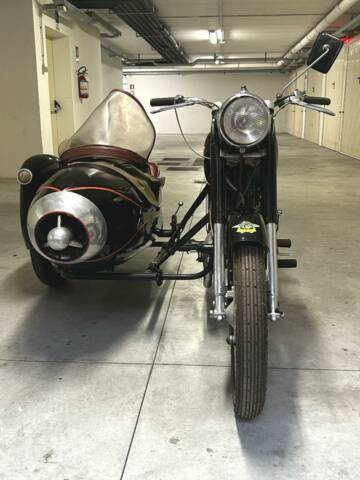
1959 | Danuvia-Csepel 125
ALTRE MOTO O TIPOLOGIE Csepel de luxe

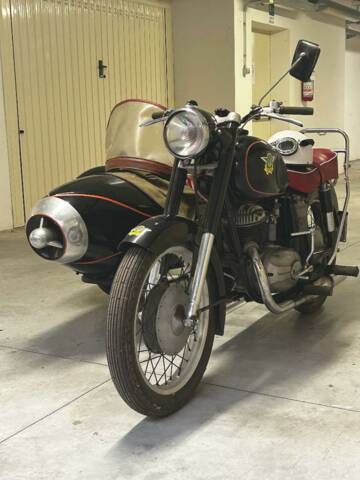
1959 | Danuvia-Csepel 125
ALTRE MOTO O TIPOLOGIE Csepel de luxe
Create search alert
Let yourself be notified as soon as a listing is published that matches your search filters.
Create listing
Do you have a Danuvia-Csepel that you want to sell? Then create a listing now.
Create listingHistory & Heritage
The legacy of Danuvia-Csepel is a testament to the resilience of Hungarian industry through the upheavals of the 20th century, offering a unique window into the industrial evolution of Central Europe. To understand this brand, one must look at the Csepel Works (Csepel Művek) located on Csepel Island in the Danube, south of Budapest. This island was the epicentre of Hungary's industrial might, once dominated by the Manfréd Weiss Steel and Metal Works.
The "WM" (Weiss Manfréd) era between 1931 and 1935 was the foundation of Hungarian motorcycling. During this period, the factory produced its first motorised cycles, which were essentially heavy-duty bicycles equipped with small, auxiliary two-stroke engines. These early WM 100cc machines were designed for the everyman, providing affordable mobility in a nation that was still largely agrarian. They were simple, light, and robust—traits that would become the hallmark of Hungarian motorcycles for decades. Manfréd Weiss was a visionary who understood that the key to mass mobility lay in simplicity and local manufacturing.
The onset of the Second World War saw the factory’s resources diverted to military production, but the post-war period brought an even more radical change. In 1948, the new Communist regime nationalised the factory, renaming it the Csepel Works. Under the planned economy, the focus shifted to producing a standard motorcycle for the masses. The engineers looked to the German DKW RT 125 as their primary design inspiration. The RT 125 was a masterpiece of lightweight engineering, and its blueprints became "spoils of war" for several nations. The Hungarian version took the RT 125’s loop-scavenged engine and simple frame and adapted them for the rugged, often poorly maintained roads of post-war Hungary.
The Danuvia brand emerged as a distinct name in the late 1950s, with the DV-125 entering production in 1958. This bike was an evolution of the earlier Csepel designs, featuring a more powerful engine and improved suspension. Between 1958 and 1966, approximately 157,000 Danuvia DV-125 motorcycles were produced, making it a ubiquitous sight on Hungarian roads. It was the vehicle that powered the "Goulash Communism" era, providing the working class with a reliable way to get to the factory and explore the countryside.
For Australian enthusiasts, the Danuvia-Csepel represents a profound level of obscurity. During the 1950s and 60s, the Australian motorcycle market was dominated by British brands like BSA and Triumph, and later by the Japanese "Big Four." Very few, if any, Hungarian motorcycles were officially imported to Australia during this period. Any Danuvia-Csepel currently in the country is likely a private import, brought over by Eastern European migrants or dedicated collectors who sought out something truly different. This makes every Danuvia in Australia a genuine piece of "moving history" from a world once hidden behind the Iron Curtain.
Highlights & Models
The Danuvia-Csepel range was built around a philosophy of simplicity and utility, yet it produced several noteworthy variants that are now highly prized by collectors.
The Danuvia DV-125 (1958–1966) This is the most common model globally and the one most likely to be encountered by an Australian collector. It featured a 123cc single-cylinder two-stroke engine with a four-speed gearbox. With 5.5 horsepower and a top speed of 85 km/h, it was perfectly suited for commuting and rural travel. The DV-125’s simplicity is its greatest asset; it was designed to be easily repaired by the owner using basic tools. This "self-reliance" was a necessity in the Socialist era and remains a charm for modern hobbyists.
The D-Csepel 125 (1954–1958) The predecessor to the DV-125, the D-Csepel is an even rarer bird. It is characterised by its older-style cycle parts and slightly lower performance (around 5 hp). These bikes were the bridge between the pre-war "WM" designs and the more modern Danuvia models. Finding one in original condition is a significant challenge, as many were modified or used as "donor" bikes over the years.
The DMC (1958–1964) A sportier variant of the 125cc platform, the DMC (Danuvia Moto-Cross/Competition) was intended for more spirited riding. It featured visual tweaks, such as different mudguards and sometimes revised gear ratios. While technically similar to the standard DV-125, its unique branding and relative scarcity make it highly desirable for those who appreciate the competition history of the brand in Eastern Europe.
The White 125 (1967) A fascinating historical footnote, the White 125 was a rebadged Danuvia exported to the United States. Only about 200 of these were sent to the US in an attempt to tap into the American market and earn hard currency. For an Australian collector, finding a "White" variant represents a unique cross-cultural artefact of the Cold War era—a Socialist bike dressed up for a Capitalist market.
Technical Data
The technical specifications of these Hungarian classics show their straightforward and robust nature.
Note for Australian Owners: Given our harsh climate and long distances, it's worth noting that the 6V electrical system can be a weak point. The flywheel magneto relies on magnets that can weaken over time. Many Australian owners who intend to ride their bikes regularly choose to upgrade the ignition to a 12V system for better lighting and more reliable starting.
Market Overview & Buying Tips
Buying a Danuvia-Csepel in Australia is a task for the patient and dedicated. You won't find one at your local dealership, and even major auction houses rarely see them.
Sourcing and Prices In Europe, particularly in Hungary, a decent Danuvia DV-125 might cost between A$1,500 and A$4,500, depending on the condition and provenance. However, the true cost for an Australian buyer is in the shipping and importation. Bringing a bike from Hungary to an Australian port (such as Melbourne or Brisbane) can easily add A$3,000 to A$5,000 to the initial purchase price once you factor in crating, sea freight, and port handling fees. As such, any Danuvia already on Australian soil and registered is a premium item, likely commanding prices in the A$6,000 to A$10,000 range for a high-quality restoration.
Importing to Australia: Customs and Regulations The Australian government has strict rules regarding the importation of classic vehicles. You will need to apply for a Vehicle Import Option (VIO) through the Department of Infrastructure.
- Asbestos Regulations: This is a critical point for Australian importers. Any components containing asbestos (such as old brake linings, clutch plates, or gaskets) must be removed and replaced with certified asbestos-free parts before the bike leaves Europe. Failure to do so can result in the bike being seized and destroyed by Border Force.
- Import GST and Duty: Expect to pay 10% GST on the combined value of the bike, the freight, and the insurance. If the bike is from a country with which Australia has a free trade agreement (like certain EU members), duty may be reduced, but GST remains mandatory.
2-Stroke Engine Inspection Tips When inspecting a Danuvia engine, look for the following:
- Crankshaft Seals: If the seals are worn, the engine will suck air into the crankcase, causing a lean running condition that can lead to seizure. Check for an inconsistent idle or high-revving at standstill.
- Piston Clearance: A loud metallic "clatter" from the top end usually indicates a worn piston or bore. Since parts are not available locally, this will require international shipping.
- Gearbox Engagement: Ensure the bike stays in gear under load. The selector forks on these older 4-speed boxes can wear, and replacements are difficult to source.
Sourcing Parts Parts are non-existent in Australia. You will need to become familiar with Hungarian marketplaces like Veterán Apró or deal with specialists such as OK Team Classic in Budapest. Shipping costs for small parts are high, so it’s often best to order multiple items at once.
Riding Experience
Riding a Danuvia-Csepel in Australia is an experience that demands a change of pace. With its 123cc engine and 5.5 hp, this is not a bike for the M1 or the Great Ocean Road on a busy weekend. It is, however, a joy on quiet country lanes or suburban streets.
The 2-stroke character is evocative. The engine has a distinctive, light "ring-ding-ding" sound that is instantly recognisable. There is no modern power band; the delivery is linear and steady. The smell of the 2-stroke smoke—a mix of petrol and oil—is a sensory trip back to the mid-20th century. In 1960s Hungary, the roads were often unpaved or made of rough cobblestones, which explains the high ground clearance and the simple, robust suspension. On modern Australian bitumen, the bike feels incredibly light and nimble, though the small tires require caution on gravel-strewn corners.
The 85 km/h top speed is achievable but not recommended for long periods. The bike feels most at home cruising at 60-70 km/h. It’s a bike that encourages you to take the "long way home" and enjoy the mechanical interaction of a bygone era.
Design & Zeitgeist
The design of the Danuvia-Csepel is a perfect reflection of its time and place. It is a product of "Socialist Realism"—utilitarian, honest, and built to last. There are no superfluous curves or expensive chrome flourishes. Every part has a function, and the beauty of the bike lies in its simple, honest execution.
The most common colour is a deep, solid red, which was the standard for many state-produced goods. The fuel tank is elegantly shaped for a utility bike, and the prominent Csepel logo is a proud mark of its Hungarian origin. For an Australian observer, the bike looks distinctly "European" but without the refinement of a contemporary Italian or German machine. It has a ruggedness that feels appropriate for the tough conditions it was originally designed to face.
Cultural Significance
In its homeland, the Danuvia-Csepel is more than just a motorcycle; it’s a symbol of the post-war recovery and the everyday lives of millions. It represents a period where personal mobility was a hard-won luxury, often requiring years of saving.
The Iron Curtain motorcycle culture was one of survival and ingenuity. Because new bikes were scarce, owners became their own mechanics, often keeping a single bike running for decades through sheer persistence. This "make do and mend" attitude is why these bikes survived the transition to the modern era.
In Australia, the cultural significance is different. Here, it represents the diversity of our migrant history and the global reach of motorcycling culture. It’s a bike that starts conversations. At any local "Show and Shine," a Danuvia-Csepel will draw a crowd of people who have never seen one before, and perhaps a few who remember them from their childhood in Budapest or Miskolc. It is a bridge between worlds, keeping alive the story of a nation’s industrial soul.
Summary
The Danuvia-Csepel is perhaps one of the most exotic choices an Australian classic bike enthusiast can make. It offers mechanical simplicity and historical depth that few other brands can match. While the challenges of sourcing and importing one are significant, the reward is owning a truly unique piece of engineering that is virtually guaranteed to be the only one of its kind in the local area.
For the collector who values rarity, history, and the charm of a simple two-stroke, the Danuvia-Csepel is a rewarding investment in Hungarian heritage. It is a machine that reminds us that even in the most challenging of times, the passion for two wheels knows no borders.
language: en-AU vehicleType: motorbike makeId: 2353 h1: 'Buy Danuvia-Csepel Motorcycle' teaser: | Experience a true rarity on Australian roads with the Danuvia-Csepel, a pinnacle of Hungarian two-stroke engineering. These ultra-obscure classics offer a unique blend of Socialist-era functionality and enduring design, perfect for the dedicated collector. page_title: 'Buy Danuvia-Csepel Motorcycle | Offers & Prices | Classic Trader' meta_description: 'Discover rare Danuvia-Csepel motorcycles in Australia. Guide to Hungarian models, importing from Europe, and local collector potential. Find yours today.'
History & Heritage
The legacy of Danuvia-Csepel is a testament to the resilience of Hungarian industry through the upheavals of the 20th century. To understand this brand, one must look at the Csepel Works (Csepel Művek) located on Csepel Island in the Danube, south of Budapest. This island was the epicentre of Hungary's industrial might, once dominated by the Manfréd Weiss Steel and Metal Works. Following the nationalisation of industry in 1948, the factory was renamed, but the engineering spirit remained.
Motorcycle production at the Csepel site began in earnest in 1931 with the "WM" (Manfréd Weiss) brand. These early machines were simple, 100cc two-strokes that became popular due to their accessibility. However, it was the post-WWII era that saw the birth of the Danuvia-Csepel models we recognise today. Influenced by the German DKW RT 125, the Hungarian engineers developed a series of lightweight, reliable bikes that would become the primary mode of transport for the nation's workforce.
The Danuvia brand itself emerged as a distinct entity in 1920, but its most famous contribution to the motorcycling world was the DV-125, which entered production in 1958. This bike was an evolution of the earlier Csepel designs, featuring a more powerful engine and modern suspension. Between 1958 and 1966, approximately 157,000 Danuvia DV-125 motorcycles were produced, making it a ubiquitous sight on Hungarian roads.
For Australian enthusiasts, the Danuvia-Csepel represents a profound level of obscurity. During the 1950s and 60s, the Australian motorcycle market was dominated by British brands like BSA and Triumph, and later by the Japanese "Big Four." Very few, if any, Hungarian motorcycles were officially imported to Australia during this period. Any Danuvia-Csepel currently in the country is likely a private import, brought over by Eastern European migrants or dedicated collectors who sought out something truly different. This makes every Danuvia in Australia a genuine piece of "moving history" from a world once hidden behind the Iron Curtain.
Highlights & Models
The Danuvia-Csepel range was built around a philosophy of simplicity and utility, yet it produced several noteworthy variants.
The Danuvia DV-125 (1958–1966) This is the most common model globally and the one most likely to be encountered by an Australian collector. It featured a 123cc single-cylinder two-stroke engine with a four-speed gearbox. With 5.5 horsepower and a top speed of 85 km/h, it was perfectly suited for commuting and rural travel. The DV-125’s simplicity is its greatest asset; it was designed to be easily repaired by the owner, a feature that still appeals to home mechanics today.
The D-Csepel 125 (1954–1958) The predecessor to the DV-125, the D-Csepel is an even rarer bird. It is characterised by its older-style cycle parts and slightly lower performance. These bikes were the bridge between the pre-war "WM" designs and the more modern Danuvia models. Finding one in original condition is a significant challenge, even in Hungary.
The DMC (1958–1964) A sportier variant of the 125cc platform, the DMC (Danuvia Moto-Cross/Competition) was intended for more spirited riding. It featured visual tweaks and sometimes different gear ratios. While technically similar to the standard DV-125, its unique branding and relative scarcity make it highly desirable for those who appreciate the competition history of the brand.
The White 125 (1967) A fascinating historical footnote, the White 125 was a rebadged Danuvia exported to the United States. Only about 200 of these were sent to the US in an attempt to tap into the American market. For an Australian collector, a "White" variant represents a unique cross-cultural artefact of the Cold War era.
Technical Data
The technical specifications of these Hungarian classics show their straightforward and robust nature.
Australian Context: Given our harsh climate and long distances, it's worth noting that the 6V electrical system can be a weak point. Many Australian owners who intend to ride their bikes regularly choose to upgrade the ignition to a 12V system for better lighting and more reliable starting.
Market Overview & Buying Tips
Buying a Danuvia-Csepel in Australia is a task for the patient and dedicated. You won't find one at your local dealership, and even major auction houses rarely see them.
Sourcing and Prices In Europe, particularly in Hungary, a decent Danuvia DV-125 might cost between $1,500 and $4,500 AUD, depending on the condition and provenance. However, the true cost for an Australian buyer is in the shipping and importation. Bringing a bike from Hungary to an Australian port can easily double or triple the initial purchase price. As such, any Danuvia already on Australian soil and registered is a premium item, likely commanding prices in the $6,000 to $10,000 AUD range for a high-quality restoration.
Importing to Australia The Australian government has strict rules regarding the importation of classic vehicles. You will need to apply for a Vehicle Import Option (VIO) through the Department of Infrastructure, Transport, Regional Development, Communications and the Arts. For a bike built before 1989, the "Older Vehicle" option is the most common path. Be aware of asbestos regulations; any components containing asbestos (such as old brake linings or gaskets) must be removed before shipping to avoid heavy fines and delays at Customs.
What to Look For
- Completeness: Because parts are non-existent in Australia, buying a complete bike is vital. Shipping small parts from Hungary is possible but expensive and time-consuming.
- Engine Integrity: The two-stroke engine is simple, but check for "bottom end" noise. If the crankshaft bearings are gone, you'll be looking for a specialist who can rebuild a 60-year-old Hungarian crank.
- Originality: For maximum value, look for bikes with their original Csepel-branded parts. The unique seat, fuel tank badges, and light switchgear are particularly hard to replace.
- Papers: Ensure the bike comes with its original registration documents from its country of origin. This is crucial for proving the bike's age and identity during the Australian registration process.
Riding Experience
Riding a Danuvia-Csepel in Australia is an experience that demands a change of pace. With its 123cc engine, this is not a bike for the M1 or the Great Ocean Road on a busy weekend. It is, however, a joy on quiet country lanes or suburban streets.
The engine has a distinctive, light "pop-pop" sound that is instantly recognisable to anyone familiar with European two-strokes. The light weight (95kg) makes it incredibly easy to handle, almost like a motorized bicycle. The power delivery is smooth and predictable, though it requires a bit of work on the gear lever to keep it in its "sweet spot" on hills.
The 85 km/h top speed is achievable but not recommended for long periods. The bike feels most at home cruising at 60-70 km/h, where the vibration is manageable and the small drum brakes feel adequate. It’s a bike that encourages you to take the "long way home" and enjoy the mechanical interaction of a bygone era.
Design & Zeitgeist
The design of the Danuvia-Csepel is a perfect reflection of its time and place. It is a product of "Socialist Realism"—utilitarian, honest, and built to last. There are no superfluous curves or expensive chrome flourishes. Every part has a function, and the beauty of the bike lies in its simple, honest execution.
The most common colour is a deep, solid red, often with black accents. The fuel tank is elegantly shaped for a utility bike, and the prominent Csepel logo is a proud mark of its Hungarian origin. For an Australian observer, the bike looks distinctly "European" but without the refinement of a contemporary Italian or German machine. It has a ruggedness that feels appropriate for the tough conditions it was originally designed to face.
Cultural Significance
In its homeland, the Danuvia-Csepel is more than just a motorcycle; it’s a symbol of the post-war recovery and the everyday lives of millions. For many families, it was the first motorised vehicle they ever owned. It represents a period where personal mobility was a hard-won luxury.
In Australia, the cultural significance is different. Here, it represents the diversity of our migrant history and the global reach of motorcycling culture. It’s a bike that starts conversations. At any "Show and Shine" event, a Danuvia-Csepel will draw a crowd of people who have never seen one before, and perhaps a few who remember them from their childhood in Eastern Europe. It is a bridge between worlds.
Summary
The Danuvia-Csepel is perhaps one of the most exotic choices an Australian classic bike enthusiast can make. It offers mechanical simplicity and historical depth that few other brands can match. While the challenges of sourcing and importing one are significant, the reward is owning a truly unique piece of engineering that is virtually guaranteed to be the only one of its kind in the local area.
For the collector who values rarity, history, and the charm of a simple two-stroke, the Danuvia-Csepel is a rewarding investment in Hungarian heritage. It is a machine that reminds us that even in the most challenging of times, the passion for two wheels and the freedom of the open road knows no borders.