- Motorcycle
- Cimatti (0 offers)
Buy Cimatti Motorcycle
From Olympic gold on the track to the winding roads of Australia, Cimatti's legacy of lightweight Italian engineering remains a hidden gem for local collectors. These Bolognese machines offer a perfect entry into the world of classic Italian 2-stroke mopeds and motorcycles.
Search results
Currently, there are no matching listings for your search.
Create search alert
Let yourself be notified as soon as a listing is published that matches your search filters.
Cimatti listing references from Classic Trader
Below you will find listings related to your search that are no longer available on Classic Trader. Use this information to gain insight into availability, value trends, and current pricing for a "Cimatti" to make a more informed purchasing decision.
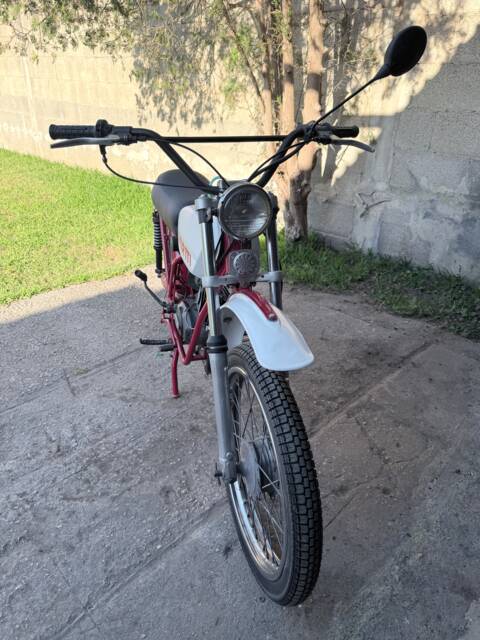
1970 | Cimatti Kaiman
Vendesi moto d’epoca

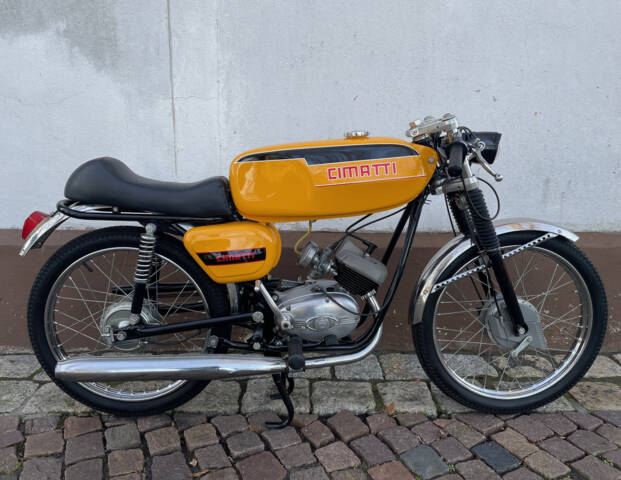
1972 | Cimatti Sport 50
Super Zustand, original restauriert.

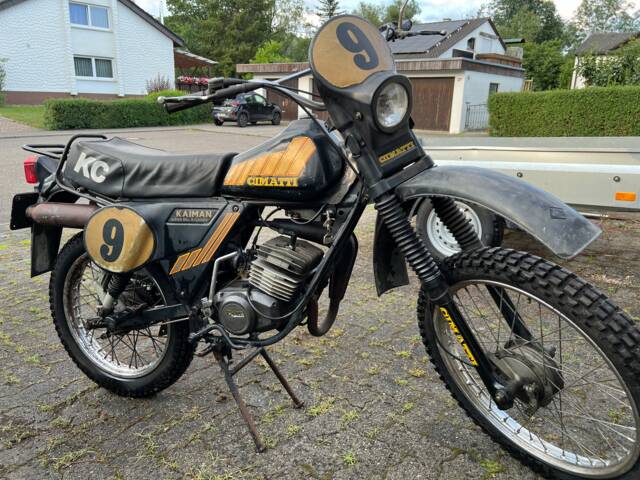
1981 | Cimatti Kaiman KC
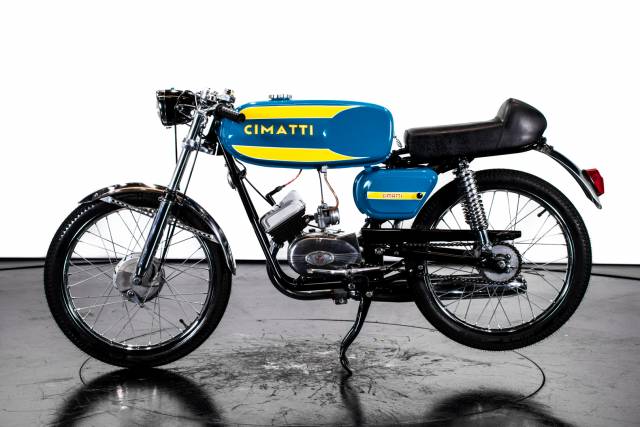
1969 | Cimatti S4
-
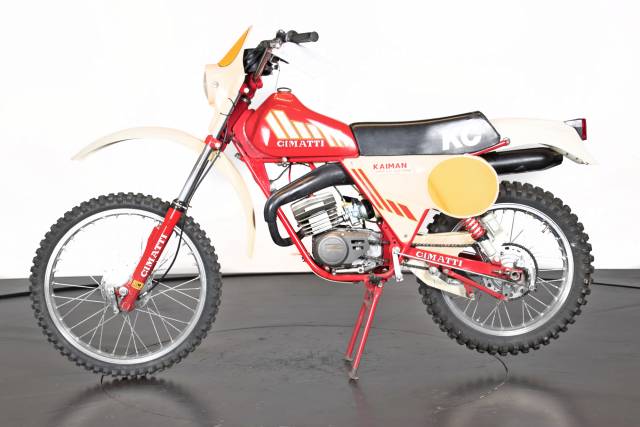
1982 | Cimatti Kaiman X21
-
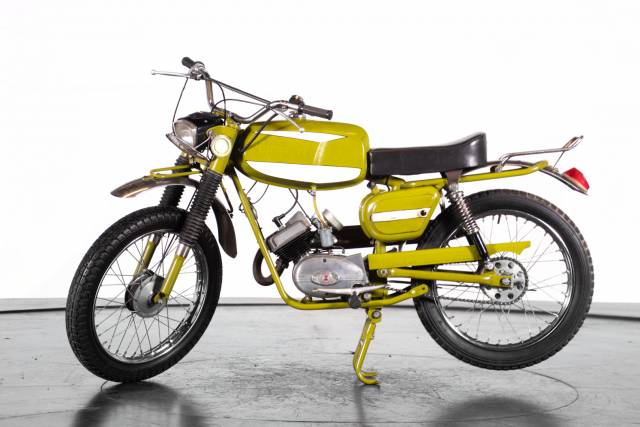
1968 | Cimatti S4
-
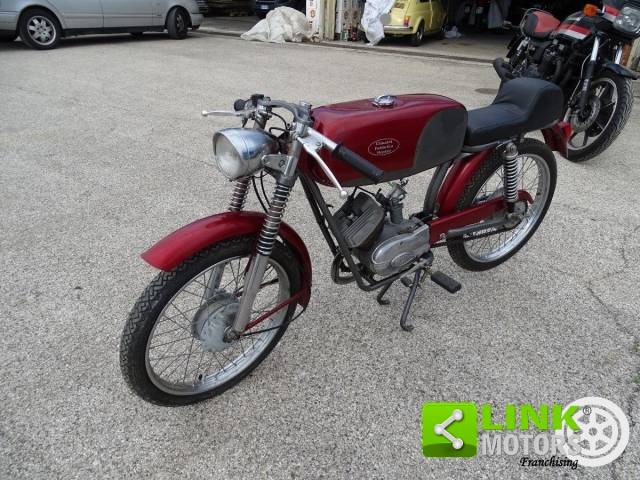
1957 | Cimatti Sport 50
Cimatti 50 1957
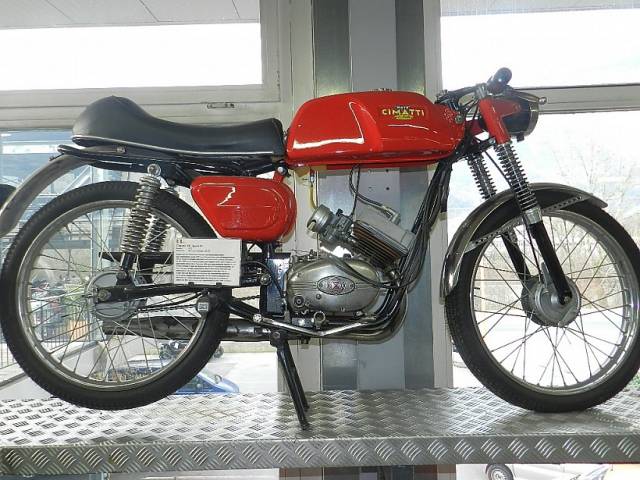
1972 | Cimatti Sport 50

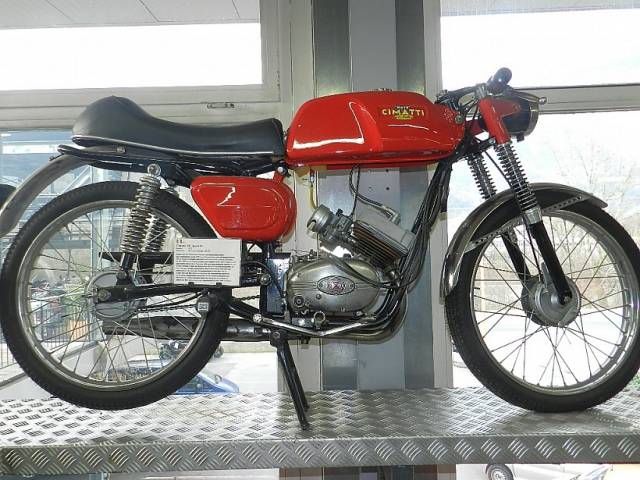
1972 | Cimatti Sport 50
Create search alert
Let yourself be notified as soon as a listing is published that matches your search filters.
History & Heritage
The story of Cimatti is inextricably linked with the competitive spirit of its founder, Marco Cimatti. Born in Bologna in 1913, Cimatti was not just an industrialist but a decorated athlete whose grit and determination defined the early years of his namesake company. Long before he ever fitted a motor to a frame, Marco was a star on the cycling track. His greatest triumph came at the 1932 Los Angeles Olympic Games, where he won a gold medal in the team pursuit. This wasn't a minor achievement; it was a testament to the Italian engineering and athletic prowess that would later be poured into every motorcycle bearing his name.
After retiring from professional cycling, which included four stage wins in the Giro d'Italia, Marco Cimatti turned his attention to manufacturing. In 1937, he established a bicycle factory in Bologna. He chose a modest location in Pioppe di Salvaro, an industrial hub where the focus was on craftsmanship and resilience. This period was difficult for any manufacturer, but the bicycle was the backbone of Italian transport during and immediately after the war.
By 1950-1951, as Italy began its economic miracle, the demand for affordable motorized transport exploded. People needed more than a pedal bike but couldn't afford a car. The "moped" became the symbol of this era. Cimatti, already an expert in bicycle frames, realized that adding a small engine was the logical next step. While giants like Piaggio and Innocenti were dominating with the Vespa and Lambretta, smaller manufacturers like Cimatti thrived by focusing on lightweight, high-quality machines.
Throughout the 1950s, Cimatti built its reputation on the reliability of the engines it sourced from fellow Bolognese companies, Franco Morini and Minarelli. These partnerships were crucial; they allowed Cimatti to focus on design and frame geometry while using some of the best small-displacement powerplants in the world. The Sagitario (1956) was one of the first models to capture the public's imagination—a sleek, sporty 50cc machine that looked like a "real" motorcycle in miniature.
The 1960s saw the company expand under the leadership of Marco’s son, Enrico Cimatti. Enrico had a global vision. He understood that the Italian domestic market was becoming crowded, so he looked toward export markets. Cimatti mopeds soon found their way to France, Norway, Tunisia, and even the United States, where they were marketed as "City-Bike" and "Town-Bike."
In Australia, the story of Cimatti is often tied to the wave of Italian immigration in the 1950s and 60s. Many young Italian men who settled in Sydney, Melbourne, and Adelaide brought with them a passion for the small, buzzing 2-strokes they had ridden back home. While the big British bikes dominated the highways, these small Italian mopeds became a familiar sight in the inner suburbs, used by migrants for commuting to factories and construction sites.
The 1970s was perhaps the brand's most iconic decade. This was the era of the Kaiman, a model that became synonymous with the "boy racer" culture in Italy and France. Available in multiple versions, from the street-legal X16 to the aggressive Kaiman Cross, these bikes were rugged, stylish, and remarkably fast for their size. Cimatti even ventured into larger displacements with the Ariete 125, a proper motorcycle that showcased the brand's ability to compete with larger manufacturers.
However, the early 1980s brought significant challenges. The arrival of Japanese manufacturers—Honda, Yamaha, and Suzuki—redefined the market. They could produce bikes at a scale and price point that a boutique manufacturer in Bologna simply couldn't match. By 1982, Cimatti was forced to switch to Garelli engines to keep costs down, but it wasn't enough. The factory finally closed its doors in 1984. While the company is gone, the Cimatti name remains a badge of honor among those who appreciate the golden age of Italian lightweight motorcycles.
Highlights & Features
What makes a Cimatti stand out in a sea of vintage Italian mopeds? It is the balance of Bolognese style and the use of premium components from the height of Italy’s specialized manufacturing era.
The Kaiman 50 series is undoubtedly the crown jewel for most collectors. Produced throughout the 1970s, the Kaiman was more than just a moped; it was a "tubone"—a term Italians used for bikes where the main frame was a large diameter tube that often doubled as the fuel tank.
- Kaiman X16: The standard road version, known for its clean lines and simple construction.
- Kaiman X19 and X21: More advanced versions with improved suspension and higher-spec Minarelli engines.
- Kaiman Cross: A cult classic in Australia among vintage dirt bike enthusiasts. It featured high-mounted exhausts, knobby tires, and a rugged frame that could handle more than just a gravel driveway.
The Ariete 125 is the "holy grail" for Cimatti enthusiasts. Unlike the 50cc models, this was a full-sized motorcycle. It featured a Demm engine, which was somewhat unusual as most Cimattis used Minarelli or Morini. The Ariete was designed to look like the larger superbikes of the early 70s, with a long, low tank and a sporty seat. Today, finding an Ariete in Australia is incredibly rare, often requiring a direct import from Europe.
For those who prefer a more classic "Step-Through" design, the Piper and Mini Chic offer a different kind of charm. The Mini Chic, as its name suggests, was a stylish, compact moped designed for urban use. It featured smaller wheels and a more delicate frame, making it a favorite for city dwellers. In the Australian context, these are popular with collectors who enjoy "Slow TV" on two wheels—leisurely Sunday rides through beachside suburbs.
A key highlight across the entire Cimatti range is the engine versatility. Because Cimatti used standard engines from Minarelli and Franco Morini, these bikes are surprisingly easy to keep on the road. The internal parts—pistons, rings, gaskets, and bearings—are still manufactured today and can be found through specialists. The challenge, however, is the bodywork. Cimatti-specific tanks, side covers, and seats were never produced in massive numbers, making original, undamaged panels highly prized.
Another unique feature is the build quality of the frames. Given Marco Cimatti’s background in bicycle manufacturing, the frames were often lighter and more rigid than those of their contemporaries. This translates into a riding experience that feels more connected and "tossable" than the heavier mopeds from Northern Europe.
Technical Data
The technical specifications of Cimatti models vary significantly depending on the year and the specific export market (some countries required pedals, others did not). Below is a summary of the most popular models as they would typically appear in a collector's market.
Note: Power outputs for the 50cc models generally hovered between 1.5 hp and 2.5 hp. The Ariete 125 produced around 7-8 hp, providing a much more "modern" traffic-matching experience.
Market Overview & Buying Tips
Buying a Cimatti in Australia is a journey of patience. Unlike the UK or Europe, where these bikes are still found in barns and back garages, the Australian market is much tighter. However, with the rise of vintage moped culture and the support of groups like the Classic Italian Motorcycle Association of Australia (CIMAA), it is possible to find and maintain these beauties.
Where to Find Them
- Gumtree & eBay Australia: Occasional listings pop up, often mislabelled as "vintage moped" or "Italian scooter." Use broad search terms.
- Shannons Auctions: For high-end, restored examples, Shannons is the place to watch. An Ariete or a mint Kaiman Cross will occasionally appear in their classic auctions.
- The Italian Community: Many bikes never make it to public listings. They are traded within families or through word-of-mouth in the Italian-Australian social clubs.
- Direct Import: If you are after a specific model like the Kaiman X21, importing from Italy (via sites like Subito.it) or France is often the most reliable route, though it comes with a high shipping premium.
Australian Pricing (2024–2025 Estimates)
Prices for Cimatti motorcycles have seen a steady rise as Gen X and Millennial collectors seek out the bikes of their (or their fathers') youth.
- Kaiman 50 (Standard/X16): For a "project" bike that needs work, expect to pay between A$1,000 and A$1,800. A fully restored, road-registered example can fetch A$2,800 to A$3,500.
- Kaiman Cross: Highly desirable in Australia. Expect to pay a premium. Good condition bikes go for A$3,000 to A$4,500.
- Ariete 125: Extremely rare. A running example can start at A$4,500, while a concours-condition bike could reach A$7,500+.
- Piper / Mini Chic: These are the most affordable entry points. You can find decent runners for A$800 to A$1,500.
The Parts Challenge & Shipping Costs
The "Australia Tax" is real when it comes to parts. While the engines are common, almost all specialized Cimatti parts must come from Europe.
- Engine Parts: Readily available from local specialists like Wemoto Australia or imported from the UK.
- Cimatti-Specific Parts (Tanks, Seats, Badges): You will likely need to deal with European sellers.
- International Shipping Costs: This is a critical factor for Australian buyers. A small box containing a piston or cables might cost A$40-A$60 in shipping. However, if you need a heavy item like an original exhaust pipe or a fuel tank, shipping can easily exceed A$250 to A$400. Always try to bundle your parts orders to save on these costs.
What to Look For
- Frame Integrity: Check the main tube (on Kaimans) for signs of internal rust or poor welding repairs.
- Originality: Ensure the badges and tank logos are present. These are very hard to replace.
- Engine Type: Confirm if it’s a Minarelli or Morini. Both are good, but you’ll need to know which one for parts.
- Electrics: Italian electrics from the 70s are notoriously "characterful." Check the stator and ignition coils, as these are common failure points.
Riding Experience
Riding a Cimatti is a sensory experience that modern, fuel-injected bikes cannot replicate. It starts with the ritual. There is no "electric start" button here; it’s all about the kickstarter. You turn the fuel tap, tickle the carburetor (if it’s an older Dell'Orto), and give it a firm, confident kick. The 2-stroke engine crackles to life with a sharp, metallic ring and a puff of blue smoke that smells of nostalgia.
On the road, a Kaiman 50 feels incredibly light. At around 50kg, you don't so much "ride" it as you "wear" it. The narrow tires and bicycle-derived geometry make it exceptionally agile. In an urban Australian setting—say, navigating the backstreets of Carlton or Leichhardt—it is a joy. You can zip through gaps and park it almost anywhere. The 4-speed gearbox on the sportier models is surprisingly tactile, requiring you to stay in the power band to keep the momentum going.
The Performance of a 50cc bike is modest, but that’s the point. It’s about the "ton-up" feeling at 60 km/h. Everything feels faster when you are two inches off the ground on a frame designed in the 1930s. The vibration through the handlebars is a constant reminder of the mechanical heart beating beneath you.
If you are lucky enough to ride an Ariete 125, the experience is more substantial. It has the weight and presence of a "real" bike. The Demm engine is smoother than the smaller units and has enough torque to keep up with modern suburban traffic. It won't win a drag race against a modern 125cc scooter, but it has a soul that those plastic machines lack.
The Sound is perhaps the most defining characteristic. A Cimatti doesn't "hum"; it "sings." The high-pitched rasp of the exhaust is a throwback to a time when every Italian street sounded like a GP start line. For many Australian riders, this sound is a direct link to their heritage—a mechanical echo of a summer in Italy.
Design & Accessories
The design philosophy of Cimatti was "Bolognese Elegance." While manufacturers from Milan or Turin might have gone for flashy, over-the-top styling, Cimatti stayed true to its roots: clean, functional, and balanced.
The Colors were traditionally Italian—deep reds, crisp whites, and vibrant blues. The paint quality was generally high for the era, though many surviving examples in Australia have suffered from the harsh Southern sun. The chrome work on the higher-end models (like the Kaiman Cross) was extensive, covering the exhaust guards, handlebars, and fender struts.
The Cimatti Logo is a piece of art in itself. Usually an oval badge with raised metallic lettering, it often featured a stylized wing or a reference to the Olympic heritage. Collectors often spend months hunting for an original, un-pitted badge to complete a restoration.
Accessories & Customization
In the 1970s, it was common for owners to "personalize" their bikes.
- Exhausts: "Expansion chambers" were popular upgrades to get a few extra HP and a much louder bark.
- Carburetors: Swapping the standard 12mm Dell'Orto for a 19mm unit was the standard "Stage 1" tune for a Kaiman.
- Saddles: Cimatti offered various seat options, from the standard single-rider saddle to the long "Giuliari" style sport seats.
- Luggage: For the Piper and Mini Chic, chrome rear racks and front baskets were common, reflecting their use as practical daily commuters.
In Australia today, the trend is toward period-correct restoration. Collectors value a bike that looks exactly as it did when it rolled off the boat in Sydney Harbor in 1974. Finding the original "Made in Italy" stickers for the swingarm or the correct CEV headlight lens is what separates a good restoration from a great one.
Culture & Legacy
The legacy of Cimatti in Australia is more than just nuts and bolts; it is a cultural artifact. For the Italian-Australian community, these bikes represent a bridge between two worlds. In the post-war period, owning an Italian motorcycle was a way for migrants to maintain their identity in a country that was, at the time, very British.
The CIMAA (Classic Italian Motorcycle Association of Australia) plays a vital role in preserving this legacy. They provide more than just technical support; they are a community. Seeing a line of Cimattis, Motobi's, and Laverda's at a club meet in NSW or Victoria is a powerful reminder of the impact Italian engineering had on the Australian landscape.
Cimatti’s story is also one of Artisanal Resilience. It was a company founded by a sportsman who understood that to win, you need both heart and a well-tuned machine. Even though the brand didn't survive the industrial consolidation of the 1980s, it left behind a catalog of machines that are still loved today.
In a world of silent electric scooters and anonymous modern bikes, a Cimatti is a loud, vibrating, smoky piece of history. It demands your attention. It requires you to understand how a carburetor works. It asks you to appreciate the curve of a fuel tank and the sound of a perfectly tuned 2-stroke. This "manual" connection to the machine is exactly why the brand continues to attract new fans in the 21st century.
Summary
Cimatti represents the "Golden Age" of the Italian lightweight motorcycle—a period of unbridled creativity and mechanical purity. From its roots in Olympic cycling to its success on the trails of the 1970s, the brand consistently punched above its weight.
For the Australian collector, a Cimatti offers:
- Distinctive Style: A Bolognese aesthetic that stands out from the more common Italian brands.
- Mechanical Simplicity: Easy-to-maintain Minarelli and Morini engines that are perfect for DIY restorers.
- Cultural Connection: A deep link to the Italian-Australian migrant story and the early days of Australian motorcycle clubs.
- Rarity: Owning a Cimatti in Australia means you are likely the only one at the local bike meet with that specific model.
Whether you are looking for a rugged Kaiman Cross for vintage trail rides, a stylish Mini Chic for city commuting, or the ultra-rare Ariete 125 for a serious collection, Cimatti provides a gateway to a vanished world. Yes, the parts might take three weeks to arrive from Italy, and yes, the shipping costs might make you wince, but once you hear that 2-stroke engine "sing" on a sunny Australian afternoon, you’ll know it was worth every cent.
Cimatti—born from the track, built for the street, and preserved by those who know that the best things in life often come in small, 50cc packages.