- Motorcycle
- Brough-Superior (0 offers)
Buy Brough Superior Motorcycles
Hand-built in Nottingham between 1919 and 1940, Brough Superior motorcycles earned the title "The Rolls-Royce of Motorcycles" through unparalleled engineering and bespoke craftsmanship. Each machine was a masterpiece of performance, tested personally by George Brough to ensure it met the highest standards of speed and reliability.
Search results
Currently, there are no matching listings for your search.
Create search alert
Let yourself be notified as soon as a listing is published that matches your search filters.
Create listing
Do you have a Brough-Superior that you want to sell? Then create a listing now.
Create listingBrough-Superior listing references from Classic Trader
Below you will find listings related to your search that are no longer available on Classic Trader. Use this information to gain insight into availability, value trends, and current pricing for a "Brough-Superior" to make a more informed purchasing decision.
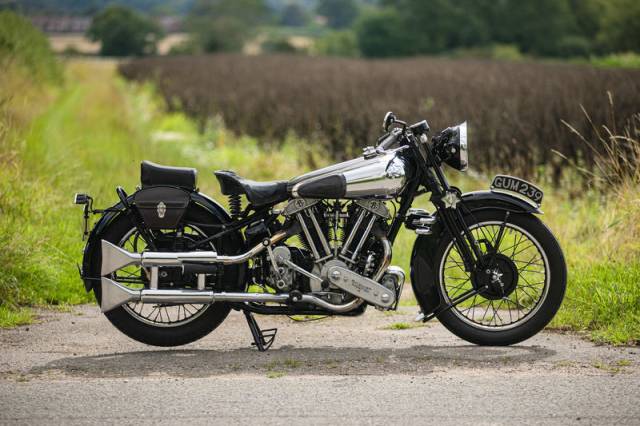
1939 | Brough-Superior SS 100
1938 Brough Superior SS100 990cc

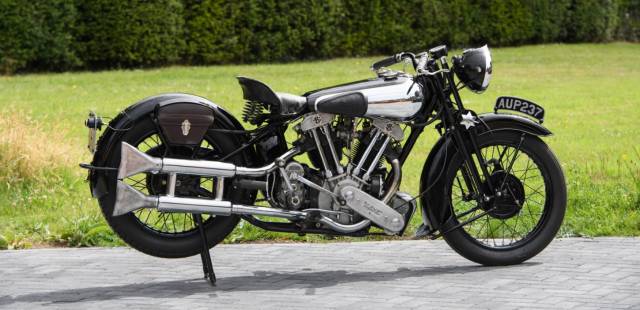
1936 | Brough-Superior SS 100
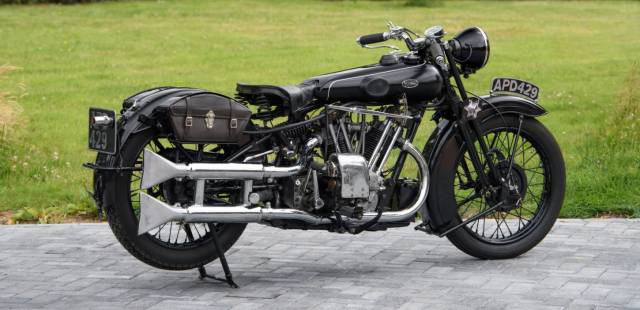
1933 | Brough-Superior 680
Alpine Black
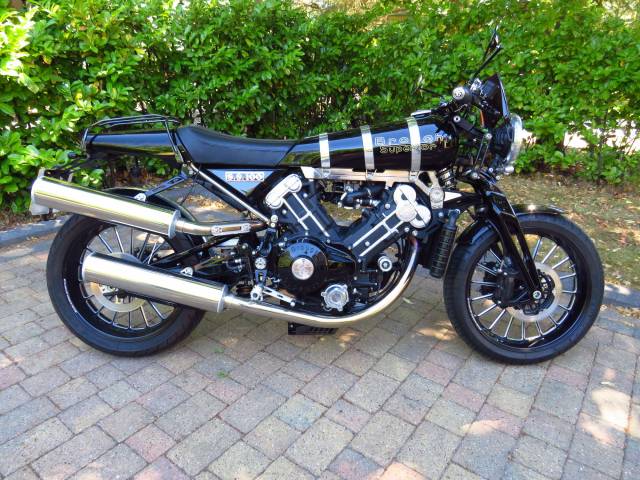
2020 | Brough-Superior SS 100
2020 Brough Superior SS100 Mk1 997cc
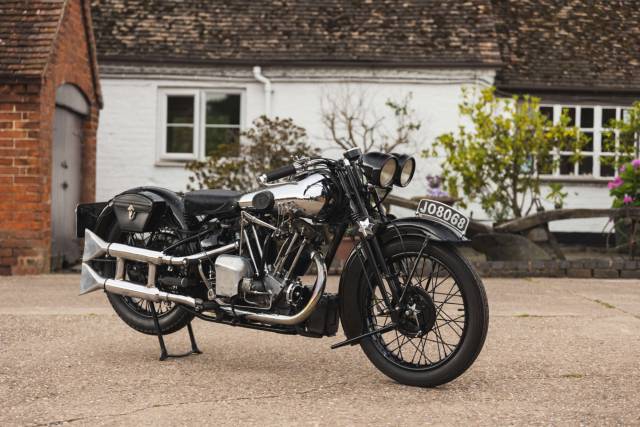
1933 | Brough-Superior 680
1933 Brough Superior 680 OHV 680cc
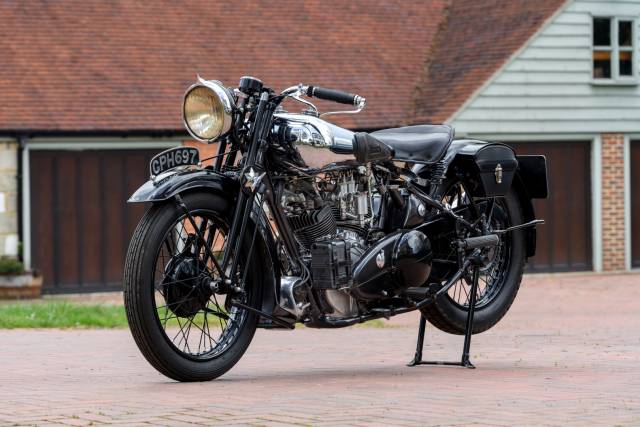
1938 | Brough-Superior SS 100
1938 BROUGH SUPERIOR SS100 – ‘BODMIN BROUGH’
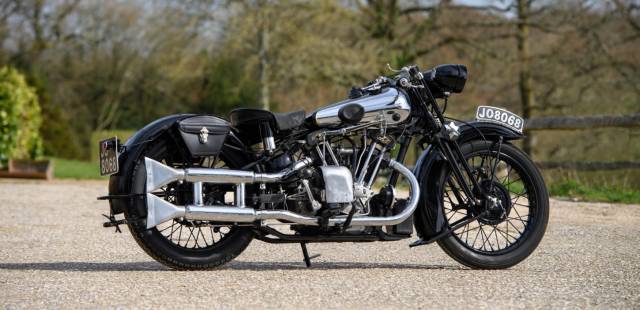
1933 | Brough-Superior 680
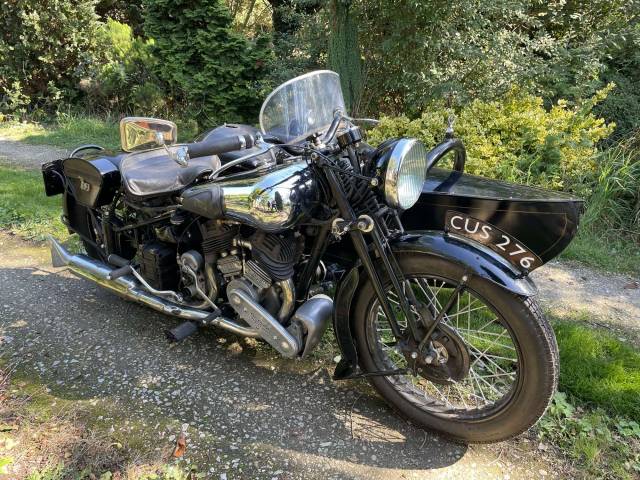
1939 | Brough-Superior SS 80
1939 Brough Superior SS80 with Alpine 'Petrol Tube' Sidecar
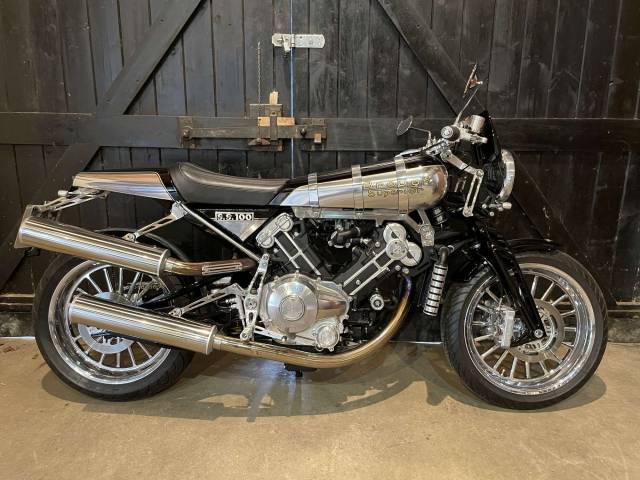
2018 | Brough-Superior SS 100
2018 Brough Superior SS100
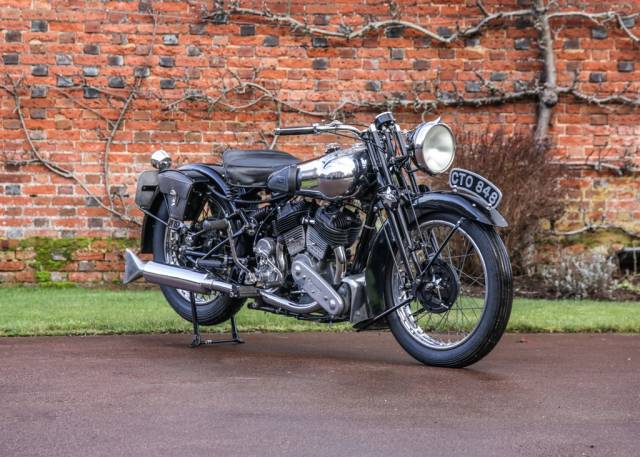
1936 | Brough-Superior SS 80
Brough Superior SS80
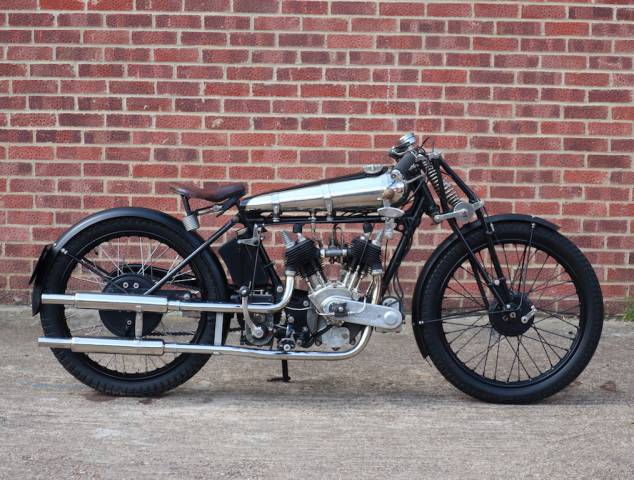
1932 | Brough-Superior 5-15
UK road registered, with UK V5C logbook
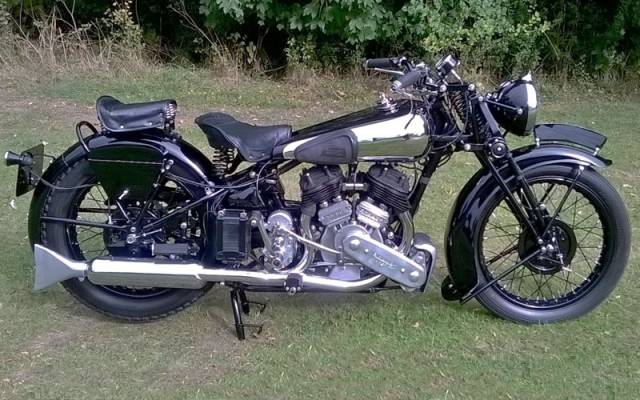
1939 | Brough-Superior SS 80
Auction Donington Park: 22.02.2017 Estimate: £ 75000 - 80000
Create search alert
Let yourself be notified as soon as a listing is published that matches your search filters.
Create listing
Do you have a Brough-Superior that you want to sell? Then create a listing now.
Create listingHistory & Heritage
The story of Brough Superior is one of ambition, engineering excellence, and a relentless pursuit of perfection. Founded in 1919 by George Brough in Nottingham, England, the brand was born from a desire to create motorcycles that were not just better than the competition, but "superior" in every conceivable way. George, the son of motorcycle pioneer William E. Brough, broke away from his father's business to build machines that would appeal to the most discerning and wealthy riders of the era.
In the early 1920s, the Nottingham workshop began producing small batches of motorcycles that were essentially bespoke creations. George Brough understood that his customers weren't just looking for transportation; they were looking for a statement of status and a tool for adventure. In 1923, the journalist H. D. Teague of The Motor Cycle magazine famously dubbed the brand the "Rolls-Royce of Motorcycles". Rather than shying away from the comparison, George Brough embraced it, even inviting Rolls-Royce executives to the factory to prove that his manufacturing standards were indeed worthy of the name.
The first major success came with the SS80 (Super Sports), introduced in 1922. The "80" in its name was a guarantee: every bike was tested to ensure it could reach at least 80 miles per hour (129 km/h). This was followed in 1924 by the even more formidable SS100, which guaranteed a top speed of 100 mph (161 km/h)—a staggering figure for the mid-1920s. These machines were powered by high-performance V-twin engines from J.A. Prestwich (JAP), and later, from 1936 onwards, by Matchless units.
Throughout the 1920s and 30s, Brough Superior expanded its range to include the SS680 OHV, a slightly smaller but still potent machine, and the 11.50, a large-capacity sidevalve V-twin designed primarily for sidecar use. The brand also produced a limited number of automobiles and high-end sidecars, which featured the same distinctive styling and engineering as the motorcycles.
The original era of Brough Superior came to an end in 1940 with the outbreak of World War II. By then, only approximately 3,048 motorcycles had been produced. This scarcity, combined with the brand's incredible reputation, has made Brough Superior one of the most sought-after names in the collector world. In 2013, the brand was revived by Mark Upham and Thierry Henriette, with production moving to Toulouse, France. These modern Brough Superiors continue the tradition of hand-built excellence, blending classic aesthetics with contemporary materials like titanium and carbon fibre.
For the Australian collector, the history of Brough Superior is particularly poignant. As a member of the British Commonwealth, Australia has a long-standing appreciation for British engineering. While few Broughs were imported to Australia during the interwar years due to their immense cost—often equivalent to a year's wages for a professional—those that did make it to the Southern Hemisphere were cherished by the local elite and have since become the crown jewels of Australian private collections.
Highlights & Features
What sets a Brough Superior apart from any other vintage motorcycle is the uncompromising quality of its components and the level of individual attention paid to every build. George Brough did not manufacture his own engines; instead, he acted as a master orchestrator, selecting the finest parts from the best suppliers in the British Empire.
Bespoke Engineering: Every Brough Superior was built to the customer's specific requirements. This included custom-shaped handlebars, adjustable footrests, and a choice of gear ratios. George Brough famously personally tested every SS100 at the Brooklands circuit or on public roads to ensure it met its speed guarantee before it was delivered to the customer.
The SS100 Icon: The SS100 remains the most famous model in the lineup. Its combination of the JAP KTOR or JTOR engine and the distinctive Castle forks (a design inspired by Harley-Davidson but refined by Brough) created a machine that was as stable at high speeds as it was beautiful to look at. The later Matchless-powered versions offered even more refinement and reliability, representing the final evolution of the pre-war superbike.
Technical Innovations: George Brough was a pioneer of many features we take for granted today. He is credited with introducing the first prop stand (side stand), the first dual headlights on a motorcycle, and the first interconnected silencers. His focus on "clean" design meant that oil leaks were minimal compared to his contemporaries, and the overall finish of the nickel and chrome plating was second to none.
The Lawrence Connection: No discussion of Brough Superior is complete without mentioning T.E. Lawrence (Lawrence of Arabia). Lawrence owned seven Broughs and was waiting for his eighth when he tragically died in a crash on his seventh SS100 in 1935. His devotion to the brand cemented its status in popular culture as the ultimate machine for the adventurous gentleman.
Australian Rarity: In the Australian context, a Brough Superior is more than just a motorcycle; it is a rare piece of industrial art. The distance from the Nottingham factory meant that only a handful of these machines ever reached Australian shores in the 1920s and 30s. Today, seeing an original Brough at an event like the Rippon Lea Estate Concours D'Elegance in Melbourne is a significant occasion for any enthusiast.
Technical Data
The technical specifications of Brough Superior motorcycles reflect the rapid advancement of engineering during the interwar period. Because each bike was custom-built, specifications can vary, but the following table provides an overview of the primary production models:
Engine Evolution: The transition from JAP to Matchless engines in 1936 was a significant turning point. While the JAP engines were legendary for their racing pedigree and raw power, the Matchless units were considered more robust and easier to maintain for the average owner. For modern collectors, the JAP-powered SS100s typically command the highest prices due to their "purity" and connection to the brand's early records.
Chassis and Handling: The use of Castle forks on the SS100 provided a level of front-end stability that was revolutionary. Unlike the more common girder forks of the time, the Castle design allowed for better absorption of road imperfections, which was crucial when travelling at 100 mph on the unsealed or poorly maintained roads of the 1920s.
Market Overview & Buying Tips
The market for Brough Superior motorcycles is one of the most exclusive and high-stakes arenas in the world of vehicle collecting. Due to the extremely low production numbers and the high survival rate (thanks to their value even when new), Broughs are treated more like fine art than mere machinery.
Price Levels 2024-2025 (AUD)
For Australian buyers, it is essential to consider the global nature of the Brough market. Most transactions occur at major international auctions in the UK or USA, meaning prices are heavily influenced by exchange rates and the costs of international logistics.
- SS100 (JAP Engine, 1924-1936): These are the "Blue Chip" investments. Prices in 2024 and 2025 have ranged from A$400,000 to over A$800,000. A 1930 SS100 ridden by George Brough himself sold in early 2025 for approximately A$480,000 (£241,500). Exceptional examples with documented racing history or famous previous owners can exceed A$1,000,000.
- SS100 (Matchless Engine, 1936-1940): Slightly more "affordable" but still incredibly valuable. Expect to pay between A$350,000 and A$550,000. These are often preferred by owners who actually intend to ride their machines, as the Matchless engine is somewhat more tractable.
- SS80 (Sidevalve): The entry point into Brough ownership. Prices typically sit between A$100,000 and A$250,000. A well-restored SS80 is a fantastic way to experience the brand's quality without the seven-figure price tag of a top-tier SS100.
- SS680 and 11.50 Models: These occupy the middle ground, usually fetching between A$150,000 and A$300,000 depending on condition and originality.
- Modern Brough Superior (Toulouse): New models imported to Australia, such as the modern SS100 or the Pendine Sand Racer, typically retail between A$105,000 and A$185,000. While they lack the pre-war history, they offer incredible performance and the same hand-built exclusivity.
The Australian Context: Importing and Rarity
Buying a Brough Superior in Australia presents unique challenges. Because there are so few original machines physically located in the country, most Australian collectors must look to the UK or Europe.
- Shipping and Insurance: Transporting a high-value motorcycle from the UK to Australia requires specialised crating and fully insured air or sea freight. Expect to pay between A$5,000 and A$10,000 for a professional door-to-door service.
- Import Regulations: Australia has strict biosecurity and asbestos regulations. Any vintage motorcycle must be thoroughly cleaned, and any asbestos-containing components (like old brake linings or gaskets) must be replaced before shipping.
- Taxes: While motorcycles are generally exempt from the Luxury Car Tax (LCT), you will still be liable for 10% GST on the landed value (purchase price + shipping + insurance). If the bike is coming from a country with which Australia has a Free Trade Agreement (like the UK), import duties may be waived.
- Local Expertise: Australia has a small but dedicated community of Brough enthusiasts. The Antique Motorcycle Club of Australia (AMCA) and the Australian branch of the Brough Superior Club are invaluable resources for verifying the authenticity of a machine before you commit to a purchase.
What to Look for When Buying
Provenance is Paramount: A Brough Superior is only as valuable as its history. Always demand the Works Record Card (available through the Brough Superior Club). This document confirms the original specifications, engine number, and frame number as the bike left the Nottingham factory. "Matching numbers" are essential for maintaining the investment value.
Originality vs. Restoration: In the current market, "oily rag" bikes—those with original paint and patina—often command a premium over over-restored examples. However, given the age of these machines, many have had parts replaced. Ensure that any replacement parts are period-correct or high-quality reproductions from recognised specialists.
Technical Inspection:
- Engine: Check for the correct JAP or Matchless stampings. Listen for excessive mechanical noise, though these engines are naturally "chatty."
- Gearbox: The Sturmey-Archer gearboxes are robust but can be expensive to repair if the internal gears are chipped or worn.
- Frame: Inspect the duplex cradle for any signs of stress fractures or poor-quality historical repairs.
- Tank: The iconic Brough tank is prone to internal corrosion if left sitting with old fuel. Check for leaks or "soft spots" under the paint.
Performance & Riding Experience
Riding a Brough Superior is an exercise in sensory overload. It is a physical, mechanical experience that requires the rider's full attention and rewards them with a feeling of power and grace that few modern machines can replicate.
The V-Twin Soul: The heart of the experience is the large-capacity V-twin. Whether it's the sidevalve SS80 or the overhead-valve SS100, the engine produces a deep, rhythmic thrum that you feel in your chest as much as you hear with your ears. The torque is immense; a Brough doesn't so much accelerate as it "surges" forward, pulling strongly from low revs in a way that makes gear changes almost optional once you're up to speed.
Hands-On Control: Unlike a modern bike with its electronic rider aids, a Brough Superior requires manual management of almost every function. You must manage the ignition advance/retard, the air lever for the carburettor, and, on earlier models, the manual oil pump. The gear change is typically a hand-operated lever on the side of the tank, requiring you to momentarily take one hand off the bars—a daunting prospect at speed for the uninitiated.
Handling and Braking: On the road, a Brough feels surprisingly light and balanced. George Brough was a master of geometry, and the low centre of gravity makes the bike feel planted and stable. The Castle forks provide a "floating" sensation over minor bumps, though the rigid rear end means you'll feel every significant pothole. The brakes, while state-of-the-art for the 1920s, are modest by modern standards. Stopping a 200 kg machine from 100 km/h requires a firm hand and plenty of foresight.
The "100 mph" Reality: While many SS100s are capable of their namesake speed, doing so on a 90-year-old machine is an intense experience. The wind blast is significant, the mechanical symphony from the engine becomes a roar, and the vibration—while well-damped for a V-twin—reminds you of the incredible forces at play. Most owners today prefer to cruise at a more relaxed 80-100 km/h, where the bike is in its "sweet spot" and the rider can enjoy the admiring glances of everyone they pass.
Design & Aesthetics
George Brough was as much a stylist as he was an engineer. He understood that for his motorcycles to be the "Rolls-Royce" of the industry, they had to look the part. The design language of a Brough Superior is one of functional elegance.
The Iconic Fuel Tank: The most recognisable feature of any Brough is the fuel tank. Long, sleek, and often finished in a combination of chrome and black (or the customer's choice of colour), it defines the silhouette of the bike. The way the tank tapers towards the seat gives the machine a sense of forward motion even when standing still.
Chrome and Nickel: Brough was one of the first manufacturers to use chrome plating extensively. On a well-maintained SS100, the handlebars, exhaust pipes, headlight shells, and even the wheel rims glisten with a deep, high-quality lustre. This wasn't just for show; the high-quality plating provided excellent protection against the damp British climate—and it stands up equally well to the harsh Australian sun.
The "Fishtail" Exhausts: The exhaust note of a Brough is directed through beautifully crafted "fishtail" silencers. These are not just aesthetic; they were designed to provide a specific back-pressure to optimise engine performance while producing a sound that George Brough described as "a gentlemanly purr."
Ergonomics: Because the handlebars and footrests were tailored to the original owner, the ergonomics of a Brough can feel very personal. Some bikes have a "sporting" crouch with narrow bars, while others—like the Alpine Grand Sports—feature wider, more upright bars designed for long-distance touring through the mountain passes of Europe.
Racing, Records & Culture
The legend of Brough Superior was forged on the racetracks and speed-trial sands of the 1920s. George Brough himself was a formidable competitor, winning numerous gold medals in trials and sprint races.
Speed Records: Brough Superior was obsessed with being the fastest. In 1937, Eric Fernihough set a world motorcycle speed record of 169.7 mph (273 km/h) on a supercharged Brough Superior at Gyon, Hungary. Earlier, in 1924, Bert le Vack had set a record of 119 mph at Arpajon, France. These records weren't just for glory; they were the ultimate proof of the "Superior" name.
Brooklands and Pendine Sands: The brand is inextricably linked with the Brooklands circuit in Surrey and the Pendine Sands in Wales. The "Pendine" model was specifically named after the beach where so many speed attempts were made. For an Australian collector, owning a Pendine model is like owning a piece of the very ground where the history of speed was written.
Pop Culture and Legacy: Beyond T.E. Lawrence, Brough Superiors have appeared in numerous films and books, often symbolising the ultimate in British luxury and daring. In Australia, the brand's legacy is kept alive by a small number of dedicated owners who regularly exercise their machines on club runs and at major shows. The modern revival of the brand in France has also introduced Brough Superior to a new generation of Australian riders, who appreciate the blend of heritage and modern performance.
The Modern Era: The new Brough Superior factory in Toulouse produces machines that are arguably even more "superior" than the originals in terms of materials. Using titanium frames, carbon fibre bodywork, and Beringer brakes, the modern SS100 and the AMB 001 (a collaboration with Aston Martin) are the spiritual successors to George Brough's vision. For the Australian buyer, these modern machines offer a way to own the Brough name with the reliability and performance of a 21st-century superbike.
Summary
Brough Superior remains the ultimate aspiration for many motorcycle collectors. It is a brand that represents a unique moment in history—a time when individual craftsmanship and engineering ambition could create something truly world-beating. Whether it's the legendary SS100, the versatile SS80, or the rare 11.50, every Brough Superior is a masterpiece of British industrial heritage.
For the Australian enthusiast, the journey to Brough ownership is one of passion and patience. The rarity of these machines in the Southern Hemisphere means that acquiring one often involves an international search and a significant financial commitment. However, the reward is a riding and ownership experience that is simply unparalleled. A Brough Superior is not just a motorcycle; it is a ticket to an exclusive club of enthusiasts who value quality, history, and the thrill of the open road above all else.
As prices continue to rise and the global appreciation for pre-war classics grows, the Brough Superior stands as a remarkably stable investment. But more importantly, it remains a machine that begs to be ridden. To hear the roar of a JAP V-twin on a quiet Australian country road is to understand why George Brough called his creations "Superior."
Find your Brough Superior on Classic Trader today and become part of a legacy that has defined the pinnacle of motorcycling for over a century.