Wanderer W 240 classic cars for sale
With its refined 2-litre, six-cylinder engine and characteristic German pre-war engineering, the Wanderer W 240 offers a deep dive into the world of 1930s middle-class motoring, with distinct body variants including saloon, touring, and a rare cabriolet built by Gläser. This model stands out for its technical roots linking Porsche development with the Auto Union era.
Suchergebnisse
Zur Zeit sind keine passenden Inserate zu Ihrer Suche veröffentlicht.
Create search alert
Let yourself be notified as soon as a listing is published that matches your search filters.
Create listing
Do you have a Wanderer W 240 that you want to sell? Then create a listing now.
Create listingWanderer W 240 listing references from Classic Trader
Below you will find listings related to your search that are no longer available on Classic Trader. Use this information to gain insight into availability, value trends, and current pricing for a "Wanderer W 240" to make a more informed purchasing decision.
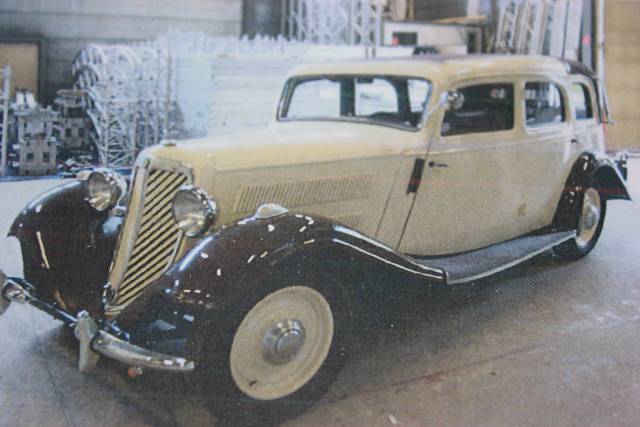
1935 | Wanderer W 240 Landaulet
W 21 CABRIOLIMOUSINE, SONDERKAROSSERIE "LANDAULET" W240 MOTOR
Create search alert
Let yourself be notified as soon as a listing is published that matches your search filters.
Create listing
Do you have a Wanderer W 240 that you want to sell? Then create a listing now.
Create listingWanderer W 240 Classic Cars: Prices & Market Values
History of the Wanderer W 240
The Wanderer W 240 entered the scene in 1935, at a time when German manufacturers were consolidating under the Auto Union AG to weather the tough economic circumstances of the 1930s. Wanderer itself started out in the 1880s as a bicycle maker and only began car production in 1905. With the foundation of Auto Union, combining DKW, Audiwerke, Horchwerke, and Wanderer, the brands remained independent, but shared technology and market presence. The W 240, strictly speaking, was only produced in 1935 but was near-identical to its predecessor, the W 22 (1933–1934), and replaced by the W 40. The W 240 featured a 2.0-litre in-line six-cylinder four-stroke engine – a unit designed by Porsche in 1931, and provided reliable performance for its era. Notable for its cable-operated drum brakes and non-synchronised four-speed gearbox, the model marks one of the last iterations before Wanderer moved to more modern hydraulic braking systems with the W 40 successor.
Model history
Model development began with the Wanderer W 22, sharing the same core engineering as the subsequent W 240. The W 240 was in production for a short period in 1935, after which a slightly larger-engined W 245 and the W 40 continued the line. Compared to its predecessor, the W 240 maintained the tried-and-tested mechanical layout, before the W 40 introduced advancements like hydraulic brakes. While the W 22 and W 40 offered extended 'Pullmann' versions, the W 240 was available as a four-door saloon, four-door touring car with removable canvas roof, and a two-door cabriolet – the latter bodied by Gläser of Dresden.
Highlights and special features
The Wanderer W 240 shines with its mix of Porsche-engineered powertrain and classic mid-1930s German vehicle design. It offered bodywork flexibility with saloon, touring, and cabriolet choices. The cabriolet stands out for its craftsmanship from Gläser, a Bodied Dresden coachbuilder. Both saloon and touring versions had four doors hinged conventionally for the time, with the front hindged at the B-pillar to open rearward. The W 240, unlike sibling generations, was not available as a long-wheelbase Pullmann version. For 1935, Wanderer promoted a slightly larger-engined variant called the W 245, sporting a 2,257cc engine with 50 PS, offered as saloon and touring only.
Technical data
Special Editions and Collectible Models
The most distinct offshoot of the W 240 line is the rare two-door cabriolet, bodied by Gläser, treasured for its elegant proportions and craftsmanship. The short-lived W 245 variant, with its increased 2,257 cc displacement and 50 PS, marks the most powerful and exclusive of the W 240 series, only available in saloon and touring body styles.
Weak spots and common issues
No specific widespread weak spots have been documented for the W 240 in this context. However, classic pre-war Wanderers of this period often require close inspection of their braking system (especially where cable operation is concerned), the non-synchronised manual gearbox for smoothness, and attention to any bodywork corrosion or issues with convertible roof mechanisms on cabriolet and touring variants.
Engine, performance, transmission and handling
The Porsche-designed in-line six of the W 240, with its 40 PS output, delivered respectable, smooth mid-1930s performance in the middle-class segment. The cable-operated drum brakes and rear-wheel drive define the driving feel, while the unsynchronised four-speed gearbox demands deliberate shifting. Road behaviour mimics designs of the era, with softly sprung suspension and steering needing a firm hand at speed. The more potent W 245 (50 PS, 2,257 cc) offered improved acceleration and top speed, making it a highlight among period touring sedans and saloons. - Wanderer W 240 Cabriolet (Gläser): For those seeking a rare open-top Wanderer with collector appeal and distinguished bodywork.
- Wanderer W 245 Touring and Limousine: For enthusiasts desiring the top-of-the-line six-cylinder Wanderer pre-war driving experience.
Interior, comfort, exterior and design
The W 240’s design channels mid-30s German styling, with cleanly contoured steel bodies, flat-topped fenders, and classic, upright grilles. Limousine interiors often featured wood veneer dashboards and simple yet robust seat upholstery. Both the touring model’s canvas roof and the Gläser cabriolet’s folding top embodied luxury and flexibility of the era, the latter complemented with two ample side windows and extra-wide doors. Equipment options at the time included tailored canvas weather-gear with viewing slots for the touring, and a range of exterior paint finishes typical for the period.
Other features
Produced under the Auto Union umbrella, the W 240 benefited from sharing components and design thinking with other prestigious brands of the group—Audi, DKW, and Horch. Its mechanical simplicity and quality finish made it a practical yet refined option for its contemporary buyers.
Summary
The Wanderer W 240, produced in 1935 under the Auto Union AG, stands out for its Porsche-derived six-cylinder engine, well-executed body variants, and position within the shifting landscape of 1930s German automotive history. Its engineering and design details capture a moment just before pre-war technologies gave way to more modern solutions. Enthusiasts value its mechanical authenticity, the uncommon cabriolet, and the more powerful W 245 special model as defining points of interest.