Trojan Van classic cars for sale
The Trojan Van distinguishes itself as a uniquely utilitarian classic, famed for its unconventional engineering and historical role in British small commercial transport. Those seeking a restoration project or a rare addition to their collection will appreciate the Trojan's accessibility and mechanical simplicity.
Search results
Currently, there are no matching listings for your search.
Create search alert
Let yourself be notified as soon as a listing is published that matches your search filters.
Create listing
Do you have a Trojan Van that you want to sell? Then create a listing now.
Create listingTrojan Van listing references from Classic Trader
Below you will find listings related to your search that are no longer available on Classic Trader. Use this information to gain insight into availability, value trends, and current pricing for a "Trojan Van" to make a more informed purchasing decision.
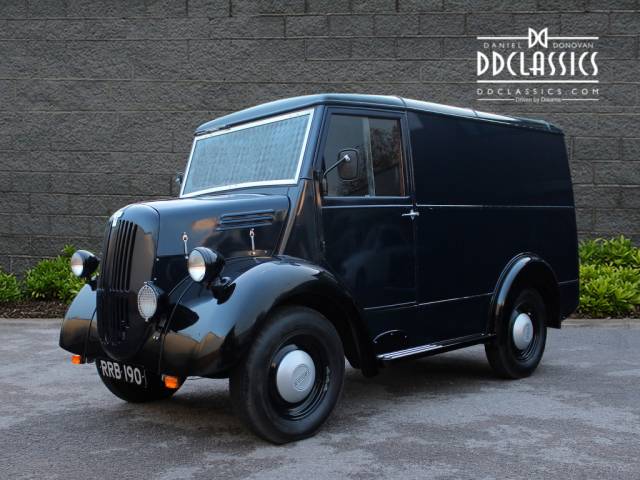
1952 | Trojan Van 15 cwt
(RHD)
Create search alert
Let yourself be notified as soon as a listing is published that matches your search filters.
Create listing
Do you have a Trojan Van that you want to sell? Then create a listing now.
Create listingTrojan Van Classic Cars: Prices & Market Values
History of the Trojan Van
The Trojan Van emerged as a commercial vehicle solution in post-war Britain, designed to provide reliable, economical transport for small businesses and local deliveries. The Trojan company itself had a reputation for building exceptionally straightforward and robust vehicles: the Van followed this credo, leveraging minimalistic two-stroke engine designs and basic engineering to keep costs and maintenance demands low. During its production run, the Trojan Van found its way into bakeries, florists, and tradesmen’s fleets, delivering goods in towns and suburbs before the ascendancy of more modern light vans.
Model Series Development
Across its production life, the Trojan Van remained true to its originals, rarely receiving extensive redesigns. Early models were heavily influenced by the company’s pre-war vehicles, utilising similar mechanical layouts. The Van did not spawn a direct line of successors—its market segment was later absorbed by larger manufacturers who offered more modern, faster alternatives as commercial expectations evolved in the late 1950s and 1960s.
Distinctive Features and Market Data
The Trojan Van stands out due to its rear-mounted two-stroke engine, low operating costs, and spartan, hardwearing interior. Its simplicity and unconventional configuration appeal to enthusiasts of British commercial vehicles who appreciate the purely functional approach of mid-century utility transport.
Technical Data
Special Editions and Collectible Models
There are no widely recognised special editions of the Trojan Van, as production focused on function rather than exclusivity. Any surviving vans with original livery from period businesses or in preserved unrestored condition could be of particular interest to collectors.
Weak Spots and Common Issues
With basic engineering, most mechanical issues relate to wear and tear of the engine and transmission components. Corrosion is a key issue, especially in older unrestored models. Replacement parts for the two-stroke engine and body panels can be challenging to source, requiring specialist knowledge or fabrication.
Driving Characteristics and Engine Performance
Performance of the Trojan Van is modest, befitting its utilitarian origins. The two-stroke engine offers low-speed torque suitable for urban deliveries, paired with leisurely acceleration and a low top speed by modern standards. Handling is uncomplicated, but ride quality is basic due to the simple suspension setup. No standout variants, as most vehicles were built to near-identical commercial specifications.
Interior and Exterior Design
The Trojan Van’s design is utilitarian, with emphasis on maximising cargo space within a compact exterior. The interior features minimal instrumentation and rugged materials intended for ease of cleaning and maintenance. Special equipment was limited: some models featured signage holders or bespoke racks for commercial use. Paint schemes often reflected the livery of original business owners, making period-correct restored examples visually appealing to collectors.
Other Features
Notably, the Trojan Van is occasionally seen at historic commercial vehicle rallies and events, drawing attention for its rarity and the distinctive sound of its two-stroke engine. Some restoration enthusiasts value the vehicle’s simplicity as an ideal mechanical learning platform.
Summary
The Trojan Van is a rare survivor from Britain’s post-war commercial sector, prized for its minimalist engineering and reliability. While market presence is minimal, its unique mechanical layout and historic value for enthusiasts of working-class transport classics make it a worthwhile subject for collectors interested in commercial vehicles from a bygone era.