Steyr 30 classic cars for sale
The Steyr 30 stands as a milestone in Austrian automotive history, representing advanced engineering and distinctive design from the early 1930s. This compact saloon set benchmarks in terms of technical innovation and aesthetics, making it an intriguing discovery for collectors with an interest in pre-war European vehicles.
Suchergebnisse
Zur Zeit sind keine passenden Inserate zu Ihrer Suche veröffentlicht.
Create search alert
Let yourself be notified as soon as a listing is published that matches your search filters.
Create listing
Do you have a Steyr 30 that you want to sell? Then create a listing now.
Create listingSteyr 30 listing references from Classic Trader
Below you will find listings related to your search that are no longer available on Classic Trader. Use this information to gain insight into availability, value trends, and current pricing for a "Steyr 30" to make a more informed purchasing decision.
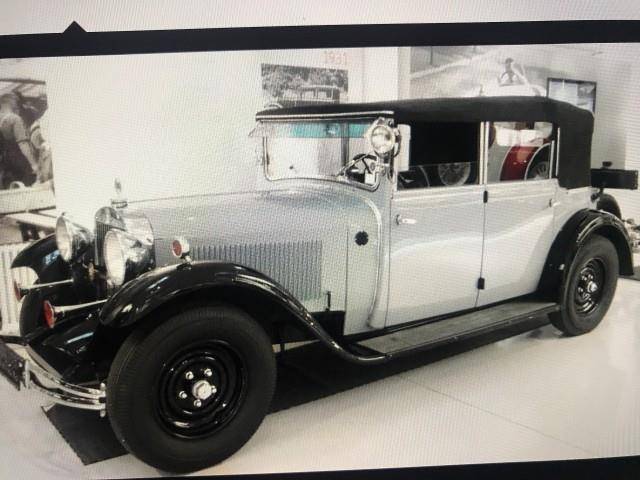
1931 | Steyr 8/40 HP
Oldtimer Porsche Steyr XXX (type 30) 1931 Ferdinand Porsche
Create search alert
Let yourself be notified as soon as a listing is published that matches your search filters.
Create listing
Do you have a Steyr 30 that you want to sell? Then create a listing now.
Create listingSteyr 30 Classic Cars: Prices & Market Values
History of the Steyr 30
Introduced in 1930 by Steyr-Daimler-Puch AG, the Steyr 30 marked a major step in the brand’s transition towards more accessible, compact vehicles. Developed during a time of economic uncertainty in Austria, the model targeted middle-class buyers seeking reliable yet forward-thinking transportation. Designed by the influential engineer Karl Jenschke, the Steyr 30 incorporated technological advancements that set it apart from many contemporaries, especially in chassis design and drive technology.
Model History of the Steyr 30
Positioned as the successor to the Steyr Type XII, the Steyr 30 launched a new direction for the brand by placing emphasis on economy, comfort, and modern construction. Its production period spanned the early 1930s and laid the groundwork for its direct successor, the Steyr 50, also famously known as the 'Steyr Baby.' Produced predominantly as a four-door saloon, the 30 set a technical and design foundation for Steyr’s following models.
Highlights of the Steyr 30
A defining feature of the Steyr 30 is its all-steel monocoque body—uncommon at the time—paired with independent front suspension. Additionally, the car featured an innovative four-cylinder engine with hemispherical combustion chambers, providing both efficiency and reasonable power for its class. Market data from Classic Trader indicates that Steyr 30 listings make up a modest fraction of all Steyr vehicles offered on the platform, underlining the model’s rarity in the classic car market.
Technical Data
Special Editions and Collectible Models
Although no widely recognised special editions of the Steyr 30 exist, certain coachbuilt versions by specialist companies occasionally appear on the classic car market. These bespoke models typically stand out due to modifications in bodywork or luxury features commissioned by their original owners.
Weak Spots and Common Issues
Due to its early 20th-century engineering, sourcing spare parts for the Steyr 30 can be challenging outside of Austria. Key elements needing attention include the cooling system, as early examples were prone to overheating, and the rather delicate transmission synchronisation, which can suffer from excessive wear if not maintained correctly. Enthusiasts should also check for corrosion in structural areas of the monocoque body, as well as wear in the independent front suspension components.
Engine and Performance, Transmission and Handling
The compact 1.5-litre four-cylinder engine delivers sufficient power for leisurely driving, paired with a four-speed manual gearbox. Its innovative suspension design results in a considerably more comfortable ride than many rivals of the era, especially on rougher surfaces. Steering is direct for its age, and the mechanical brakes, though robust, require regular adjustment.
Popular Models and Technical Data:
- Standard saloon: 1.5-litre inline-four, 32 hp, all-steel monocoque
- Coachbuilt variants: Varied luxury features and potential minor performance enhancements undefined
Interior, Comfort, Exterior and Design
The Steyr 30’s design combined streamlined styling cues with functional simplicity. Its all-steel bodywork was a technical highlight, while the interior focused on comfort with period-correct fabrics, adjustable seats, and straightforward instruments. On some models, additional accessories such as custom luggage racks, special paintwork, and chrome accents further individualised the appearance. The exterior’s balanced proportions and understated grille design reflect the aesthetic trends of early 1930s Central Europe.
Other Relevant Features
The Steyr 30 occasionally featured bespoke accessories, such as external sunshades, leather straps for luggage storage, and tailor-made toolkits. Factory-optional extras were rare but included heating systems designed for the Austrian climate.
Summary
The Steyr 30 stands out for combining technical innovation, rare pre-war design elements, and reliable engineering in a compact package. Its scarcity on today’s classic car market makes it an attractive acquisition for enthusiasts focusing on historically significant, well-engineered continental classics.