Standard Atlas classic vans for sale
The Standard Atlas, known for its utility and varied production history from Britain to India, offers classic van enthusiasts a glimpse into post-war commercial vehicle evolution. With a production run that spanned more than two decades and several continents, it occupies a unique role among vintage utility vehicles.
Search results
Currently, there are no matching listings for your search.
Create search alert
Let yourself be notified as soon as a listing is published that matches your search filters.
Create listing
Do you have a Standard Atlas that you want to sell? Then create a listing now.
Create listingStandard Atlas listing references from Classic Trader
Below you will find listings related to your search that are no longer available on Classic Trader. Use this information to gain insight into availability, value trends, and current pricing for a "Standard Atlas" to make a more informed purchasing decision.
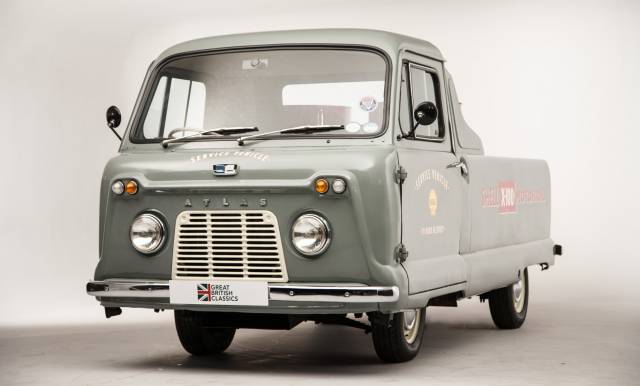
1959 | Standard Atlas
Create search alert
Let yourself be notified as soon as a listing is published that matches your search filters.
Create listing
Do you have a Standard Atlas that you want to sell? Then create a listing now.
Create listingStandard Atlas Classic Cars: Prices & Market Values
History of the Standard Atlas
The Standard Atlas began life in 1958 as a light commercial van developed for the British and European markets. Initially produced by Standard Motor Company, the van was designed to serve a market hungry for durable and economical transportation for tradespeople and small businesses. The Atlas evolved throughout its long production run, later reaching Indian markets and remaining in manufacture until 1980. Its longevity and expansiveness highlight its adaptability and the high demand for practical, reliable commercial transport in both Europe and Asia.
Model history
The Standard Atlas was introduced as a successor to earlier post-war vans, filling a gap in Standard's line-up for dedicated commercial vehicles. The model series saw incremental refinements in payload capacity, drivetrains, and configurations over its production life. Although initially badged as Standard, it was also sold under other names—reflecting changing partnerships and market demands—especially as production shifted to India in later years. The Atlas never spawned a direct replacement, instead marking the end of an era for Standard-branded light vans.
Highlights of the Standard Atlas
Unique among British commercial vehicles, the Atlas was exported and assembled in multiple regions, adapting to different markets with varying features and specifications. Its simple engineering made it popular for conversions and customisation, further extending its utility life long after its initial release. The Atlas design prioritised economy and functional load space, crucial for small businesses and fleets during its era.
Technical data
Special Editions and Collectible Models
While the Standard Atlas was primarily a practical working vehicle, certain export models and localised editions produced for specific markets, especially in India, are now sought after for their unique adaptations and rarity.
Weak Spots and Common Issues
There are no detailed records of widespread technical weaknesses specific to the Atlas series. However, as with most vintage commercial vehicles, attention should be given to rust in body panels, wear in mechanical components due to high-mileage commercial use, and difficulty sourcing some region-specific parts for export variants.
Engine, Performance, Transmission and Handling
The Atlas was never intended as a performance vehicle, focusing instead on reliability and function. Its engines were tuned for torque rather than speed, providing sufficient power for urban and rural deliveries. Handling was typical of mid-century panel vans, with a robust suspension designed to handle variable loads and rougher roads. Gearboxes were robust, manual, and simple to service. Popular variants include early British production years (1958–1963) and Indian-produced examples from the 1970s, each reflecting unique regional features that affect desirability and value.
Interior, Comfort, Exterior and Design
The interior of the Atlas was utilitarian, focused on maximising cargo area and ease of cleaning. Materials included basic vinyl and painted metal surfaces, suitable for heavy use. Externally, its compact dimensions, prominent Standard grille, and straightforward body lines set the tone for its function-first design philosophy. Notable features include high rooflines for ease of loading and side and rear door configurations catering to various commercial needs.
Other Features
The Atlas is often retrofitted for camper and promotional use due to its ample cargo bay and boxy body, making it a favourite for custom classic van enthusiasts seeking a blank slate for their projects.
Summary
With its unique cross-continental history, focus on utility, and adaptability, the Standard Atlas stands apart from more common classic vans. Surviving examples offer tremendous historical interest for collectors of post-war commercial vehicles and are particularly prized by enthusiasts of British and Indian automotive heritage.