- Car
- Sebring-Vanguard
- Sebring-Vanguard Citicar (0 offers)
Sebring-Vanguard Citicar Classic Cars For Sale
The Sebring-Vanguard Citicar stands as a unique chapter in American automotive history. As one of the first mass-produced electric cars from the 1970s, the Citicar fused practicality and innovation in a compact, distinctly wedge-shaped package.
Search results
Currently, there are no matching listings for your search.
Create search alert
Let yourself be notified as soon as a listing is published that matches your search filters.
Create listing
Do you have a Sebring-Vanguard Citicar that you want to sell? Then create a listing now.
Create listingSebring-Vanguard Citicar listing references from Classic Trader
Below you will find listings related to your search that are no longer available on Classic Trader. Use this information to gain insight into availability, value trends, and current pricing for a "Sebring-Vanguard Citicar" to make a more informed purchasing decision.
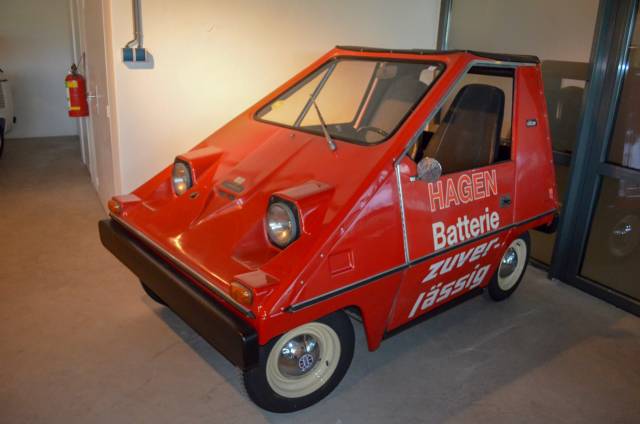
1975 | Sebring-Vanguard Citicar
Online Auction "Classics, Sports Cars & Specials". From 9th to 22nd of May
Create search alert
Let yourself be notified as soon as a listing is published that matches your search filters.
Create listing
Do you have a Sebring-Vanguard Citicar that you want to sell? Then create a listing now.
Create listingSebring-Vanguard Citicar Classic Cars: Prices & Market Values
History of the Sebring-Vanguard Citicar
Developed in the wake of the 1970s oil crisis, the Sebring-Vanguard Citicar emerged as an answer to fuel shortages and rising interest in alternative propulsion. Launched in Florida by Sebring-Vanguard, this compact electric vehicle reflected the ambitions of the era to reduce reliance on petrol. Its development marked a distinct departure from conventional combustion engines, focusing instead on simple engineering and low running costs. Production ran from 1974 to 1977, with American roads seeing thousands of these fibreglass microcars during their heyday.
Model History of the Citicar Series
The Citicar does not have a traditional predecessor, as it was designed independently by Sebring-Vanguard founder Robert G. Beaumont. Over its production, the Citicar saw incremental improvements: battery capacity and range were modestly increased, and later versions received tweaks to the bodywork and electrical system. Following Sebring-Vanguard, the company was sold to Commuter Vehicles Inc., which continued production under the Comuta-Car name, essentially making the Citicar its own ancestor and descendant.
Highlights and Features of the Citicar
One of the Citicar's unique selling points is its electric drivetrain—powered by a 3.5 to 6 hp DC motor paired with a bank of lead-acid batteries. Its sharply angular design stands out, and at only about 500 kilograms, the lightweight fibreglass body contributed to efficiency. With seating for two and space for basic essentials, the Citicar delivered urban mobility at minimal cost. Its innovation came at a time when few manufacturers dared to commercialise electric vehicles on this scale.
Technical Data
Special Editions and Collectible Models
Later-build Citicars, sometimes referred to as the 'Transitional' Citicars, featured enhanced safety features, revised front styling, and improved battery boxes. These models, along with rare export versions and the later Comuta-Car, attract added attention among collectors due to lower production numbers and technical refinements.
Weak Spots and Common Issues
As with all vintage electric vehicles, period-correct battery technology remains the chief limitation. Early Citicars are prone to corrosion in battery compartments, and original electrical components can suffer from ageing insulation and contact wear. Chassis and fibreglass shell are generally durable, but check suspension bushings, as exposure to weather accelerates degradation. Given their age, spare parts, particularly for trim and unique electrical fittings, may be challenging to source.
Engine, Performance, Transmission and Handling
Built purely for urban environments, the Citicar's performance is modest. Acceleration is sufficient for city traffic; however, speed and range are limited by today's standards. The direct-drive transmission simplifies operation—no gear shifts necessary. Steering is light, though the short wheelbase results in a firm ride, and the car is susceptible to crosswinds due to its minimal weight. Regenerative braking is not present, so drivers should rely extensively on traditional drum brakes. Notable Citicar variants include the later 48-volt models, which offered marginally increased speed and range.
Interior, Comfort, Exterior and Design
Few classic vehicles draw as much attention in city traffic as the Citicar, thanks to its unmistakable wedge silhouette and compact dimensions. Interiors are utilitarian, usually featuring simple vinyl-covered seats, a spartan dashboard with analogue instrumentation, and minimal comfort features to maximise weight savings. Exteriors were most commonly finished in bright orange or yellow, adding to their period-correct appeal. Factory options were sparse, but some cars were accessorised post-sale with upgraded lighting, radios, or even aftermarket weather protection. The Citicar’s looks are a blend of function and futuristic optimism—a true 1970s artefact.
Other Noteworthy Features
Despite being rare, parts compatibility with later Comuta-Car models offers a potential avenue for refurbishment and parts supply. The Citicar also qualifies for various historic electric vehicle events and rallies, making it a favourite within specialist communities.
Summary
The Sebring-Vanguard Citicar is a bold example of early electric vehicle engineering from the United States. Tailored for city usage and shaped by the energy concerns of the 1970s, it combines unorthodox design with simple electric propulsion. Its niche following persists among enthusiasts who value automotive innovation and microcar eccentricity.