Scammell Scarab classic cars for sale
The Scammell Scarab, produced in Britain from 1948 to 1967, stands out thanks to its distinctive three-wheeled design and unmistakable rounded front. This 'snub-nose lorry' became a familiar sight in post-war urban logistics, prized for its manoeuvrability and practicality in tight city streets.
Search results
Currently, there are no matching listings for your search.
Create search alert
Let yourself be notified as soon as a listing is published that matches your search filters.
Create listing
Do you have a Scammell Scarab that you want to sell? Then create a listing now.
Create listingScammell Scarab listing references from Classic Trader
Below you will find listings related to your search that are no longer available on Classic Trader. Use this information to gain insight into availability, value trends, and current pricing for a "Scammell Scarab" to make a more informed purchasing decision.
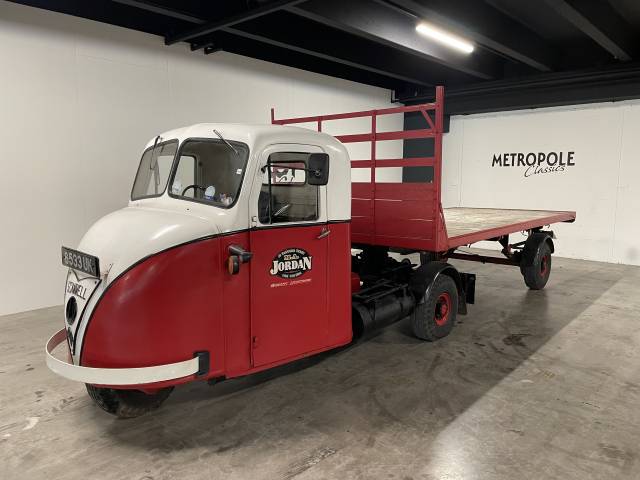
1961 | Scammell Scarab
Scammel Scarab Flat Lorry 1961 Right hand drive M0407
Create search alert
Let yourself be notified as soon as a listing is published that matches your search filters.
Create listing
Do you have a Scammell Scarab that you want to sell? Then create a listing now.
Create listingScammell Scarab Classic Cars: Prices & Market Values
History of the Scammell Scarab
The Scammell Scarab was developed as a successor to the Scammell Mechanical Horse, aiming to improve upon its predecessor’s urban hauling capabilities. Built between 1948 and 1967, the Scarab was tailored for rail and road parcel delivery, especially by British Railways and Royal Mail. Its unique three-wheel configuration with articulation allowed quick trailer swaps and agile movement through congested city environments. The rounded front and short wheelbase gave the Scarab its unmistakable 'snub-nose' appearance, reflecting post-war industrial design priorities focused on efficiency and adaptability.
Model History
The Scarab directly followed the Scammell Mechanical Horse, updating both its aesthetics and mechanical elements to meet evolving transport demands. Available in several load ratings, the Scarab remained mostly consistent in design during its production run, with only minor updates for ergonomics and reliability. The model line concluded in 1967 without a direct replacement, as the logistics sector shifted towards more modern articulated lorry designs.
Highlights and Features
The Scammell Scarab set itself apart with a three-wheeled chassis and pivoting cab, ideal for frequent trailer swaps and tight navigation. Its compact dimensions, robust chassis, and instantly recognisable round front end became staples in mid-20th-century British cities. The Scarab commanded a loyal following among operators due to its agility and low operating costs.
Technical Data
Special Editions and Collectible Models
There are no widely documented limited editions of the Scarab, but variations exist in terms of payload capacity and original equipment depending on the operator—such as postal or railway specifications. Restored examples painted in period livery, especially those from British Railways or Royal Mail, are particularly sought after.
Weak Spots and Common Issues
No common weak spot information is currently available for the Scammell Scarab. Due to its age, potential buyers should carefully inspect all driveline components, suspension joints, and bodywork for corrosion or fatigue, focusing on previous restoration quality.
Engine, Performance, Transmission and Handling
The Scarab’s performance is geared towards urban settings, with engines tuned for low-speed reliability rather than outright speed. The design’s three-wheeled setup enabled a very tight turning circle—critical for goods delivery in constricted environments. Gearboxes are typically manual, robust, and designed for heavy shunting rather than long-distance travel. The main Scarab variants differ primarily in payload rating and original commercial use, with British Railways and Royal Mail configurations highly representative of the type.
Interior, Comfort, Exterior and Design
The Scarab’s pragmatic cab features only the most essential instruments and controls, focusing on visibility and easy access. Bench seating and large windows were favoured for practicality in city operations. Externally, the Scarab’s short bonnet and rounded front are unmistakable, making it a favourite for enthusiasts seeking standout design from the golden era of British haulage. Period-correct accessories, including company insignia, play a major role in restoration.
Other Relevant Features
The Scarab’s legacy lives on at classic lorry shows and parade events, where restored vehicles attract attention thanks to their unique layout and historical British logistics role.
Summary
A distinctly British solution to post-war urban goods transportation, the Scammell Scarab remains notable for its three-wheeled agility and snub-nose styling. With the entire classic Scammell demand and supply on Classic Trader focusing on this model, the Scarab’s historical and technical legacy is unchallenged in the brand’s roster.