Rolux Baby classic cars for sale
The Rolux Baby is a microcar that embodies French ingenuity and post-war engineering simplicity. Produced in the late 1940s and early 1950s, this compact vehicle reflects a unique chapter in automotive history, offering collectors a rare blend of charm and practicality from the era of economic recovery.
Search results
Currently, there are no matching listings for your search.
Create search alert
Let yourself be notified as soon as a listing is published that matches your search filters.
Create listing
Do you have a Rolux Baby that you want to sell? Then create a listing now.
Create listingRolux Baby listing references from Classic Trader
Below you will find listings related to your search that are no longer available on Classic Trader. Use this information to gain insight into availability, value trends, and current pricing for a "Rolux Baby" to make a more informed purchasing decision.
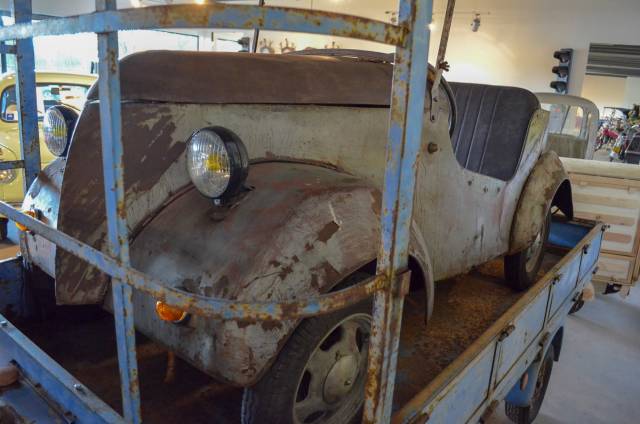
1948 | Rolux VB58 Baby
Online Auction "Classics, Sports Cars & Specials". From 9th to 22nd of May
Create search alert
Let yourself be notified as soon as a listing is published that matches your search filters.
Create listing
Do you have a Rolux Baby that you want to sell? Then create a listing now.
Create listingRolux Baby Classic Cars: Prices & Market Values
History of the Rolux Baby
The Rolux Baby emerged in France shortly after World War II, developed by the Rolux company to meet the demand for affordable and economical personal transport. With national restrictions and material shortages shaping the French car market, the Baby was created as a microcar solution for practical city driving. Its compact dimensions, lightweight body, and minimalist approach were direct responses to the pressing needs of the period. Production remained limited, which today adds a layer of exclusivity to each surviving example.
Model history
The Rolux Baby constitutes Rolux's principal entry into the microcar segment. There were no direct predecessors within the Rolux range, as the company shifted from producing mechanical components and small engines to building complete vehicles in the wake of wartime disruption. Following its production, the company did not introduce an immediate successor to the Baby, marking it as a unique artefact in the manufacturer’s brief automotive venture.
Highlights of the Rolux Baby
Distinct among postwar microcars, the Rolux Baby is notable for its featherweight chassis, straightforward two-seater configuration, and minimalistic controls. Its appeal is heightened among enthusiasts who appreciate unconventional engineering. The rarity of the Baby is further amplified by its limited production numbers and its representation of a historic era when many French marques focused on efficient city vehicles.
Technical data
Special Editions and Collectible Models
No known factory special editions of the Rolux Baby are documented. However, due to the low production numbers, each surviving example—especially with documented provenance or in original condition—may be regarded as significant among microcar collectors.
Weak Spots and Common Issues
Specific common issues for the Rolux Baby are not broadly documented, largely due to its extremely limited numbers and age. Potential buyers should be attentive to the availability of mechanical parts, particularly for the engine and transmission, and inspect for age-related wear in chassis and suspension elements, given the often rudimentary construction typical of microcars from this period.
Engine and Performance, Transmission and Handling
The Rolux Baby offers a unique driving experience rooted in simplicity. The lightweight chassis and minimal running gear deliver modest acceleration and speed, suitable primarily for urban and suburban environments. Turning radius and manoeuvrability are notable strengths, a result of its short wheelbase. With its basic suspension, ride comfort is secondary to functional mobility, mirroring the primary goals of microcars of the late 1940s and early 1950s. Within the Rolux lineup, the Baby is the only production microcar of significance, standing out as a physical reminder of early postwar motoring constraints and innovation.
Interior, Comfort, Exterior and Design
Utilitarian simplicity defines the Rolux Baby’s exterior and interior. The bodywork is distinctly minimal, with flat panels and compact dimensions. The interior is equally straightforward, generally equipped with very basic seating and controls, reflecting its economical spirit. Custom colours, luxury materials, or bespoke accessories are exceedingly rare, but original paintwork and upholstery are valued by collectors aiming for period correctness.
Other relevant features
Owning a Rolux Baby connects enthusiasts to a crucial period in French motoring: the years immediately following WWII, when resourcefulness and technical ingenuity were keys to mobility. The Baby’s appeal lies as much in its historical context as in its rarity.
Summary
The Rolux Baby encapsulates the era of postwar French automotive pragmatism, offering a rare glimpse into the world of microcars that emerged during challenging economic times. With minimal surviving examples, its allure for collectors is rooted in both its rarity and its status as a symbol of creative problem-solving in a transformative period for the European car industry.