Reliant Regent classic cars for sale
The Reliant Regent stands out as a quintessential British three-wheeler designed for utility rather than style—a true workhorse on wheels. With its distinct character and historical significance in the evolution of light commercial vehicles, the Regent attracts enthusiasts who appreciate both mechanical simplicity and the charm of early Reliant engineering.
Search results
Currently, there are no matching listings for your search.
Create search alert
Let yourself be notified as soon as a listing is published that matches your search filters.
Create listing
Do you have a Reliant Regent that you want to sell? Then create a listing now.
Create listingReliant Regent listing references from Classic Trader
Below you will find listings related to your search that are no longer available on Classic Trader. Use this information to gain insight into availability, value trends, and current pricing for a "Reliant Regent" to make a more informed purchasing decision.
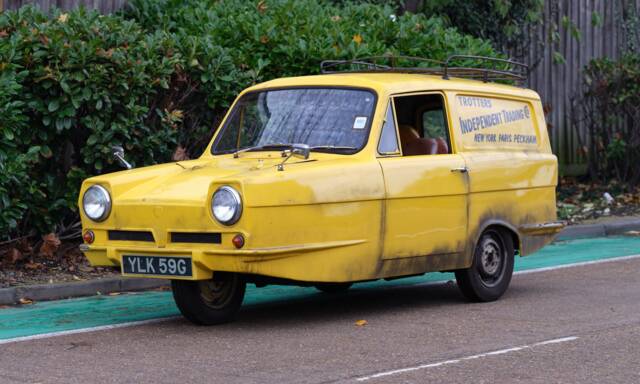
1969 | Reliant Regent Van 10cwt
1969 Reliant Regal Supervan - “Only Fools & Horses”
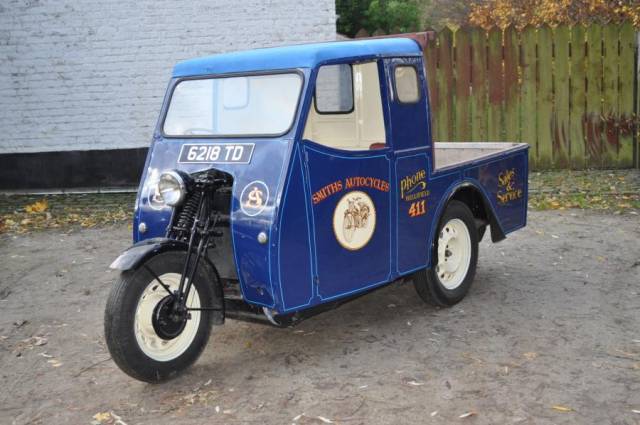
1952 | Reliant Regent Van 10cwt
Regent 10cwt
Create search alert
Let yourself be notified as soon as a listing is published that matches your search filters.
Create listing
Do you have a Reliant Regent that you want to sell? Then create a listing now.
Create listingReliant Regent Classic Cars: Prices & Market Values
History of the Reliant Regent
The Reliant Regent was introduced as one of the early ventures by Reliant into the three-wheeled light commercial vehicle market. Launched in the aftermath of World War II, the Regent was developed primarily to offer affordable transport for small businesses and tradesmen who needed a vehicle exempt from standard car taxation in the UK. Its lightweight construction was in response to the material shortages of the era, and the use of a three-wheel configuration meant that owners could drive it on a motorcycle licence under period regulations. The Regent was foundational in cementing Reliant’s reputation for producing practical, economical vehicles.
Model History
The Regent arrived following the earlier Reliant 7cwt van and set the tone for a string of three-wheeled utility vehicles from the company, preceding well-known models like the Regal and the iconic Robin. Built with a pressed steel chassis and a wood-framed, metal-paneled body, the Regent’s production run paved the way for Reliant to become one of the leading manufacturers in its niche. Successor models carried forward the key innovations established by the Regent, such as lightweight construction and motorcycle powerplants, while introducing improvements in comfort and reliability.
Highlights of the Reliant Regent
What makes the Reliant Regent interesting for collectors and aficionados is its utilitarian approach, simplicity, and the way it reflects post-war ingenuity of British engineering. Its single front wheel, straightforward engine, and no-nonsense cargo area marked it as a tradesman’s tool above all else. Owing to its classification as a three-wheeler, owners benefitted from lower road taxes and driving licence flexibility.
Technical Data
Special Editions and Collectible Models
There is no evidence of factory-offered special editions for the Reliant Regent, as the focus remained on utility and affordability rather than exclusivity. Most variations are related to bodywork for different trades, such as vans or pickups.
Weak Spots and Common Issues
Given the basic construction and use as commercial vehicles, Regents are prone to corrosion, particularly at the wood–metal interfaces and chassis. The engine and transmission are robust if regularly maintained but may suffer from neglect or overloading. Always inspect the suspension, steering components, and bodywork integrity, as repairs involving wood framing require specialist skills and careful material sourcing.
Engine and Performance, Transmission and Handling
Reliant Regents are not about outright speed. Their motorcycle-derived engines—a hallmark of Reliant's early models—provided enough power for city deliveries and local errands. Acceleration is modest, with top speeds rarely exceeding those legally allowed for commercial vehicles of their era. Driving dynamics are unique, with the single front wheel dictating handling characteristics that require prudence in turns and at speed—especially when laden. The layout grants tight turning circles, which was a boon in urban environments. Within Reliant’s historical three-wheeler lineup, the Regent is notable for its simplicity and work focus, succeeded by the more advanced Regal, which improved on comfort and engine options for wider appeal.
Interior, Comfort, Exterior and Design
The Reliant Regent's design is defined by its functional purpose: spartan interiors, easy-to-clean flat panels, and a bare minimum of instruments. Seating is basic but designed for resilience under heavy use. Externally, the boxy body and distinct single front wheel configuration immediately mark it as a working vehicle from the post-war era. Early examples were hand-built, often painted in simple utilitarian colours, with any special fittings or accessories added by tradesmen as needed. There was little in the way of factory luxury or optional extra equipment.
Other Relevant Features
Due to their layout and age, Regents possess classic vehicle quirks, including side-valve engines, cable brakes, and unique electrical systems. Documentation and sourcing parts can be challenging, but an active enthusiast community fills many gaps.
Summary
The Reliant Regent stands as a distinctive representative of British light commercial history. It encapsulates a pragmatic approach to design and engineering, serving businesses and small traders through practical features, low running costs, and straightforward mechanics. For those seeking a piece of genuine working-class motoring heritage, the Regent delivers a compelling proposition.