Oakland Six classic cars for sale
The Oakland Six represents a key chapter in early American automotive engineering, traceable through a multitude of annual model updates and body styles from 1913 until the marque’s transformation into Pontiac. Discover the engineering variety and historic transition embodied in the Oakland Six lineup.
Search results
Currently, there are no matching listings for your search.
Create search alert
Let yourself be notified as soon as a listing is published that matches your search filters.
Create listing
Do you have a Oakland Six that you want to sell? Then create a listing now.
Create listingOakland Six listing references from Classic Trader
Below you will find listings related to your search that are no longer available on Classic Trader. Use this information to gain insight into availability, value trends, and current pricing for a "Oakland Six" to make a more informed purchasing decision.
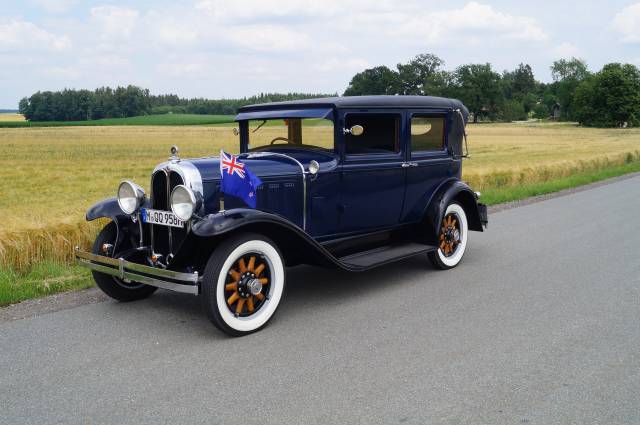
1929 | Oakland Greater Six
Landaulet Reiselimusine Model 212 All America
Create search alert
Let yourself be notified as soon as a listing is published that matches your search filters.
Create listing
Do you have a Oakland Six that you want to sell? Then create a listing now.
Create listingOakland Six Classic Cars: Prices & Market Values
Introduction and history of the Oakland Six
The Oakland Six debuted in 1913 as the first six-cylinder vehicle from Oakland Motor Company, shortly after the brand became part of General Motors. Over nearly two decades until 1929, the Six served as Oakland's technical and commercial backbone, evolving through countless mechanical updates and body variants. The continuous model updates reflected GM’s rapid exploration of early automotive technology. With the introduction of the V8 in 1929 and Oakland’s renaming to Pontiac by 1931, the Six marked the end of an era for the brand, bridging the gap between brass-era cars and the streamlined models that followed.
Model history
Initial Oakland Six models featured a six-cylinder engine at a time when many competitors still relied on four-cylinders. Each model year often brought a new body style or technical adjustment, responding to both customer demands and rapid advances in automotive technology. Following the departure from the Six-cylinder formula in 1929, the brand’s focus shifted, leading ultimately to the introduction of Pontiac as GM’s middle-class offering, effectively replacing Oakland.
Highlights of the Oakland Six
The Oakland Six stood out for its versatility in configuration, with an array of annual updates that included different engine displacements and body options. It played a significant role in GM’s portfolio, embodying mechanical experimentation typical of the time.
Technical data
Special Editions and Collectible Models
Oakland offered the Six in a multitude of body styles and with various engine sizes, but the historical record does not indicate officially designated special editions. Rather, rarity arises from certain low-production body styles or years with unique mechanical features, now highly prized among enthusiasts for their distinctiveness within the Oakland Six lineage.
Engine and Performance, Transmission and Handling
Engine performance for the Oakland Six improved over the years, reflecting advancements in six-cylinder technology from 1913 to 1929. Original engines delivered smooth running compared to their four-cylinder predecessors, while yearly updates provided incremental gains in output and mechanical refinement. Transmissions were usually manual, with gear shifts typical of the era and demanding precise operation. The long wheelbases and soft springing prioritised ride comfort, but handling retained the characteristics of early 20th-century engineering, with slow and steady responsiveness. Notable Oakland Six variants include early tourers and the final pre-V8 series from 1928-1929, which featured improved braking and upgraded drivetrain components.
Interior, Comfort, Exterior and design
Oakland Six models embraced the design conventions of their times, from brass-era details in the earliest examples to art deco motifs by the late 1920s. Upholstery varied according to body style, with open cars featuring robust leather seating and closed models offering cloth-wrapped interiors. Special paint colours and trim options were available across the lineup, though bespoke customisations by early owners mean surviving cars often feature unique details. The breadth of coachwork—including touring cars, roadsters and sedans—showcases both technical innovation and aesthetic variety.
Other relevant features
The Oakland Six’s significance within the GM family makes it a cornerstone for those interested in early American automotive consolidation and the evolution of mass-market vehicle design. Surviving vehicles serve as living documentation of the transition from independent automaking to industry-wide standardisation.
Summary
The Oakland Six is emblematic of an experimental and transformative period in American automotive history. Representing both engineering adaptation and brand evolution, these cars connect collectors to a unique legacy within the General Motors story, offering a vivid sense of progress and technical curiosity spanning the 1910s through 1920s.