Nissan Violet classic cars for sale
The Nissan Violet stands out as a compact car manufactured from 1973 to 1992 exclusively for the Japanese market during its early years. Known for its versatility in various body styles and its positioning as a more spacious alternative to the Cherry, the Violet offers classic car enthusiasts a slice of Japanese automotive evolution. Discover more about the history, technology, and appeal of the Nissan Violet below.
Resultados de la búsqueda
Actualmente no hay anuncios que coincidan con su búsqueda.
Create search alert
Let yourself be notified as soon as a listing is published that matches your search filters.
Create listing
Do you have a Nissan Violet that you want to sell? Then create a listing now.
Create listingNissan Violet listing references from Classic Trader
Below you will find listings related to your search that are no longer available on Classic Trader. Use this information to gain insight into availability, value trends, and current pricing for a "Nissan Violet" to make a more informed purchasing decision.
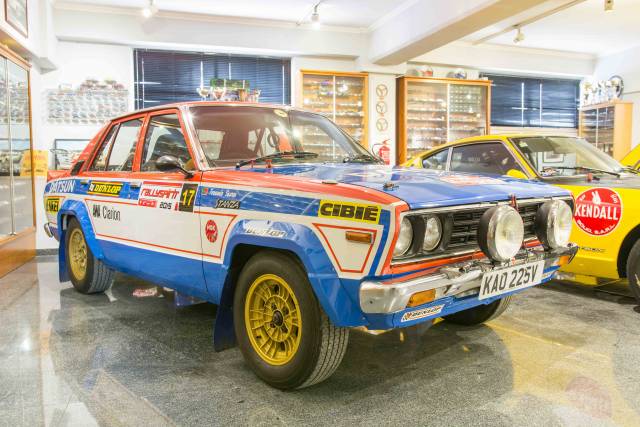
1979 | Nissan Stanza
Nissan Ex-Works Rally Car
Create search alert
Let yourself be notified as soon as a listing is published that matches your search filters.
Create listing
Do you have a Nissan Violet that you want to sell? Then create a listing now.
Create listingNissan Violet Classic Cars: Prices & Market Values
History of the Nissan Violet
Launched in 1973 for the Japanese domestic market, the Nissan Violet was created to fill the gap between smaller compacts and larger saloons, positioned just above the Cherry in Nissan's range. Originally available through the Nissan Cherry Store dealerships, it responded to domestic demand for a practical yet roomy car. Over the years, the Violet saw several iterations, each focusing on reliability, efficient use of space, and gradual inclusion of modern features. By the end of its production run in 1992, the Violet had evolved into multiple generations, reflecting Japan’s economic and technological development throughout the late 20th century.
Model Series History
The first generation Violet debuted in 1973 with a focus on compact practicality and efficient powertrains. Subsequent generations introduced upgrades in engine technology, refinement, and comfort, with the model series expanding to include various body styles—including sedan, coupe, and wagon. Early models were known internally under codes such as 710, while later generations adopted new naming conventions as the Violet evolved and regional adaptations were made. The Violet eventually gave way to successor models in Nissan’s global lineup, but its role in bridging traditional Japanese compacts and more international platforms remains notable.
Highlights of the Nissan Violet
The Nissan Violet’s primary strengths are its adaptability and its representation of the Japanese compact segment’s growth during the 1970s and 1980s. Designed with an emphasis on everyday usability, it offered a selection of efficient engines and robust mechanical simplicity. Buyers could select from a range of body styles to match family or personal needs—a rare flexibility among its contemporaries.
Technical Data
Special Editions and Collectible Models
Information about specific limited or special editions of the Nissan Violet is limited. However, certain variants—such as those equipped with sportier engines or rare body styles (notably some coupes or higher-trim wagons)—may be considered more desirable among purists due to their relative scarcity and distinctive features compared to mass-market trims.
Engine and Performance, Transmission and Handling
Performance in the Nissan Violet reflected the practical orientation of Japan’s compact cars in the 1970s and 1980s. Early rear-wheel-drive models provided a traditional driving experience, favouring stability and durability. Later front-wheel-drive generations improved everyday efficiency and interior packaging. Engines ranged from naturally aspirated SOHC four-cylinders, delivering adequate power for urban and suburban use rather than high performance. The 710 series (early rear-wheel-drive variants) and later FWD models with larger displacement engines deserve mention for their technical robustness and adaptability to both daily driving and subtle customisation.
Interior, Comfort, Exterior and Design
The Violet reflected the evolution of Japanese automotive design: clean, uncluttered lines outside, with purposeful interiors focused on functionality. Materials varied across trims, with higher-grade models offering upgraded finishes, more instrumentation, and occasionally sport seat options. Special colours and accessories were available in domestic Japanese markets, often tailored to owner preferences or dealership promotions. The shift from rear- to front-wheel-drive formats influenced interior space and practicality, supporting the Violet’s reputation as a capable yet understated classic.
Summary
From its origins as a practical step up from the Nissan Cherry to its diverse body styles and incremental adoption of modern features, the Nissan Violet highlights Nissan’s adaption to evolving compact market needs between the 1970s and 1990s. Today, its rarity and the breadth of its model range appeal most to enthusiasts interested in authentic Japanese classics that marked a transition era for Nissan.