Minerva BB Classic Cars for Sale
The Minerva BB represents Belgian engineering art at its finest, built at a time when Minerva automobiles stood for exclusivity and uncompromising quality—often surpassing Rolls-Royce in price. Delivered as chassis with engines and custom coachwork, each BB reflects the taste and status of its discerning first owner.
Search results
Currently, there are no matching listings for your search.
Create search alert
Let yourself be notified as soon as a listing is published that matches your search filters.
Create listing
Do you have a Minerva BB that you want to sell? Then create a listing now.
Create listingMinerva BB listing references from Classic Trader
Below you will find listings related to your search that are no longer available on Classic Trader. Use this information to gain insight into availability, value trends, and current pricing for a "Minerva BB" to make a more informed purchasing decision.
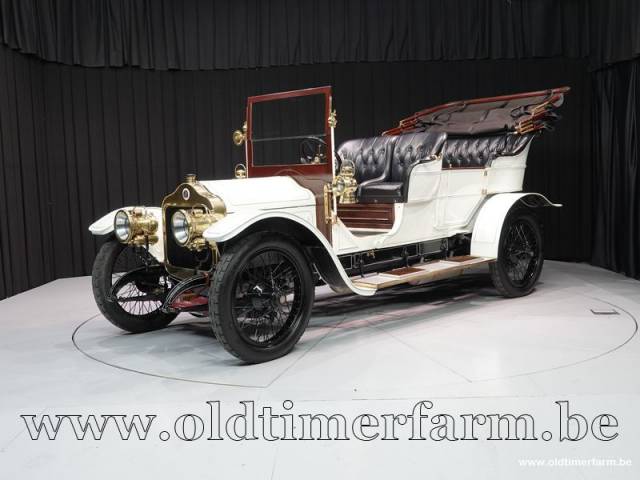
1912 | Minerva BB
1912 Minerva BB Tourer by Kellow Falkiner '12
Create search alert
Let yourself be notified as soon as a listing is published that matches your search filters.
Create listing
Do you have a Minerva BB that you want to sell? Then create a listing now.
Create listingMinerva BB Classic Cars: Prices & Market Values
History of the Minerva BB
Minerva was born from an Antwerp-based bicycle factory founded by Dutchman Sylvain de Jong. Diversifying into motorcycles by the turn of the century, Minerva delivered engines to brands like Triumph before fully transitioning to automobile manufacturing in 1902. The official Société Anonyme Minerva Motors began in 1903, and by 1904, serial production of cars with chain drive and wood-metal frames was underway. Motorsport success soon followed, culminating in a high-profile win at the 1907 Circuit des Ardennes with the mighty 8-litre Kaiserpreis model. Charles Rolls, co-founder of Rolls-Royce, acted as Minerva’s English distributor, underscoring the international esteem these cars commanded.
Model History of the Minerva BB Series
The Minerva BB fits into a lineage of luxury automobiles born from relentless innovation. Starting with the 6 hp models of 1902 and evolving through technological milestones like the adoption of the Knight sleeve-valve engine in 1908, Minerva’s prestige consistently grew. The BB was delivered as a rolling chassis, allowing renowned coachbuilders to equip each example with bespoke bodies. Knight-engineered Minervas—such as the 20CV and 30CV—cemented the brand’s standing. Post-WWI, Minerva’s focus on smaller yet still luxurious models continued, with the BB series as a notable high-end offering until production moved onto eight-cylinder successors in the 1930s.
Highlights and Key Features of the Minerva BB
Every Minerva BB benefitted from the world-licensed Knight sleeve-valve engine from 1908 onward, a hallmark for smooth and quiet operation without the rattle of a poppet valve actuation. This technological edge meant Minerva outclassed many rivals, with cars often built for royalty and Hollywood elites. Minerva’s chassis-only sales model meant each BB is unique, defined by the custom coachwork it received. The brand was famed for excellence in finish and pioneering updates like four-wheel brakes and rigid mechanical standards. Motorsport accolades at the Austrian Alpine and Swedish Winter rallies reflect the cars' robust engineering.
Technical Data
Special Editions and Collectible Models
Each Minerva BB is inherently a one-off due to the custom bodywork ordered by their first owners, often crafted by Europe’s elite coachbuilders. Some editions are especially significant for carrying bodies by famous ateliers such as Hibbard & Darrin or Vanden Plas. Royal commissions and cars used for motorsport or ceremonial duties further enhance the BB’s appeal among collectors seeking unique provenance.
Weak Spots and Common Issues
No model-specific weak spots documented for the Minerva BB. However, as with all pre-war luxury vehicles, particular attention should be paid to the condition of the Knight sleeve-valve engines, especially regarding oil consumption and cylinder wear. The availability of parts for coachbuilt bodies and unique drivetrain components can require specialist sourcing and skilled restoration work.
Engine and Performance, Transmission and Handling
Minerva BB models delivered stately, near-silent motoring, thanks to the advanced sleeve-valve engines. Power output was substantial for the era, with six-cylinder versions (such as the 30CV) offering smooth acceleration and relaxed cruising at speed—remarkable in the late 1920s luxury context. Four-wheel braking provided superior stopping power compared to many peers. The chassis, designed for strength and durability, gave a composed ride necessary for the heavy bespoke bodies. 1. Minerva BB with 20CV or 30CV Knight engine: known for advanced technology and robust torque 2. BB with Hibbard & Darrin or Vanden Plas coachwork: recognized for unique design and historical provenance
Interior, Comfort, Exterior and Design
No two Minerva BBs are alike, as coachwork ranged from limousines to sporting roadsters. Interiors were often finished with the finest woods, high-grade leathers, and custom fixtures, tailored to the whims of European royalty and the Hollywood elite. Exteriors often display elaborate grilles, custom lighting, and brand-specific mascots. Accessories could include rear seating cabinets, bespoke luggage, or even built-in instruments for special ceremonial vehicles. Coachbuilders would sometimes employ striking livery colours or inlays, establishing remarkable individuality for each car.
Other Notable Features
Minerva vehicles, including the BB, served in unique roles during turbulent times—Belgian military units improvised armoured vehicles from Minerva chassis during World War I for mobile warfare. After WWI, the marque’s cars appealed to high-status customers including European monarchs and high-profile Americans such as Henry Ford. The combination of technical achievement and rich history continues to set the BB apart in the classic car world.
Summary
A Minerva BB combines advanced engineering—most notably its Knight sleeve-valve engine—with peerless craftsmanship and a high degree of individuality courtesy of its coachbuilt construction. Its role as a symbol for Belgian luxury motoring, combined with documented exclusivity in supply and demand statistics, ensures lasting appeal for connoisseurs seeking a pre-war automobile whose story is as nuanced as its engineering.