Mercury Park Lane classic cars for sale
The Mercury Park Lane stands out as the top-tier offering from Mercury during the late 1950s and 1960s, renowned for its powerful V8 engines, impressive dimensions, and distinctive American design language. Drivers who sought luxury and character beyond the mainstream found their match in the Park Lane.
Search results
Currently, there are no matching listings for your search.
Create search alert
Let yourself be notified as soon as a listing is published that matches your search filters.
Create listing
Do you have a Mercury Park Lane that you want to sell? Then create a listing now.
Create listingMercury Park Lane listing references from Classic Trader
Below you will find listings related to your search that are no longer available on Classic Trader. Use this information to gain insight into availability, value trends, and current pricing for a "Mercury Park Lane" to make a more informed purchasing decision.
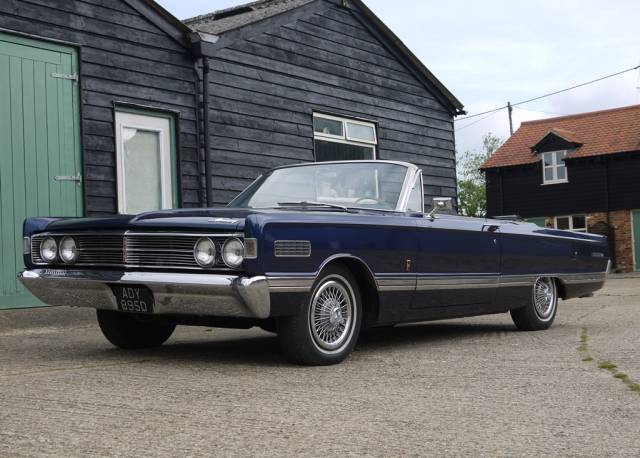
1966 | Mercury Park Lane Marauder Convertible
Mercury Park Lane Convertible

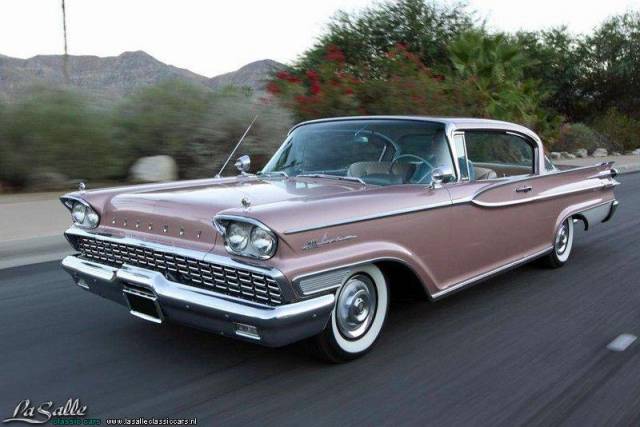
1959 | Mercury Park Lane
Mercury Park Lane

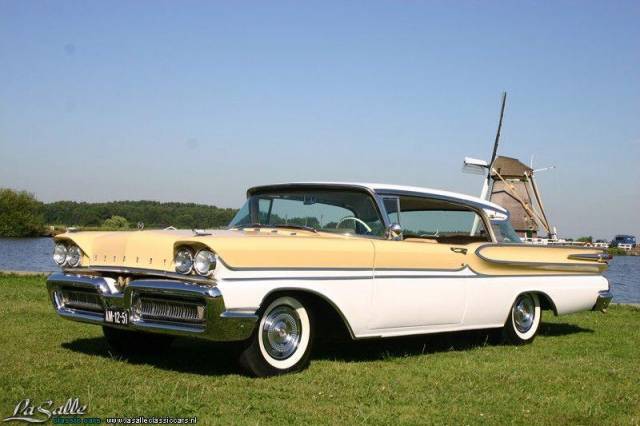
1958 | Mercury Park Lane
iI perfect shape for a great Saturday Night Cruise in perfect shape
Create search alert
Let yourself be notified as soon as a listing is published that matches your search filters.
Create listing
Do you have a Mercury Park Lane that you want to sell? Then create a listing now.
Create listingMercury Park Lane Classic Cars: Prices & Market Values
History of the Mercury Park Lane
Introduced by Mercury in 1958, the Park Lane was developed as the brand’s flagship model, intended to bridge the gap between Ford's mainstream vehicles and the more opulent Lincoln range. The Park Lane had two production phases: the first from 1958 to 1960, and a revival in 1964 that lasted until 1968. Throughout its lifecycle, the Park Lane embodied the American ambition for size, comfort, and prestige, offering advanced features for its time and reflecting Mercury's desire to offer premium alternatives within the Ford family. Manufacturing took place in facilities across New Jersey, Missouri, California, and Georgia, ensuring a steady supply across the US. By 1968, the Park Lane bowed out, making way for the Mercury Marquis, but its mark as Mercury's most lavishly equipped model remained.
Model History and Successors
The first-generation Park Lane (1958–1960) debuted as Mercury’s response to the evolving American taste for luxury and bold styling. It was available in coupe, convertible, sedan, and estate body styles and positioned above the Turnpike Cruiser and Montclair. After a short production hiatus, the second generation arrived in 1964, focusing on hardtop and station wagon layouts and offering features that paralleled or surpassed competitors including Lincoln. The 1967–1968 Park Lane Brougham represented the model’s zenith in terms of luxury. Ultimately, the Marquis succeeded the Park Lane post-1968, continuing Mercury’s tradition of full-sized, high-comfort vehicles.
Highlights and Statistics
The Park Lane is distinguished by its formidable V8 powertrains—engines ranged from 6.4 to 7.0 litres, delivering between 253 and 431 PS, an extraordinary figure for its era. Key technical innovations included Merc-O-Matic automatic gearboxes and luxury appointments, such as power steering and power-assisted brakes. The design embraced American extravagance, with chrome-laden details and dramatic bodywork in both generations.
Technical Data
Special Editions and Notable Variants
Notably, the Mercury Park Lane Brougham (1967–1968) emerged as the most exclusive variant, featuring further upgraded interiors and exterior trim, setting it apart from standard models. These Broughams are identifiable by unique upholstery, increased sound insulation, and detail-rich badging.
Engine, Performance, Transmission and Handling
Park Lane models provided effortless cruising courtesy of their high-displacement V8s. Early cars delivered around 310 PS, with later models topping 400 PS, giving brisk acceleration and strong highway performance typical of American full-sized cars. The Merc-O-Matic automatic transmission (and available manual) ensured smooth, relaxed driving, which was further supported by power steering and brakes. Handling remains oriented towards comfort and straight-line stability, reflecting North American road conditions of the era. Popular models include the 1967–1968 Park Lane Brougham for its elevated specifications and the earlier 7.0-litre V8 variants for their raw performance and presence. Both versions offer distinctive ownership experiences tied to high-output engines and generous dimensions.
Interior, Comfort, Exterior and Design
The Park Lane is a showcase of period American automotive style, dominated by chrome, sharp creases, and elongated bodywork. Exteriors often featured two-tone finishes and sweeping side lines, with heavy use of chrome around bumpers, window surrounds, and lighting. Interiors were marked by deep, padded dashboards, plush seating, ornate instrumentation, and options for elaborate fabrics or leather. The estate models presented large rear cargo spaces, while sedans and convertibles showcased the full spectrum of luxury touches.
Other Relevant Features
The Park Lane was purpose-built for comfort and freeway cruising, so factory accessories frequently included air conditioning, power windows, and adjustable steering columns. Rare special order trim packages—such as wire wheel covers or extra sound insulation—occasionally appear in the market, adding further pedigree to surviving examples.
Summary
The Mercury Park Lane represents an ambitious period in American car history, with a focus on power, luxury, and presence. It remains a compelling choice among Ford-family classics, drawing interest for its extensive equipment, robust V8 power, and distinct styling that echoes mid-century American automotive culture.