March 822 classic cars for sale
The March 822, crafted for Formula 2 racing in the early 1980s, secured championship victories in both Europe and Japan. Built by the renowned March Engineering, it embodies the innovative spirit of British motorsport of its era. Discover more about this noteworthy open-wheel single-seater.
Search results
Currently, there are no matching listings for your search.
Create search alert
Let yourself be notified as soon as a listing is published that matches your search filters.
Create listing
Do you have a March 822 that you want to sell? Then create a listing now.
Create listingMarch 822 listing references from Classic Trader
Below you will find listings related to your search that are no longer available on Classic Trader. Use this information to gain insight into availability, value trends, and current pricing for a "March 822" to make a more informed purchasing decision.
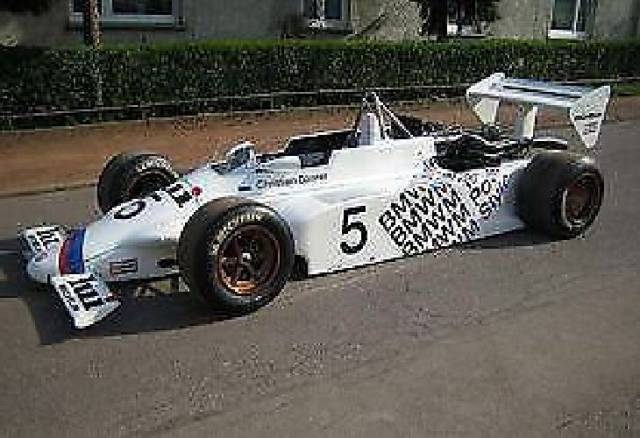
1982 | March 822 BMW
Create search alert
Let yourself be notified as soon as a listing is published that matches your search filters.
Create listing
Do you have a March 822 that you want to sell? Then create a listing now.
Create listingMarch 822 Classic Cars: Prices & Market Values
History of the March 822
The March 822 emerged from the workshops of March Engineering in 1982, reflecting the high standards of British racing car development. This open-wheel single-seater was purpose-built for Formula 2, a fiercely competitive category that bridged the gap between junior formulas and Formula 1. The 822 made an immediate mark on the international stage: Corrado Fabi drove it to the European Formula 2 Championship title in 1982, while Satoru Nakajima clinched the Japanese Formula 2 Championship in the very same year. Its versatile chassis also saw adaptation for the Formula Atlantic series under the designation '82A'. The March 822 was the testament to March's ethos of pushing technical boundaries and securing motorsport accolades across continents.
Model Series History – March 822
March Engineering followed a tradition of designating its cars with the year and model code, situating the '822' as the manufacturer's 1982 entrant for Formula 2. The 822 followed the successful lineup of March F2 models, inheriting innovations from its predecessors and setting the stage for further chassis evolution in subsequent years. While the 822 drew from the knowledge gained with the 812 and 821, it marked an improvement in aerodynamics, chassis rigidity, and track adaptability. Its immediate successor continued to be developed for further enhancements in response to the Formula 2 technical landscape until the series’ regulatory changes in the mid-1980s.
Highlights of the March 822
The March 822 stood out for its competitive performance in multiple international championships, boasting a remarkable record for reliability and adaptability. Its aluminium monocoque design, combined with sophisticated suspension geometry, contributed to agile handling and effective power delivery. The flexibility of the 822's platform made it a favourite for privateer teams, and its derivative—the 82A—found success in Formula Atlantic. In both Europe and Japan, championship victories demonstrated the chassis’ strengths on diverse tracks and under varied technical regulations.
Technical Data for March 822
Special Editions and Collectible Variants of the March 822
A derivative of the 822, known as the March 82A, was adapted specifically for competition in the North American Formula Atlantic series. While fundamentally based on the F2 chassis, it was modified for Atlantic regulations and powertrains. The championship-winning cars of Corrado Fabi and Satoru Nakajima are of particular historic interest, often sought after by collectors for their documented race pedigree.
Engine and Performance, Transmission and Handling
The March 822 excelled in dynamic performance, intended for high-speed circuit racing. Standard for this type of formula chassis, it featured a mid-mounted, naturally aspirated 2.0-litre engine (commonly BMW M12/7 or Hart 420R) paired to a Hewland F.T.200 gearbox. Double wishbone suspension at both ends allowed for highly adjustable setups, tailored to the demands of each circuit. The precise steering, minimal weight, and slick-tyre grip provided competitive lap times and excellent responsiveness—qualities that contributed directly to its championship wins in 1982. The March 822 continues to be used today in historic Formula 2 events, appreciated for its balance and feedback even by modern standards. Among the distinctions, the chassis used by European Champion Corrado Fabi and Japanese Champion Satoru Nakajima stand out, both powered by competitive Formula 2 engines and tuned by experienced race teams of their era.
Interior, Comfort, Exterior and Design
Like all purpose-built open-wheelers, the March 822 presents a stripped interior focused solely on racing efficiency, with a single seat, minimalist instrumentation, and essential controls within close reach of the driver. The exterior’s angular lines were dictated by aerodynamic requirements, notably the front and rear wings and low-profile bodywork optimised for downforce and drag reduction. Cars were often finished in sponsor liveries—no two cars necessarily had the same appearance. The chassis offered flexibility for adaptations, whether for F2 or Formula Atlantic. Special wheel designs, bespoke instrumentation panels, and custom team colours added further distinctiveness for individual entries.
Other Features
The March 822’s involvement in both European and Japanese racing circuits underlines its engineering versatility and global motorsport relevance. Its adaptability, evidenced by the creation of the 82A for Atlantic racing, speaks to March Engineering’s commitment to meeting diverse technical regulations across continents.
Summary – March 822
The March 822 is a significant model for historic racing enthusiasts: a car with proven championship credentials, adaptable engineering, and a prominent presence in early-1980s Formula 2 and Atlantic racing. For collectors seeking a purpose-built race car with real motorsport heritage, the 822 remains a rewarding choice both in provenance and driving experience.